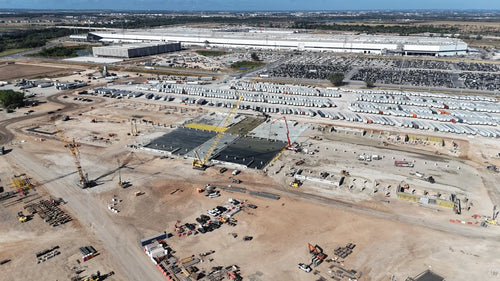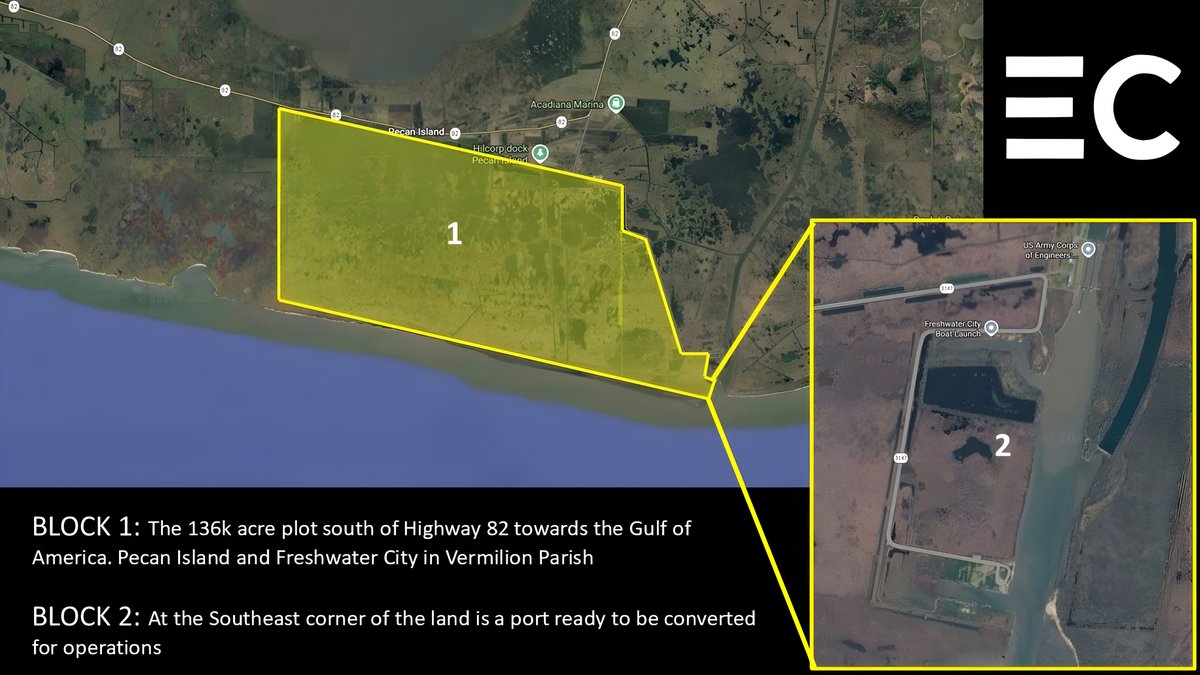
SpaceX has officially confirmed it is scouting multiple domestic and international locations to build new Starship launch facilities — a direct consequence of the company's stated goal of flying Starship thousands of times per year. The announcement, made simultaneously by the official SpaceX account and Elon Musk on May 12, signals that the current infrastructure footprint is nowhere near large enough to support the cadence SpaceX envisions.


The Scale Problem
SpaceX's two existing Starship launch sites — Starbase in South Texas and LC-39A at Kennedy Space Center in Florida — are already operating under significant regulatory constraints. Starbase currently holds approval for just 25 annual Starship launches, a cap that sits several orders of magnitude below the thousands-per-year target Musk has repeatedly cited as necessary for missions to Mars at civilizational scale. That math alone explains why a global spaceport expansion isn't optional — it's a prerequisite.
The good news is that construction is already well underway at several sites, even before today's broader announcement.
What's Already Being Built
In Florida, SpaceX is constructing three new Starship launch pads: one additional pad at LC-39A and two at Launch Complex-37 (SLC-37) at Cape Canaveral Space Force Station, where development approval has already been granted. U.S. Space Force officials have indicated that Starship launches from Cape Canaveral could begin as early as mid-2026. Alongside the launch infrastructure, a second Starship manufacturing plant is being built at the Kennedy Space Center's Roberts Road facility — a sign that production capacity is being scaled in parallel with launch capacity.
Back in South Texas, SpaceX is adding a second launch pad at Starbase and has received regulatory approval to expand the complex's developed footprint from 20 acres to roughly 41 acres, more than doubling the site's physical scale.
Perhaps the most unconventional piece of the infrastructure puzzle is SpaceX's pair of ocean-based spaceports, named Deimos and Phobos. These floating, superheavy-class launch platforms are being retrofitted from oil rigs acquired from Valaris for approximately $7 million. Designed to support missions to Mars, the Moon, and eventually hypersonic point-to-point travel around Earth, the ocean platforms represent SpaceX's answer to the geographic limitations of fixed land-based sites.
Why International Sites Matter
The mention of international locations is the most forward-looking element of today's announcement. Land-based launches in the United States are subject to FAA licensing, environmental review, and airspace coordination — processes that can take years and impose hard caps on launch frequency. International sites, particularly those near the equator, offer both regulatory diversification and orbital mechanics advantages for certain mission profiles. SpaceX has not named specific countries or regions under consideration, but the framing of "world's most advanced spaceports" suggests the bar being set is well beyond anything currently operational anywhere on Earth.
For context on our broader SpaceX coverage, see SpaceX coverage.
Editor's View
The thousands-of-flights-per-year figure has always been the number that makes Mars colonization arithmetic work — not dozens, not hundreds, thousands. Today's announcement is the first time SpaceX has framed the global spaceport search as an active, ongoing program rather than a distant aspiration. The construction already underway in Florida and South Texas suggests the timeline is being treated seriously internally. The open question is which international governments are in serious conversations with SpaceX, and whether any regulatory fast-tracking deals are already in progress behind the scenes.
🚀 Following the Starship program? See every test flight, official outcome and the next launch window in our SpaceX Starship Tracker.
Sources & reporting notes
The links below identify the material source records used for this report.
- @elonmusk on X (2026-05-12T20:23:02.000Z) — Direct source
- @SpaceX on X (2026-05-12T20:18:47.000Z) — Direct source
Source links are preserved as published or accessed. See our editorial standards and corrections policy.
The BASENOR Editorial Desk covers Tesla, SpaceX, and related technology, curating reporting from primary sources — official accounts, regulatory filings, and software release data. Every article passes source-record and fact-checking review before publication. About the newsroom.
This report was curated by the BASENOR Editorial Desk from the sources listed above. Read our editorial standards or email editorial@basenor.com to report an error.