The News: SpaceX filed an FCC application on April 23, 2026 for a next-generation Starlink gateway station called "First of Its Name," designed to unlock gigabit-class internet speeds.
Why It Matters: This ground infrastructure upgrade — paired with upcoming V3 satellites — is the clearest signal yet that Starlink's leap to gigabit speeds is no longer theoretical. It's in motion.
Source: @SawyerMerritt on X
SpaceX Files for Next-Gen Starlink Gateway Station to Unlock Gigabit Speeds
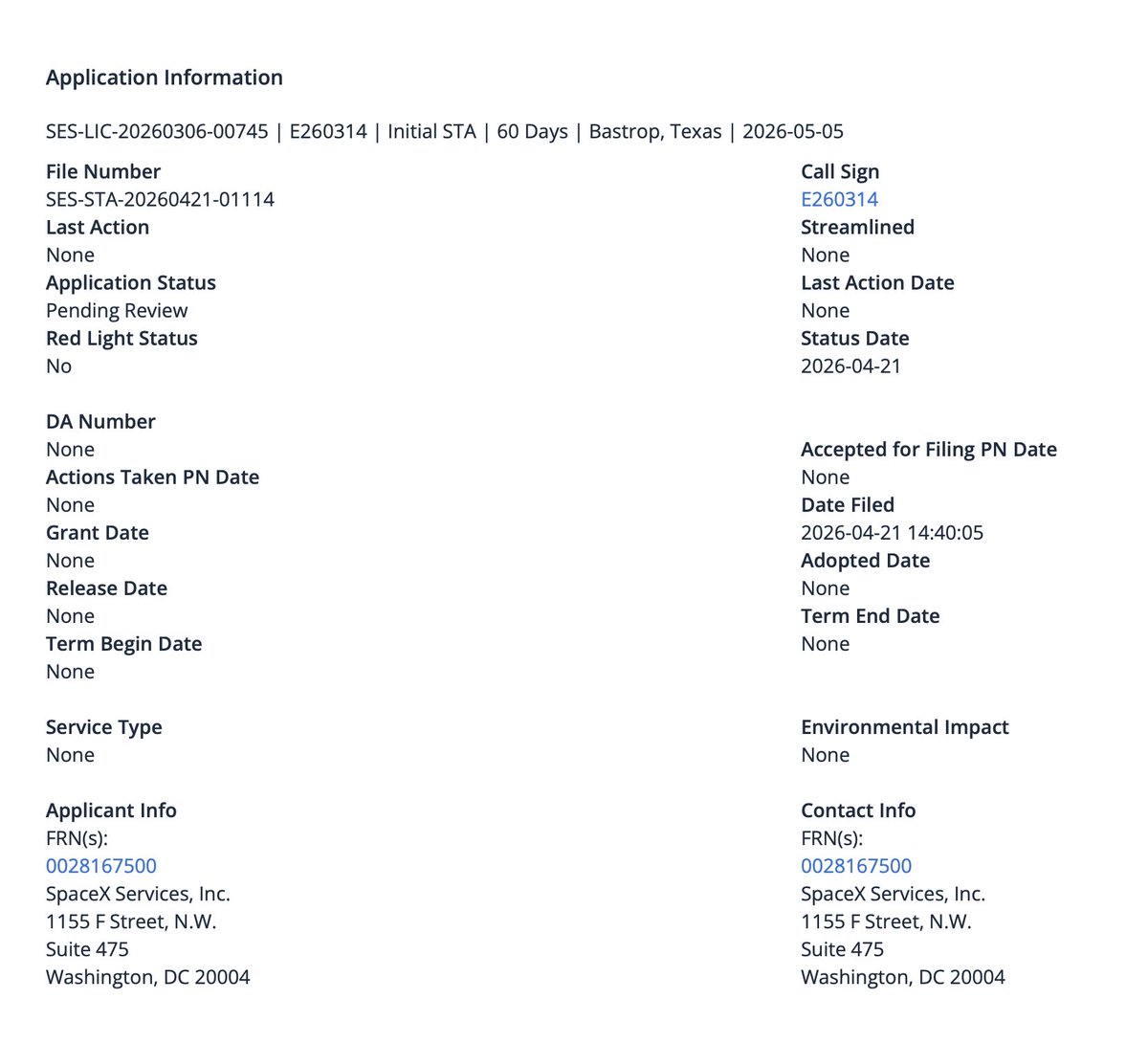
SpaceX is moving fast on the ground infrastructure side of its gigabit Starlink ambition. On April 23, 2026, the company filed an application with the FCC for a new gateway station — officially named "First of Its Name" — to be built at Starlink's own factory campus in Bastrop, Texas. The filing, first flagged by @SawyerMerritt, is the next concrete step in SpaceX's plan to deliver gigabit-class connectivity to Starlink subscribers.

📊 Key Figures
| Metric | Detail | Context |
|---|---|---|
| Gateway Name | "First of Its Name" | Filed April 23, 2026 |
| Location | Bastrop, Texas | Starlink factory campus |
| Antenna Count | 40 antennas | 1.99m parabolic dishes (vs. 1.85m current) |
| Spectrum Bands | Ka-, V-, E-, W-band | Incl. 18.6–18.8 GHz, 19.4–19.6 GHz, 29.1–29.5 GHz |
| FCC Gigabit Approval | January 2026 | Greenlit expanded spectrum for gigabit upgrades |
| V3 Satellite Capacity | 10× downlink vs. current gen | 24× uplink vs. Gen2 |
| Capacity per Starship Launch | ~60 Tbps added | Per Gen3 hardware launch |
| V3 Launch Target | H1 2026 | SpaceX stated target |
📋 Regulatory Filing
Agency: Federal Communications Commission (FCC)
Applicant: Space Exploration Technologies Corp. (SpaceX)
Filed: April 23, 2026
Station: "First of Its Name" — Bastrop, Texas
Purpose: Next-generation gateway authority for gigabit Starlink service
What SpaceX Is Actually Building
The "First of Its Name" gateway is not just a routine infrastructure expansion. It represents a purpose-built ground node designed specifically to interface with SpaceX's upcoming V3 satellite constellation — the hardware that will actually deliver gigabit speeds to end users.
The station's 40 antennas are each 1.99-meter parabolic dishes, slightly larger than the 1.85-meter dishes used at existing Starlink gateway facilities. That size difference matters: bigger dishes mean more precise signal focus and greater capacity to handle the dramatically higher throughput that V3 satellites will generate. The gateway will also operate across an expanded set of radio spectrum bands — Ka-, V-, E-, and W-band — including specific allocations at 18.6–18.8 GHz, 19.4–19.6 GHz, and 29.1–29.5 GHz, plus higher-frequency V- and W-band channels. The FCC cleared SpaceX to use these expanded bands in January 2026 as part of the broader gigabit connectivity approval.
Siting the gateway at Starlink's Bastrop, Texas factory campus is a deliberate choice. It puts next-gen ground infrastructure at the same location where Starlink hardware is manufactured and tested — a logical hub for the first deployment of a new gateway architecture.
The V3 Satellite Connection
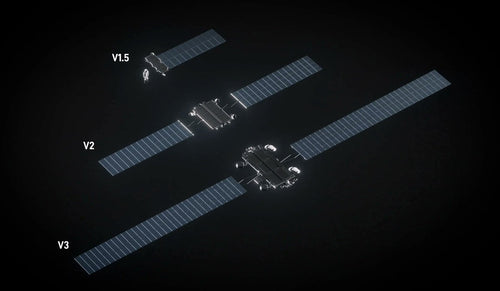
Ground stations alone don't deliver gigabit speeds — the satellites have to match. SpaceX's V3 (third-generation) satellites are the other half of this equation. According to SpaceX, V3 satellites are expected to offer 10 times the downlink capacity of current-generation satellites and 24 times the uplink throughput of Gen2. Each Starship launch carrying Gen3 hardware is projected to add approximately 60 terabits per second (Tbps) of new network capacity.
SpaceX aims to begin launching V3 satellites in the first half of 2026. The FCC separately approved SpaceX's request in January 2026 to launch an additional 7,500 Gen2 satellites, further expanding the network ahead of the V3 rollout. The "First of Its Name" gateway filing is the ground-side infrastructure catching up to that satellite roadmap.
🔭 The BASENOR Take
Timeline: FCC gigabit approval → January 2026 | Gateway filing → April 23, 2026 | V3 launch target → H1 2026
Impact Level: 🔴 High — This is the infrastructure layer that makes gigabit Starlink real, not just approved
Confidence: ⬛⬛⬛⬛⬜ High — FCC filing is a matter of public record; V3 timelines are SpaceX-stated targets
The sequence here is worth paying attention to. The FCC approved gigabit-band spectrum in January. SpaceX filed for the first purpose-built gateway to use that spectrum in April. V3 satellites are targeting launch in H1 2026. These aren't disconnected announcements — they're a coordinated build-out happening in real time.
What makes this filing particularly significant is the name SpaceX chose: "First of Its Name." That's not bureaucratic language — it's a deliberate signal that this is a new class of gateway, not an incremental upgrade to existing infrastructure. SpaceX is standing up an entirely new ground architecture to support what will be a fundamentally different network.
For existing Starlink subscribers, the practical question is when these improvements actually reach service tiers. Gigabit speeds require V3 satellites overhead, a compatible gateway in range, and eventually updated user terminals. The gateway filing is a necessary step, but subscribers shouldn't expect gigabit service the moment this station comes online. The full stack — satellites, gateways, and terminals — needs to be in place. That said, the pace of filings and approvals suggests SpaceX is not treating this as a distant roadmap item. For our full SpaceX coverage, including Starship and Starlink milestones, bookmark that tag.
The competitive backdrop also matters. Starlink already leads the satellite internet market on both subscriber count and service quality. A successful gigabit upgrade — backed by Starship's launch economics and the V3 constellation's capacity numbers — would extend that lead considerably. Each Starship flight adding 60 Tbps of capacity is a number that's difficult for any competitor to match with conventional launch vehicles. The "First of Its Name" gateway is a small filing with large implications.

Sarah focuses on Tesla Energy, SpaceX missions, and the broader Musk AI portfolio. Former data analyst in clean energy. Based in San Francisco.
Sources verified at publish time. Spotted an inaccuracy? Email editorial@basenor.com.