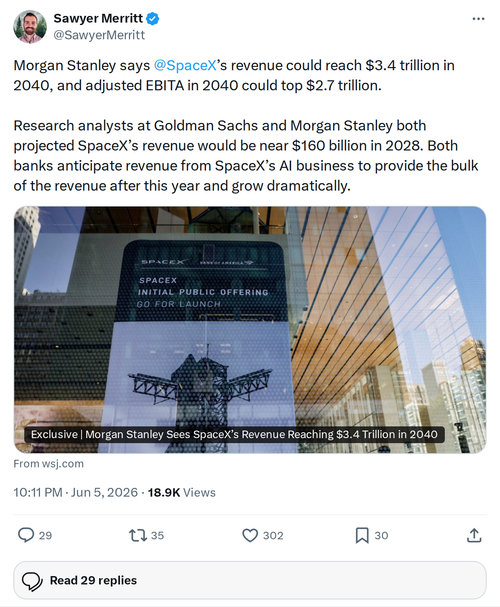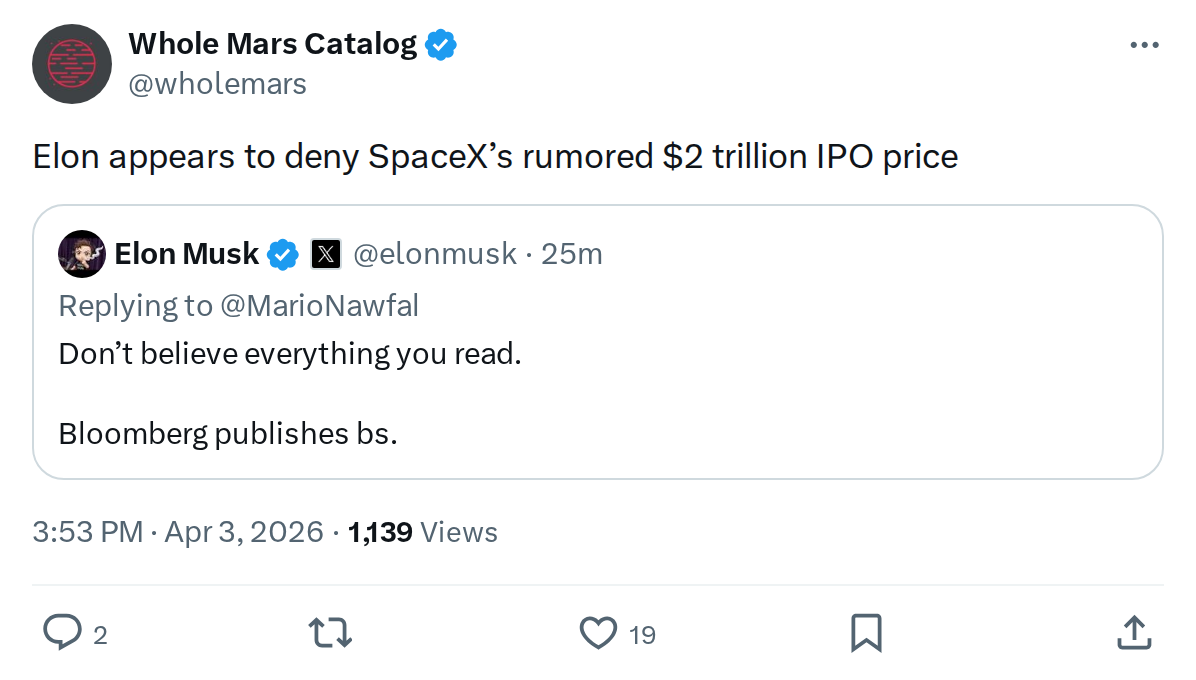
The News: Elon Musk appears to have pushed back on reports of a $2 trillion valuation for a potential SpaceX IPO — but verified SEC filings and market reporting paint a more nuanced picture.
Why It Matters: SpaceX's public offering trajectory directly affects how investors and Tesla shareholders view Musk's broader empire, including the recently merged xAI entity.
Source: @wholemars on X
The Signal vs. The Noise on SpaceX's IPO Valuation
On April 3, 2026, Whole Mars Catalog — one of the more plugged-in Tesla and SpaceX observers on X — flagged what appeared to be Elon Musk pushing back on circulating reports of a $2 trillion valuation for SpaceX's anticipated IPO. The word "appears" is doing a lot of work in that post, and for good reason: the full picture here is considerably more complicated than a simple denial.

Here is what verified reporting and SEC filings actually show — and why the valuation number Musk may be disputing matters for anyone watching the SpaceX IPO closely.
📊 Key Figures
| Metric | Value | Context |
|---|---|---|
| Target IPO Valuation | $2T+ | Raised from earlier $1.75T estimate |
| Capital Raise Target | $75B | Among the largest IPOs in history if achieved |
| SEC Filing Date | April 1, 2026 | Confidential draft registration filed |
| Earliest Possible Listing | June 2026 | Per current market reporting |
| xAI Merger Valuation (pre-IPO) | ~$1.25T | All-stock merger completed Feb 2026 |
| Retail Investor Allocation | Up to 30% | Individual investors may get significant access |
What Musk Has Actually Denied — And What He Hasn't
Context is everything here. Musk has a track record of publicly pushing back on valuation figures he considers inflated — but the specific target of his skepticism matters enormously.
In December 2025, Musk dismissed a report valuing SpaceX at $800 billion, calling it "too high for where SpaceX is today" and "not accurate." That denial was specific to an $800 billion figure. Fast-forward to April 2026, and SpaceX has confidentially filed a draft IPO registration with the SEC, with market reporting now pointing to a target valuation that has been revised upward — from $1.75 trillion to over $2 trillion.
The apparent pushback flagged by @wholemars on April 3 adds a new wrinkle. Whether Musk is disputing the $2 trillion figure itself, the methodology behind it, or simply the framing of the reports is not yet clear from the available source. What is clear: SpaceX's own confidential SEC filing is moving forward, and the company is actively targeting one of the largest public offerings in financial history.
🔭 The BASENOR Take
Timeline: SEC confidential filing April 1, 2026 → Earliest listing June 2026
Impact Level for Tesla Owners: Medium — indirect, but significant for Musk ecosystem investors
Confidence in $2T+ Valuation Reports: Moderate — multiple verified outlets citing the figure, but Musk's apparent pushback introduces uncertainty
Musk has used public skepticism about valuations strategically before — sometimes to manage expectations, sometimes to correct genuinely inaccurate reporting. The December 2025 denial of the $800 billion figure, for example, came before SpaceX's valuation estimates subsequently climbed well past that number anyway.
For Tesla shareholders, the SpaceX IPO trajectory matters for a few reasons. First, the February 2026 all-stock merger between SpaceX and xAI created a combined entity valued at roughly $1.25 trillion before any public offering — a deal that further concentrates Musk's attention and capital allocation across his portfolio of companies. Second, a successful SpaceX IPO at a multi-trillion dollar valuation would cement Musk's financial position in a way that could influence his involvement and investment in Tesla's own long-term roadmap.
The retail investor angle is also worth watching. Musk denied on March 31, 2026 that platforms like Robinhood and SoFi would be excluded from the IPO — and current indications suggest up to 30% of shares could be allocated to individual investors. That is a meaningful departure from how many mega-IPOs have historically been structured, and it signals an intent to broaden the SpaceX shareholder base significantly.
The bottom line: treat the "denial" with appropriate skepticism until Musk clarifies exactly what he is pushing back on. The SEC filing is real. The IPO machinery is in motion. Whether the $2 trillion number is accurate, aspirational, or premature is the question the market will spend the next several months answering. Follow our SpaceX coverage for updates as the filing process moves toward a public listing.

Sarah focuses on Tesla Energy, SpaceX missions, and the broader Musk AI portfolio. Former data analyst in clean energy. Based in San Francisco.
Sources verified at publish time. Spotted an inaccuracy? Email editorial@basenor.com.