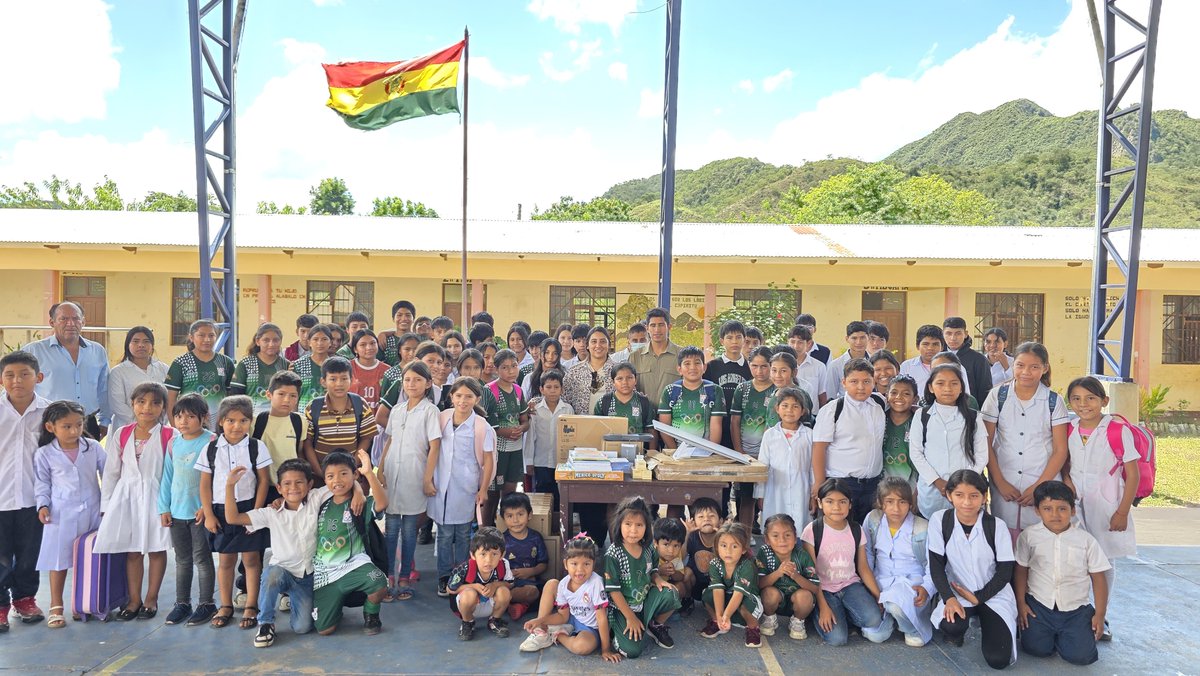
Starlink has connected more than 1,000 students and teachers across 14 schools in Bolivia, the company confirmed this week. The initiative is designed to give rural communities reliable high-speed internet access — the kind of connectivity that's been out of reach for much of Bolivia's remote population — with a specific focus on building digital skills and improving literacy.

Bolivia only officially opened its doors to Starlink in early 2026. The service launched commercially on February 2, 2026, following Supreme Decree 5509 signed by President Rodrigo Paz, which allowed low Earth orbit satellite operators to enter the Bolivian market. The government framed internet access as a basic service — on par with electricity and water — particularly for rural schools and health centers that traditional infrastructure has long bypassed. According to publicly available data, Starlink had already reached approximately 40,000 active connections in Bolivia by mid-May 2026, a remarkably fast uptake for a market that had been closed to the service just months earlier.
The school connectivity push fits directly into that broader government objective. Bolivia's geography — spanning the Andes highlands, Amazon basin, and Gran Chaco lowlands — makes ground-based fiber or cable deployment prohibitively expensive in many areas. Satellite internet sidesteps that problem entirely. Starlink's residential plans in Bolivia start at BOB 460 per month, with download speeds ranging from 135 to 310 Mbps, making it a genuinely capable connection for classroom use rather than a slow fallback option.
The partnership with state-owned telecom operator Entel, which is in negotiations to resell Starlink services, suggests the Bolivian government sees this as a long-term infrastructure play rather than a short-term pilot. Whether the 14-school program expands further — and how quickly — will likely depend on how the experimental license evolves into permanent regulatory approval over the coming months.
Sources & reporting notes
The links below identify the material source records used for this report.
- @Starlink on X (2026-06-05T22:16:16.000Z) — Direct source
Source links are preserved as published or accessed. See our editorial standards and corrections policy.
The BASENOR Editorial Desk covers Tesla, SpaceX, and related technology, curating reporting from primary sources — official accounts, regulatory filings, and software release data. Every article passes source-record and fact-checking review before publication. About the newsroom.
This report was curated by the BASENOR Editorial Desk from the sources listed above. Read our editorial standards or email editorial@basenor.com to report an error.