📌 UPDATE — March 22, 2026
Elon Musk has officially confirmed that SpaceX deployed an additional 29 Starlink satellites on top of the 10,000-active milestone reported in this article, pushing the constellation even further beyond that landmark figure. Musk shared the news directly on X, noting the latest batch brings the total well past 10,000 active satellites in orbit. The rapid cadence of launches underscores SpaceX's aggressive expansion strategy as it works to extend global broadband coverage and increase network capacity.
Elon Musk @elonmusk · Mar 22, 2026"Another 29 sats added to the 10k active"

 👍 21,466 🔁 2,048 👁 2.88MView on X →
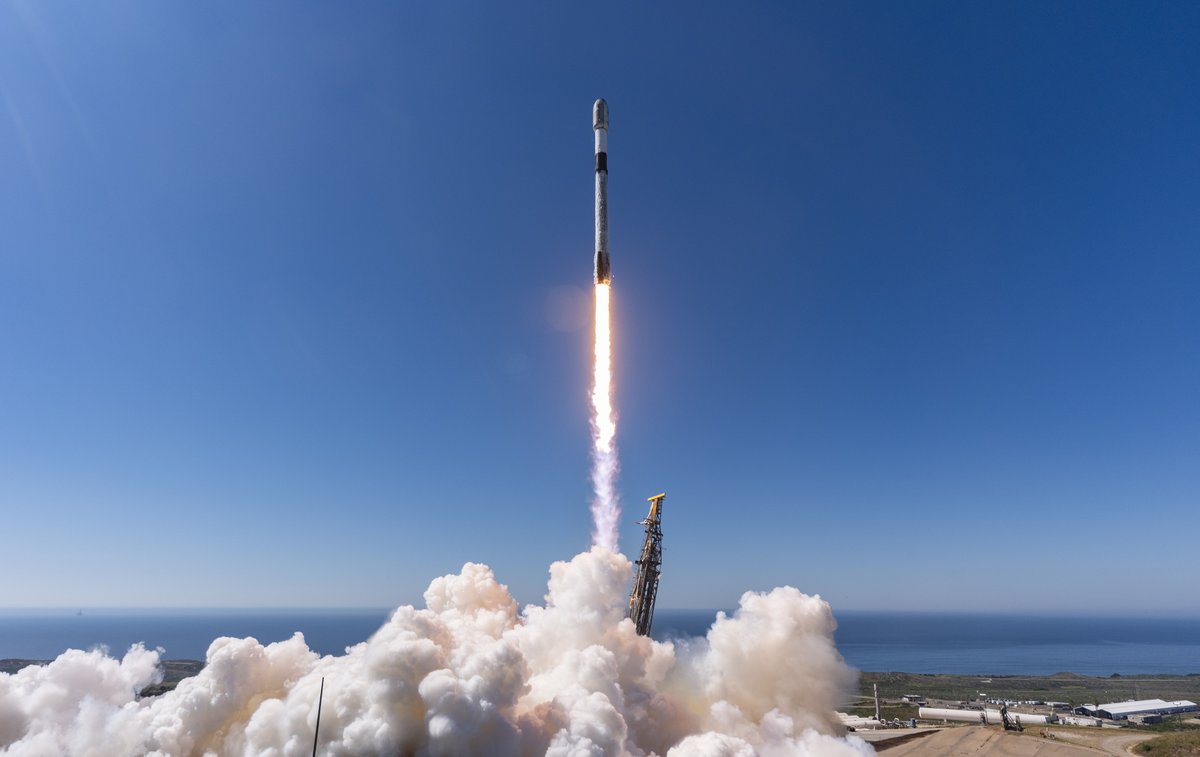
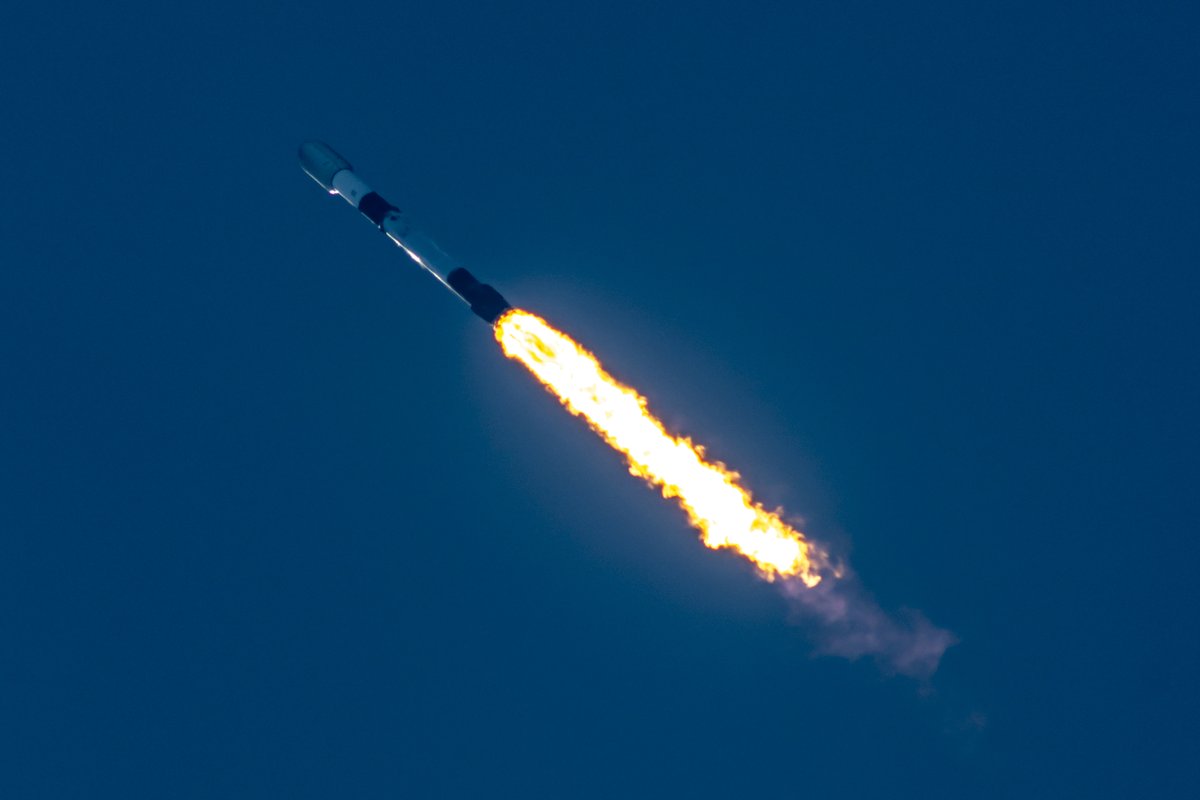
The News: SpaceX successfully launched 25 Starlink satellites aboard a Falcon 9 rocket from Vandenberg Space Force Base in California, further expanding its massive satellite internet constellation.
Why It Matters: Starlink's growing constellation — now exceeding 10,000 active satellites — strengthens global internet infrastructure that increasingly intersects with the Tesla vehicle ecosystem.
Source: @SpaceX on X
Another Falcon 9, Another 25 Satellites in Orbit
SpaceX continued its relentless launch cadence on Thursday evening, lofting 25 Starlink satellites into low Earth orbit from Space Launch Complex 4 East (SLC-4E) at Vandenberg Space Force Base in California. The Falcon 9 mission underscores how routine orbital delivery has become for the company — and each batch of satellites makes the Starlink network meaningfully denser.

The mission is the latest in a rapid-fire series of Starlink deployments that has pushed the active constellation past a historic threshold. According to spaceflight tracking sources, SpaceX recently surpassed 10,000 active Starlink satellites in orbit simultaneously for the first time — a scale of space infrastructure no other operator, government or private, has come close to matching.
📊 Key Figures
| Metric | Value | Context |
|---|---|---|
| Satellites Deployed | 25 | Standard Starlink batch |
| Launch Site | SLC-4E, Vandenberg SFB | California |
| Active Starlink Satellites | 10,000+ | Historic milestone recently crossed |
| Total SpaceX Booster Landings | 586+ | Across all missions to date |
The Reusability Engine Behind Starlink's Growth
What makes SpaceX's launch tempo sustainable is the Falcon 9's proven reusability. Recent Starlink missions have featured first-stage boosters on their 14th flight — a figure that would have seemed fantastical when SpaceX first landed a booster in 2015. According to spaceflight tracking data, the company's Pacific droneship Of Course I Still Love You has now hosted over 180 successful booster landings, serving as the primary recovery platform for Vandenberg launches.
Each successful booster reuse fundamentally changes the economics. Instead of discarding a $60+ million first stage after every flight, SpaceX refurbishes and relaunches it within weeks. That cost advantage is what enables the company to deploy satellites at a pace that no expendable-rocket operator could afford to match. It's the economic flywheel that keeps the Starlink constellation growing.
What This Means for Tesla Owners
Starlink and Tesla are separate companies, but they share leadership under Elon Musk — and the practical overlaps between satellite internet and connected vehicles continue to grow. Tesla vehicles depend on cloud connectivity for core features: real-time navigation and traffic data, streaming media, Sentry Mode event uploads, remote vehicle access via the Tesla app, and the constant data exchange that powers FSD improvements through over-the-air updates.
For owners in rural or underserved areas, reliable connectivity has always been the weak link. Starlink's expanding constellation — with 10,000+ satellites now providing denser coverage and lower latency — strengthens the broader internet infrastructure that every connected Tesla relies on, whether directly or indirectly. SpaceX's ongoing development of direct-to-cell satellite technology could eventually make this connection even more immediate.
🔭 The BASENOR Take
Timeline: Ongoing — SpaceX is launching Starlink missions multiple times per week in 2026
Impact Level: Moderate — each mission is incremental, but the cumulative scale is transformative
Confidence: High — confirmed directly by SpaceX
The Starlink constellation crossing 10,000 active satellites is the kind of milestone that doesn't make mainstream headlines but reshapes the connectivity landscape underneath everything. For Tesla owners, the relevance is structural: more satellites mean better global internet coverage, which means more reliable connected vehicle features everywhere you drive. As SpaceX continues pushing toward direct-to-cell capabilities — where your device connects to a satellite without a ground terminal — the possibility of native satellite connectivity in Tesla vehicles moves from theoretical to plausible. We're watching the infrastructure get built in real time, 25 satellites at a time.
📰 Deep Dive
SpaceX's Starlink deployment pace in 2026 is staggering by any historical measure. Operating from both Vandenberg on the West Coast and Cape Canaveral on the East Coast, the company is adding satellites at a rate that dwarfs every other orbital operator combined. The 10,000-satellite threshold isn't just a vanity number — it represents a constellation dense enough to provide competitive, low-latency broadband service across nearly every inhabited region on Earth, including oceans and polar routes where traditional infrastructure doesn't reach.
The Falcon 9 program's maturity is the unsung enabler. With boosters routinely flying double-digit missions and the entire launch-to-landing timeline compressed to weeks, SpaceX has effectively industrialized access to orbit. The company has completed over 586 booster landings to date, according to spaceflight tracking sources, and each one validates the engineering assumptions that make the entire Starlink business model viable. Remove reusability, and the economics of deploying a 10,000+ satellite constellation simply don't work.
For the Tesla community watching from the ground, the connection is strategic rather than immediate — but it's real. Tesla's fleet of millions of connected vehicles generates and consumes enormous amounts of data. As our SpaceX coverage has tracked, the convergence between satellite connectivity and the Tesla ecosystem keeps tightening. Today it's infrastructure. Tomorrow it could be a direct data link between your Model Y and a satellite 550 km overhead. Every Falcon 9 mission like this one builds toward that future, one batch of 25 at a time.

Sarah focuses on Tesla Energy, SpaceX missions, and the broader Musk AI portfolio. Former data analyst in clean energy. Based in San Francisco.
Sources verified at publish time. Spotted an inaccuracy? Email editorial@basenor.com.