📌 UPDATE — April 11, 2026
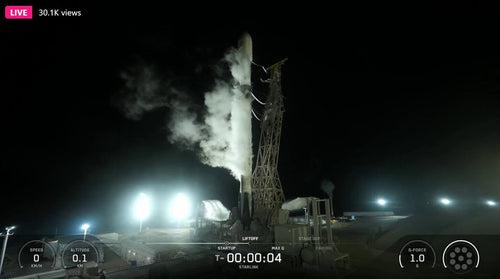
The NG-24 mission is now officially underway. Falcon 9 booster B1094-7 lifted off from SLC-40 at 11:42 UTC and stuck a clean landing at LZ-40 roughly seven minutes later — its seventh flight. Cygnus XL separation was confirmed at approximately 11:57 UTC, and the spacecraft is now cruising toward the ISS for capture on Monday, April 13 at 12:50 p.m. ET, per SpaceX.

📣 @SpaceX confirming Cygnus XL separation — April 11, 2026
30-Second Brief
The News: SpaceX's Falcon 9 successfully launched Northrop Grumman's NG-24 Cygnus cargo spacecraft toward the International Space Station from Cape Canaveral on April 11, 2026.
Why It Matters: The mission delivers over 11,000 pounds of supplies and cutting-edge scientific hardware to the ISS — including a quantum research upgrade and blood stem cell experiments — marking another routine-but-remarkable milestone in SpaceX's commercial launch cadence.
Source: @SpaceX on X
SpaceX Falcon 9 Launches NG-24 Cygnus to ISS: What's on Board and What It Means
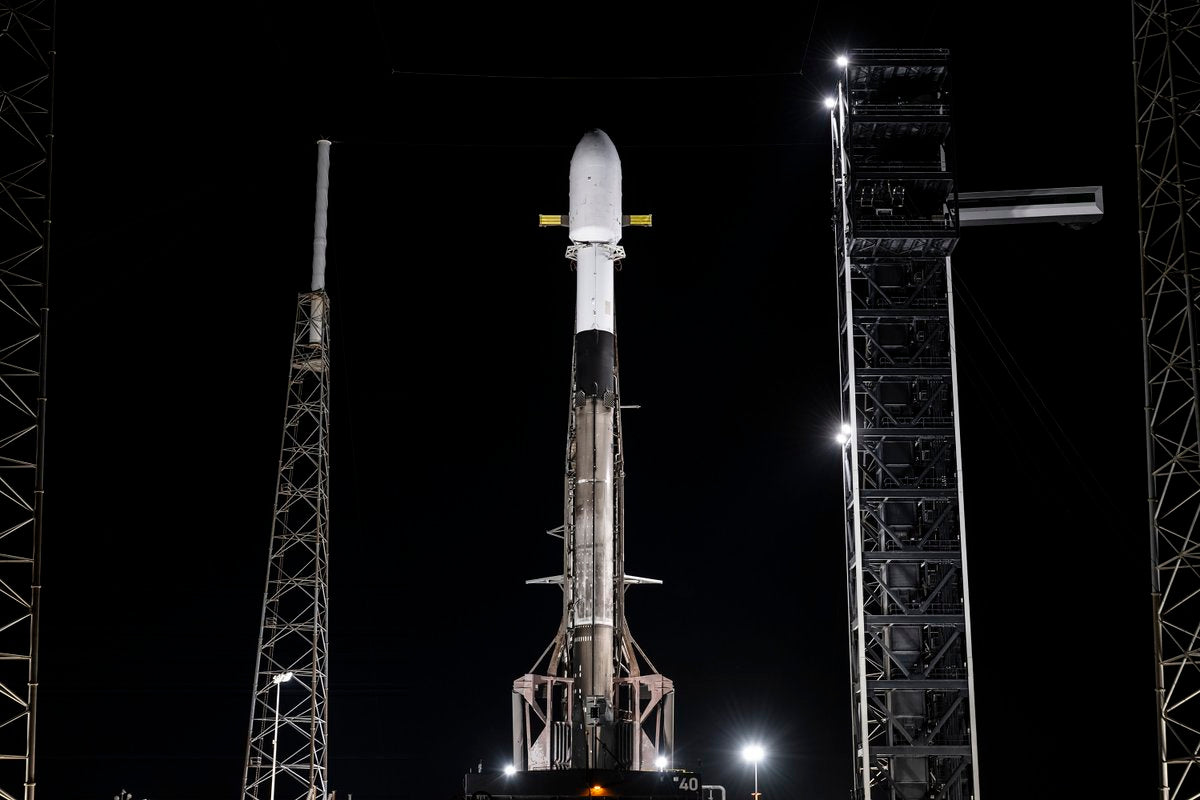
SpaceX's Falcon 9 lifted off from Space Launch Complex 40 (SLC-40) at Cape Canaveral Space Force Station this morning, carrying Northrop Grumman's Cygnus XL spacecraft — designated NG-24 — toward the International Space Station. All systems were nominal at launch, with favorable weather conditions greenlighting an on-time liftoff at 7:41 a.m. ET (11:41 UTC).


The Cygnus spacecraft for this mission is named the S.S. Steven R. Nagel, honoring the late NASA astronaut. It's flying in the Cygnus XL configuration — a larger variant that debuted with NG-23 in September 2025 and offers roughly a 20% increase in cargo capacity over the standard version.
📊 Key Figures
| Metric | Value | Context |
|---|---|---|
| Cargo Mass | 11,000+ lbs (≈4,990 kg) | Cygnus XL config |
| Booster Flight | 7th flight | Previously flew Ax-4, Crew-11, NG-23 + 3 Starlink missions |
| Launch Site | SLC-40, Cape Canaveral | Florida |
| Booster Landing | LZ-40 | Return to launch site |
| Capacity Increase (XL) | ~20% | vs. standard Cygnus |
| Expected ISS Departure | ~October 2026 | Destructive re-entry |
What's in the Cargo Hold?
The S.S. Steven R. Nagel isn't just hauling routine supplies. According to NASA, this mission carries a particularly science-dense manifest:
- Cold Atom Lab upgrade — An enhancement to NASA's quantum research facility aboard the ISS, enabling more precise experiments with ultracold atoms in microgravity.
- Blood stem cell study — An investigation into how microgravity affects blood stem cell production, with potential implications for treating blood disorders on Earth.
- Gut health research — Model organisms to study how the space environment impacts gut microbiome health in long-duration missions.
- Space weather monitoring hardware — New equipment designed to improve the station's ability to detect and characterize solar and cosmic radiation events.
Beyond the science, the cargo includes critical consumables, crew provisions, and hardware to sustain ISS operations through the remainder of 2026.
The Booster: Seven Flights and Counting
The Falcon 9 first stage supporting this mission is flying for the seventh time — a testament to SpaceX's reusability program. This same booster previously carried the Ax-4 commercial crew mission, NASA's Crew-11 astronauts, the NG-23 Cygnus mission, and three separate Starlink satellite batches. Following stage separation, the booster returned to Landing Zone 40 (LZ-40) at Cape Canaveral — a return-to-launch-site landing rather than a drone ship recovery, enabled by the mission's trajectory.
How Cygnus Docks Differently
Unlike SpaceX's own Dragon capsule — which autonomously docks with the ISS — the Cygnus spacecraft requires a more hands-on approach. NASA astronauts aboard the station will use the ISS's robotic arm (Canadarm2) to physically capture the Cygnus as it approaches, then berth it to a docking port. This rendezvous and capture sequence is expected in the days following launch.
Once berthed, the crew will unload cargo over several weeks. When the mission concludes — expected around October 2026 — Cygnus will be packed with trash and waste, then released for a destructive re-entry and burnup over the ocean.

🔭 The BASENOR Take
Timeline: Launch confirmed April 11, 2026 | ISS capture: ~April 13-14 | Departure: ~October 2026
Impact Level: Medium — Routine resupply, but science payload is above average
Confidence: High — Launch confirmed by SpaceX and NASASpaceflight
NG-24 is the kind of mission that doesn't generate headlines the way a crewed launch or Starship test does — but it's the backbone of sustained human presence in space. A seven-flight booster delivering over five metric tons of cargo to orbit is, at this point, a demonstration of industrial-scale spaceflight reliability that would have seemed extraordinary just a decade ago.
The Cygnus XL configuration is still relatively new, having only debuted with NG-23 in September 2025. Two successful flights of the larger variant in quick succession validates Northrop Grumman's decision to upgrade the spacecraft's capacity. For NASA, more volume per flight means more science per dollar — and the NG-24 manifest reflects that with a notably research-heavy cargo list.
The Cold Atom Lab upgrade is worth watching in particular. Quantum research in microgravity has produced results that simply aren't replicable on Earth, and enhancements to that facility could accelerate discoveries in quantum sensing and fundamental physics. For SpaceX's part, this mission continues to demonstrate that Falcon 9 — now well into its mature operational life — remains the most reliable heavy-lift workhorse in the commercial launch market. For more on SpaceX's ongoing missions, see our SpaceX coverage.

Sarah focuses on Tesla Energy, SpaceX missions, and the broader Musk AI portfolio. Former data analyst in clean energy. Based in San Francisco.
Sources verified at publish time. Spotted an inaccuracy? Email editorial@basenor.com.