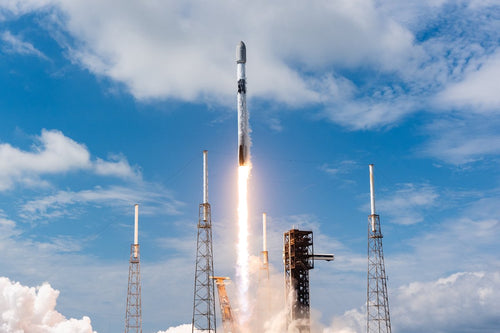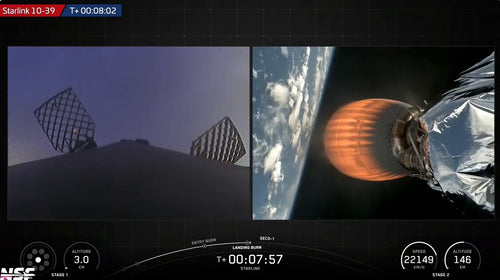
Space reporter Michael Sheetz posted three words Sunday evening — 'Time to touch the Moon' — alongside a video that's drawing renewed attention to just how close SpaceX's lunar ambitions actually are. With Starship V3 now flying, a flight-article Human Landing System cabin under fabrication, and NASA's Artemis schedule freshly revised, the Moon isn't a distant aspiration anymore. It's a 2027-2028 engineering target with hardware already taking shape.

Where the Artemis Program Stands
NASA reshuffled the Artemis timeline significantly in May 2026. Artemis III — long marketed as the first crewed Moon landing since Apollo — has been redesignated as a Low Earth Orbit demonstration flight. Its revised mission objective is to test docking between the Orion spacecraft and SpaceX's Starship Human Landing System (HLS) without touching the lunar surface. The actual crewed landing has moved to Artemis IV, currently targeted for 2028.
That's a meaningful delay on paper, but it reflects a pragmatic sequencing decision: before astronauts ride Starship to the lunar surface, NASA and SpaceX want a verified docking procedure and a proven uncrewed landing under their belts. The agency has now committed nearly $7 billion to Human Landing System development across both SpaceX and Blue Origin as of May 2026, according to verified program data.
The Hardware Is Already Being Built
SpaceX isn't waiting on schedule clarity to start fabricating. The company has begun building a flight-article Starship HLS cabin — not a mockup, but hardware intended for actual flight. According to SpaceX, the cabin includes functional avionics, power systems, crew systems, environmental control and life support, cabin communications, and thermal control. The HLS variant is designed to deliver up to 100 metric tons directly to the lunar surface.
The uncrewed HLS demonstration landing on the lunar surface is targeted for around mid-2027. A crewed lunar landing follows, tentatively scheduled for September 2028. Both milestones hinge on a critical intermediate step: in-space propellant transfer. Orbital refueling is essential for Starship HLS — estimates suggest approximately ten tanker launches may be required to fully fuel a single lunar mission. A propellant transfer flight test is among the major milestones SpaceX is targeting in 2026.
Starship V3 Changes the Calculus
The lunar timeline is also being shaped by the vehicle itself improving faster than expected. Starship V3, which debuted in May 2026, is powered by Raptor 3 engines that deliver meaningful performance gains over the previous generation. Sea-level Raptor 3 engines produce 250 tf of thrust, up from 230 tf, while vacuum engines now output 275 tf versus 258 tf previously. At the same time, engine mass dropped — Raptor 3 sea-level units weigh 1,525 kg, down from 1,630 kg.
The Super Heavy booster was also redesigned, moving from four grid fins to three, with each new fin 50% larger and stronger. The net result is a more capable, more efficient system at the exact moment SpaceX needs maximum performance for lunar payload delivery.
Commercial Lunar Missions Running in Parallel
Separate from the NASA Artemis track, SpaceX is planning a commercial circumlunar flyby mission in 2026 — a week-long crewed flight that will pass within 200 km of the Moon's surface. The mission includes Dennis and Akiko Tito and Chun Wang. It won't land, but it will be the closest humans have come to the Moon since 1972 and serves as a real-world demonstration of Starship's deep-space crew capabilities ahead of the HLS missions.
Longer term, SpaceX has outlined lunar cargo flights starting no earlier than 2028, targeting research, development, and exploratory missions at a rate of $100 million per metric ton.
The sequencing is now clearer than it's been in years: propellant transfer test in 2026, uncrewed HLS lunar landing in mid-2027, crewed Artemis IV landing in late 2028. Whether those targets hold depends heavily on how the next several Starship integrated flight tests unfold — but the hardware is being built, the contracts are funded, and the schedule has a shape. Sheetz's three-word post may be understated, but it isn't wrong.
🚀 Following the Starship program? See every test flight, official outcome and the next launch window in our SpaceX Starship Tracker.
Sources & reporting notes
The links below identify the material source records used for this report.
- @thesheetztweetz on X (2026-07-06T22:08:18.000Z) — Direct source
Source links are preserved as published or accessed. See our editorial standards and corrections policy.
The BASENOR Editorial Desk covers Tesla, SpaceX, and related technology, curating reporting from primary sources — official accounts, regulatory filings, and software release data. Every article passes source-record and fact-checking review before publication. About the newsroom.
This report was curated by the BASENOR Editorial Desk from the sources listed above. Read our editorial standards or email editorial@basenor.com to report an error.