⚡ 30-Second Brief
The News: SpaceX has announced a contract to launch Vast's first private astronaut mission to the International Space Station aboard Falcon 9 and Dragon, scheduled for no earlier than summer 2027.
Why It Matters: This marks the sixth private astronaut mission to the ISS and represents a significant expansion of commercial orbital logistics as private companies increasingly access low Earth orbit infrastructure.
Source: @SpaceX on X
🚀 SpaceX Expands Commercial Spaceflight Portfolio
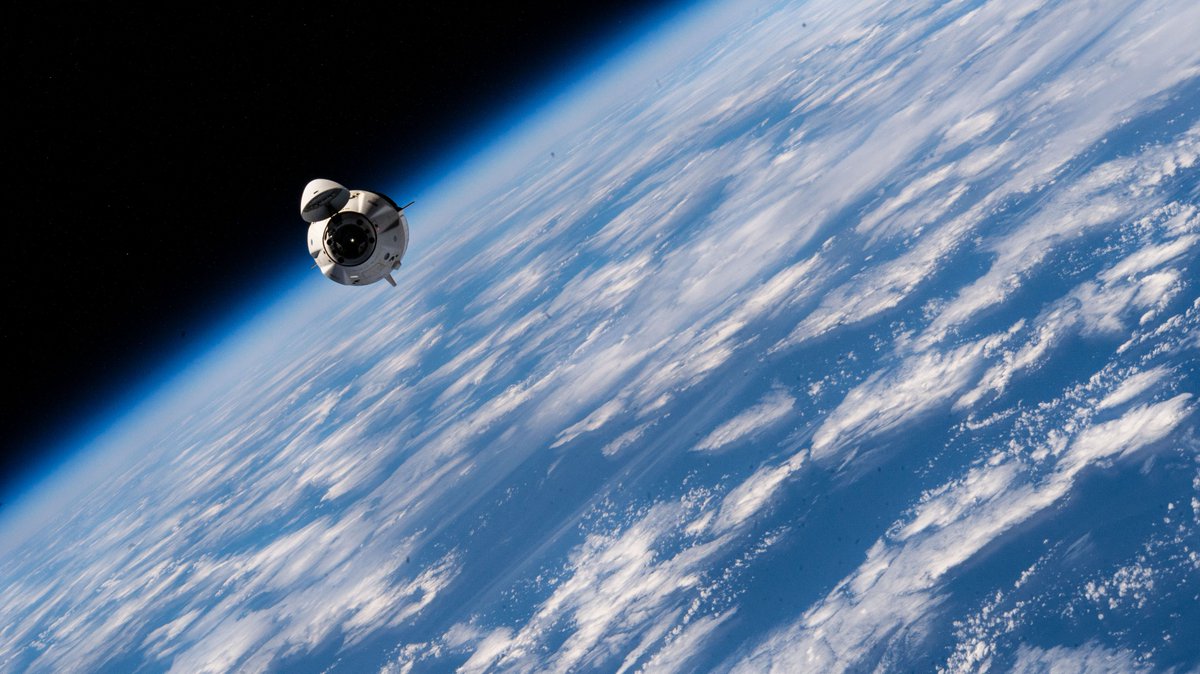
SpaceX announced today that its Falcon 9 rocket will launch a Dragon capsule carrying Vast's first private astronaut crew to the International Space Station from Florida. The mission, designated as NASA's sixth private astronaut mission (PAM-6) to the ISS, represents a key milestone in the commercialization of low Earth orbit operations.

The announcement comes as Vast, a commercial space station developer, prepares for a dual-track strategy: accessing existing orbital infrastructure through ISS missions while simultaneously building its own Haven-1 commercial space station targeted for Q1 2027 launch.
📊 Key Figures
🔭 The BASENOR Take
Timeline: The summer 2027 target positions this mission shortly after Vast's Haven-1 station is expected to launch in Q1 2027. This suggests Vast is pursuing parallel tracks—proving crew operations on the ISS while simultaneously deploying their own infrastructure.
Impact Level: 🔥🔥🔥 High. This contract validates the commercial crew model beyond government astronaut rotations. According to NASA's agreement with Vast, the company will submit four proposed crew members for review and training—establishing precedent for how commercial entities select and prepare personnel for orbital missions.
Confidence: ✅ Very High. NASA has officially selected Vast for PAM-6, and SpaceX's announcement confirms the transportation contract. The summer 2027 timeframe aligns with ISS operational plans as the station approaches its retirement window around 2030.
The Strategic Play: Vast's dual approach—ISS access missions plus Haven-1 development—mirrors how SpaceX itself built credibility. By demonstrating operational capability on existing infrastructure while building next-generation platforms, Vast positions itself as a serious successor to ISS operations. Haven-1's 45 cubic meters of habitable volume and planned Starlink integration represent iterative improvement rather than radical departure, reducing technical risk.
🛰️ The Bigger Picture: Commercial LEO Transition
This mission represents more than a single contract—it's a data point in the systematic commercialization of low Earth orbit infrastructure. With the ISS planned for retirement around 2030, NASA is actively cultivating commercial alternatives through its Commercial LEO Destinations program.
Vast's Haven-1 station, scheduled to launch just months before the PAM-6 ISS mission, will feature 80 cubic meters of pressurized volume and support up to 30-day missions. According to verified sources, Haven-1 will be the first commercial space station to integrate Starlink laser terminals for high-speed connectivity—a capability that could differentiate commercial stations from legacy government infrastructure.
The company has already flown a pathfinder mission (Haven Demo) that validated core systems, and integration work is currently underway with testing scheduled throughout 2026. This methodical approach reduces the risk profile for both NASA and potential commercial customers.
🎯 What This Means for the Space Industry
For SpaceX: Falcon 9 and Dragon continue to dominate the commercial crew market. With contracts spanning government astronaut rotations, private missions like Inspiration4 and Polaris Dawn, and now commercial station support, SpaceX has effectively become the default transportation provider for human spaceflight. The 2027 launch schedule suggests sustained cadence even as Starship development progresses.
For Commercial Stations: Vast's strategy demonstrates the importance of incremental capability building. Rather than attempting to replace the ISS with a massive multi-module station from day one, Haven-1's single-module design (with Haven-2 envisioned as a larger successor) allows for faster deployment and revenue generation. The 4-person, 14-day capacity targets the research and tourism markets without requiring ISS-scale infrastructure.
For NASA: The PAM program validates NASA's pivot from infrastructure operator to customer. By enabling private missions to the ISS while those crews are still available, NASA gains operational data on commercial crew selection, training, and mission execution—insights critical for certifying future commercial stations as destinations for government astronauts.
📰 Deep Dive
The timing of SpaceX's announcement is strategically significant. With Haven-1 integration underway and a Q1 2027 launch target, Vast is positioning its ISS mission as both a validation flight and a marketing demonstration. Potential customers—whether sovereign space agencies, research institutions, or private individuals—will be able to evaluate Vast's crew selection, training protocols, and operational procedures on a proven platform before committing to Haven-1 missions.
This approach mirrors the broader industry trend toward incremental capability demonstration. Blue Origin's Orbital Reef, Axiom's ISS commercial modules, and Northrop Grumman's commercial station concepts all share a common strategy: prove operations on existing infrastructure before asking customers to trust entirely new platforms. Vast's advantage lies in having both tracks running in parallel, with Haven-1 potentially operational before their first ISS crew returns.
The summer 2027 timeframe also positions Vast's mission during a critical transition period for the ISS. With NASA and international partners evaluating extension options versus transition timelines, private astronaut missions serve as both revenue generators for station operations and capability demonstrations for successor platforms. If Vast can execute a flawless 14-day mission with four commercial astronauts while simultaneously operating Haven-1, they establish credibility that pure development programs cannot match.
For Tesla owners tracking broader Elon Musk ventures, this announcement underscores SpaceX's central role in the emerging commercial space economy. Just as Tesla vertically integrated battery production and charging infrastructure to control its automotive destiny, SpaceX's ownership of launch, spacecraft, and (through Starlink) communications infrastructure creates a defensible competitive moat. Vast's reliance on Falcon 9 and Dragon for both ISS missions and Haven-1 operations demonstrates how SpaceX has become essential infrastructure for the next generation of space companies—a position that generates sustained revenue regardless of which commercial stations ultimately succeed.
Sources & reporting notes
The links below identify the material source records used for this report.
- @SpaceX on X (2026-02-12T21:30:07.000Z) — Direct source
Source links are preserved as published or accessed. See our editorial standards and corrections policy.
The BASENOR Editorial Desk covers Tesla, SpaceX, and related technology, curating reporting from primary sources — official accounts, regulatory filings, and software release data. Every article passes source-record and fact-checking review before publication. About the newsroom.
This report was curated by the BASENOR Editorial Desk from the sources listed above. Read our editorial standards or email editorial@basenor.com to report an error.