30-Second Brief
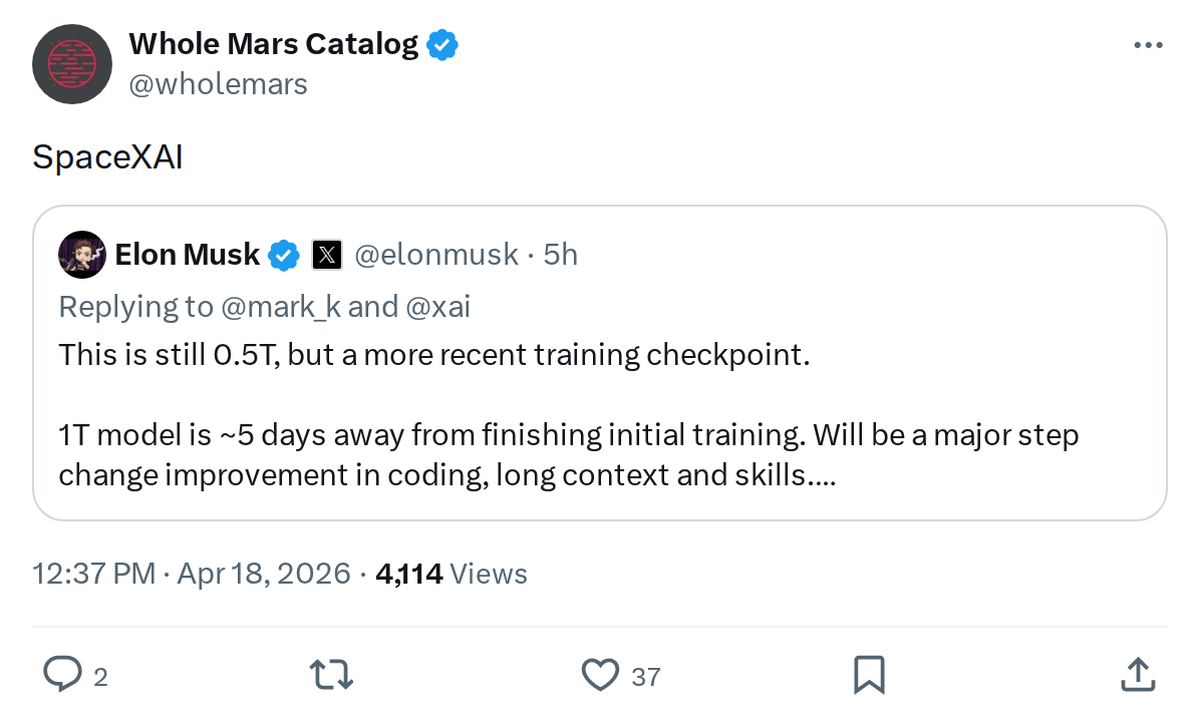
The News: Whole Mars Catalog flagged the term 'SpaceXAI' — the operating identity emerging from SpaceX's February 2026 acquisition of xAI — signaling that the combined entity is now a visible, unified force in the AI race.
Why It Matters: This isn't just a corporate rebrand. SpaceXAI represents a plan to move AI compute off Earth entirely — using Starship and a constellation of up to one million orbital satellites to build the world's largest solar-powered supercomputer in space.
Source: @wholemars on X

What Is SpaceXAI?
On February 2, 2026, SpaceX officially acquired xAI — Elon Musk's artificial intelligence company — in an all-stock deal. xAI shareholders exchanged their holdings for SpaceX equity, creating a combined entity with an estimated valuation of approximately $1.25 trillion (SpaceX at $1 trillion, xAI at $250 billion at the time of the transaction).
The term 'SpaceXAI' is now the shorthand for what that merger is becoming in practice: a vertically integrated innovation engine that combines rocket manufacturing, orbital infrastructure, Starlink's global internet network, and frontier AI development under one roof. When Whole Mars Catalog — one of the most plugged-in Tesla and SpaceX community voices — drops a single word like this, it's worth paying close attention.
📊 Key Figures
| Metric | Value | Context |
|---|---|---|
| Combined Valuation | ~$1.25 trillion | At time of deal close |
| Acquisition Date | Feb 2, 2026 | All-stock transaction |
| Orbital Satellite Target | Up to 1 million | FCC authorization requested |
| Target AI Compute Added | 100 GW / year | At 100 kW per ton of satellite |
| Starship Payload Capacity | 200 tons / flight | Target cadence: ~1 flight/hour |
| V3 Starlink Capacity Gain | 20x per launch | vs current Falcon V2 launches |
| Cost Efficiency Timeline | 2–3 years | Until space-based AI = lowest-cost compute |
Why Move AI to Space?
The core argument Musk has made publicly is straightforward: terrestrial data centers are hitting a wall. Power grids can't keep up. Cooling systems are becoming prohibitively expensive. Land near reliable energy sources is scarce. The next frontier for compute isn't a new chip fab in Arizona — it's orbit.
According to SpaceX's internal estimates, space-based AI compute is projected to become the lowest-cost method for generating compute within 2 to 3 years. The math is compelling: launch a million tons of satellites annually, each generating 100 kW of compute power per ton, and you add 100 gigawatts of AI capacity per year — solar-powered, continuously operational, and entirely outside the constraints of Earth's energy infrastructure.
To make that happen, SpaceX has filed a request with the FCC to authorize a constellation of up to one million satellites designed to function as orbital data centers. That's an order of magnitude beyond anything currently in orbit.
Starship Is the Critical Variable
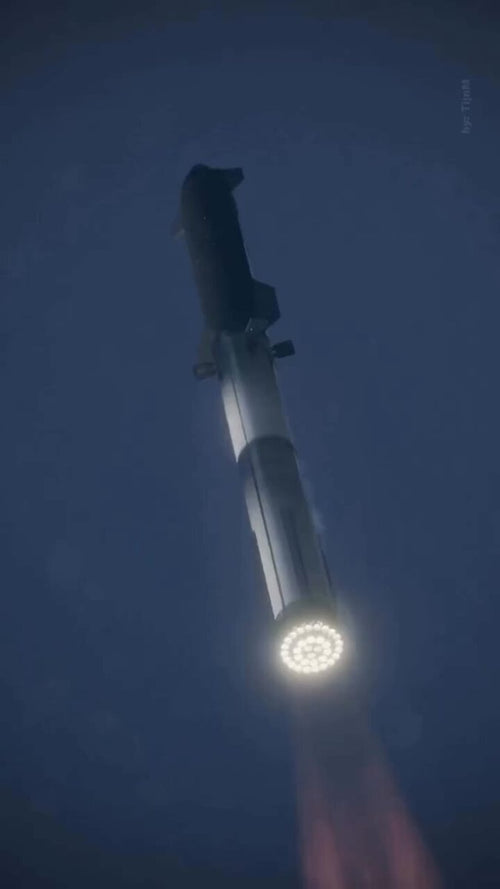
None of this works without Starship. The vehicle's 200-ton payload capacity per flight — and a target launch cadence of nearly one flight per hour — is what makes the economics viable. SpaceX plans to begin delivering the more powerful 'V3 Starlink' satellites and dedicated AI satellites to orbit later in 2026. Each V3 Starlink launch via Starship will add over 20 times the capacity of a current Falcon 9 launch carrying V2 Starlink satellites.
The leadership integration is already underway. As of March 5, 2026, Gwynne Shotwell — SpaceX's President and COO — is formally representing xAI, signaling that this isn't a loose partnership. It's a full operational merger at the executive level.
🔭 The BASENOR Take
Timeline: Acquisition closed February 2026. V3 Starlink and AI satellite deliveries targeted for late 2026. Cost parity with terrestrial compute projected within 2–3 years.
Impact Level: 🔴 High — This restructures how AI infrastructure is built at a civilizational scale.
Confidence: High — FCC filings, official acquisition records, and leadership changes are all documented.
Analysis: The 'SpaceXAI' label is more than branding. It represents a genuine strategic thesis: that the compute bottleneck constraining AI development is fundamentally an energy and real estate problem, and that space solves both. If Starship achieves even a fraction of its target launch cadence, the orbital compute capacity SpaceX could deploy would dwarf anything being built on the ground today. For Tesla owners, the downstream implications are significant — Grok, FSD training, and Optimus all run on AI infrastructure. A SpaceX-owned, orbital-scale compute layer feeding back into Tesla's AI stack is not a distant hypothetical. It's the stated roadmap. An IPO reportedly in the works for 2026 would make this bet accessible to public markets for the first time.
📰 Deep Dive
The timing of this signal matters. Whole Mars Catalog posting 'SpaceXAI' with a link — even as a brief, single-word post — suggests the concept is gaining enough traction in informed circles to warrant public attention. These kinds of posts from well-connected community accounts often precede broader media coverage by days or weeks.
What makes SpaceXAI structurally different from a typical tech acquisition is the vertical integration depth. Most AI companies buy compute from cloud providers. SpaceX is proposing to own the rockets that launch the satellites that generate the solar power that runs the compute that trains the models. Every layer of the stack — from orbital mechanics to transformer weights — would sit inside one corporate structure. That's an unprecedented concentration of AI infrastructure ownership.
The FCC filing for up to one million satellites is the detail that deserves the most scrutiny. The current Starlink constellation numbers in the thousands. Scaling to a million orbital assets — even over a decade — would require manufacturing, launch, and operational capabilities that don't yet exist at that scale. Starship's development trajectory is the single biggest variable determining whether SpaceXAI's compute ambitions are achievable on the timelines being discussed internally.
For the broader EV and autonomous vehicle industry, the implications extend beyond Tesla. If space-based AI compute becomes genuinely cost-competitive with terrestrial alternatives within three years as projected, it reshapes the economics of training large models — the kind that underpin next-generation FSD, robotics, and any AI-heavy product roadmap. The company that controls that infrastructure controls a meaningful lever over the entire AI supply chain. That's what 'SpaceXAI' is really about. For more on how this connects to SpaceX's broader trajectory, see our SpaceX coverage.
🚀 Following the Starship program? See every test flight, official outcome and the next launch window in our SpaceX Starship Tracker.
Sources & reporting notes
The links below identify the material source records used for this report.
- @wholemars on X (2026-04-18T04:37:40.000Z) — Direct source
Source links are preserved as published or accessed. See our editorial standards and corrections policy.
The BASENOR Editorial Desk covers Tesla, SpaceX, and related technology, curating reporting from primary sources — official accounts, regulatory filings, and software release data. Every article passes source-record and fact-checking review before publication. About the newsroom.
This report was curated by the BASENOR Editorial Desk from the sources listed above. Read our editorial standards or email editorial@basenor.com to report an error.