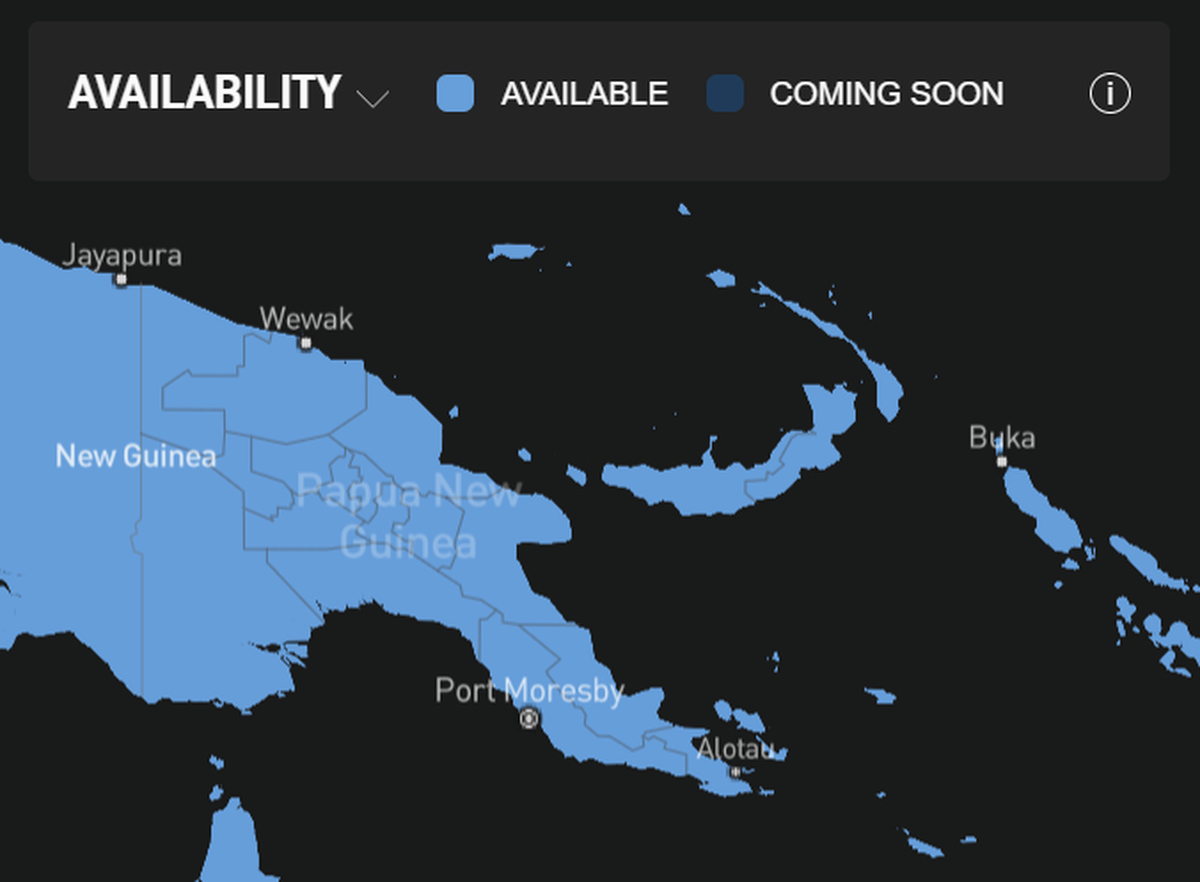
Starlink has officially switched on high-speed, low-latency satellite internet in Papua New Guinea — ending a regulatory saga that stretched more than two years and briefly resulted in SpaceX being ordered to shut down service entirely.

The path to this launch was anything but smooth. Papua New Guinea's Ombudsman Commission had blocked Starlink's operating license, and on December 11, 2025, the country's National Information and Communications Technology Authority (NICTA) instructed SpaceX to cease services. SpaceX complied five days later, cutting off users who had been relying on the connection. The turning point came on April 24, 2026, when a PNG National Court ruled that the Ombudsman Commission had exceeded its powers in blocking the license — clearing the way for NICTA to formally grant Starlink Internet Services (PNG) Limited both operating and spectrum authorizations covering KA and KU band satellite connectivity. Acting ICT Minister Peter Tsiamalili Jr. confirmed the government's approval on April 30, and the service went live the following day.
Prime Minister James Marape welcomed the court's decision, pointing to the country's urgent connectivity needs — particularly in the aftermath of recent natural disasters that left remote communities cut off from communications. PNG's geography, with thousands of islands and mountainous terrain, makes terrestrial broadband infrastructure expensive and slow to deploy, which is precisely the gap low-earth-orbit satellite service is built to fill. Starlink's operations will be subject to regulatory oversight covering consumer protection, national security compliance, and support for emergency services.
For a nation where reliable internet has long been a privilege of urban centers, the relaunch marks a meaningful shift — though how quickly hardware reaches rural communities will determine whether the promise translates into real-world impact.
Sources & reporting notes
The links below identify the material source records used for this report.
- @Starlink on X (2026-05-01T21:39:34.000Z) — Direct source
Source links are preserved as published or accessed. See our editorial standards and corrections policy.
The BASENOR Editorial Desk covers Tesla, SpaceX, and related technology, curating reporting from primary sources — official accounts, regulatory filings, and software release data. Every article passes source-record and fact-checking review before publication. About the newsroom.
This report was curated by the BASENOR Editorial Desk from the sources listed above. Read our editorial standards or email editorial@basenor.com to report an error.