📌 UPDATE — April 24, 2026 🔍
SpaceX has released official footage of the full 33-engine static fire, and new details have emerged about the road to getting there. The earlier 10-engine static fire attempts were aborted due to engine swaps — not a clean run as previously implied — and the 33-engine test itself was initially aborted due to a pad issue before ultimately succeeding. This transparency from SpaceX sheds light on the iterative troubleshooting behind the milestone. The confirmed use of next-generation Raptor 3 engines across all 33 positions on Booster V3 marks a first for the program, and the footage released is being widely described as stunning.


30-Second Brief
The News: Super Heavy Booster 19 successfully completed a full-duration static fire of all 33 Raptor 3 engines on Pad 2 at Starbase, Texas, and is now returning to Mega Bay 1 ahead of Starship Flight 12.
Why It Matters: This was the final major ground test milestone before Flight 12 — the first-ever integrated flight of SpaceX's next-generation V3 hardware. A May 2026 launch window is now firmly in sight.
Source: @NASASpaceflight on X
Starship Flight 12: Booster 19 Clears Full Static Fire — All 33 Raptor 3 Engines Fired
SpaceX has cleared the last major ground test hurdle for Starship Flight 12. Super Heavy Booster 19 — the first Block 3 (V3) booster ever built — fired all 33 Raptor 3 engines simultaneously in a full-duration static fire on Pad 2 at Starbase, Texas. The booster is now rolling back to Mega Bay 1, and a May 2026 launch window is no longer speculative. It's the plan.

📊 Key Figures
| Metric | Value | Context |
|---|---|---|
| Engines Fired | 33 | All Raptor 3 — first time on a V3 booster |
| Combined Thrust | ~9,240 tons | ~280 tons per Raptor 3 engine |
| Static Fire Date | April 15–16, 2026 | Pad 2, Starbase, Texas |
| Previous Test | March 16, 2026 | 10-engine test, ended early (ground systems issue) |
| Target Launch Window | Early–Mid May 2026 | Elon Musk: ~4–6 weeks away (early April) |
| Booster Generation | Block 3 (V3) | First V3 booster to reach this milestone |
What Just Happened — And Why It's a Big Deal
Static fire tests are SpaceX's final hardware verification before committing to a launch attempt. For Booster 19, this wasn't a routine check — it was the first time all 33 Raptor 3 engines on a V3 Super Heavy booster fired simultaneously, generating a combined thrust of approximately 9,240 tons. That's a number that has no real precedent in spaceflight history.
The road to this test wasn't entirely smooth. A 10-engine static fire on March 16 ended prematurely due to a ground systems issue — not a booster problem, but a reminder that even the support infrastructure for Starship is operating at the edge of what's been done before. The April full-duration test cleared that concern definitively.
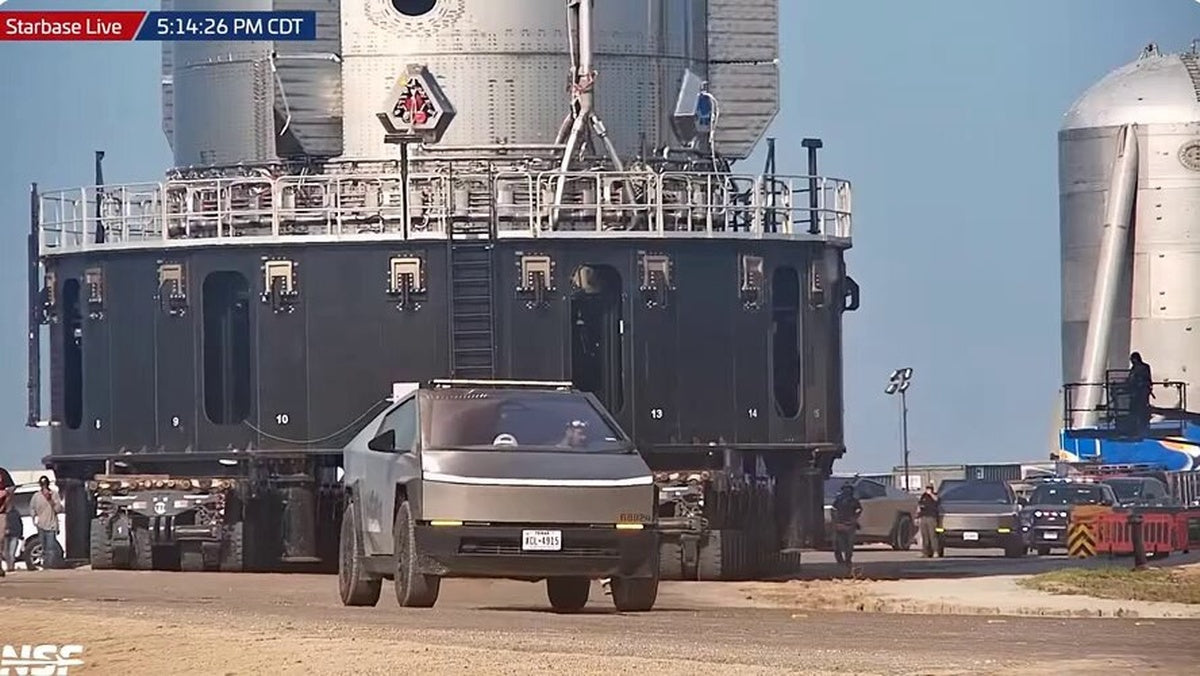
With Booster 19 now heading back to Mega Bay 1, the next steps are integration with Ship 39 — the V3 upper stage — followed by rollout to the launch mount and final pre-launch checks. Elon Musk stated in early April that Flight 12 was approximately 4 to 6 weeks out, which puts the window squarely in early-to-mid May 2026.
🔭 The BASENOR Take
Timeline: Static fire complete → Mega Bay 1 integration with Ship 39 → Rollout to launch mount → Flight 12 attempt (target: early–mid May 2026)
Impact Level: 🔴 High — This is the final ground test gate. Barring regulatory delays or a hardware anomaly during integration, Flight 12 is go.
Confidence Rating: High. The full-duration, all-engine static fire is the most demanding pre-flight test in SpaceX's Starship campaign. Passing it cleanly on a brand-new booster generation is a strong signal.
Flight 12 carries more weight than the number implies. It's not just another test flight — it's the debut of the entire V3 hardware stack. Both Booster 19 and Ship 39 are Block 3 vehicles, featuring redesigned structures, upgraded Raptor 3 engines, and refinements informed by the lessons of Flights 7 through 11. A successful Flight 12 would validate the V3 architecture end-to-end for the first time.
The significance for SpaceX's broader program — including NASA's Artemis lunar lander contract, which relies on a Starship variant — is hard to overstate. Every successful test flight accelerates the timeline toward an operational vehicle. For our SpaceX coverage, this is one of the most consequential milestones of 2026 so far.
📰 Deep Dive
The jump from a 10-engine partial test to a 33-engine full-duration static fire in roughly a month reflects the pace SpaceX has been able to maintain at Starbase. The March 16 test's early shutdown was attributed to ground systems — the kind of infrastructure-side issue that, while frustrating, doesn't require hardware rework on the booster itself. That distinction matters: it meant Booster 19 could proceed to the full test without major delays.
Raptor 3 represents a significant leap over its predecessors. SpaceX has described it as a cleaner, more manufacturable design — fewer external components, higher chamber pressure, and improved reliability targets. Firing 33 of them simultaneously on a V3 booster is a validation not just of the engines individually, but of the entire propellant feed system, ignition sequencing, and structural load paths under maximum thrust conditions.
The return to Mega Bay 1 is the logical next step. Integration of the booster with Ship 39 will be followed by a full stack rollout to the orbital launch mount — a process that has become increasingly practiced at Starbase but still demands precision at every step. Once stacked, a wet dress rehearsal or additional checks may follow before the launch attempt is formally scheduled.
What Flight 12 ultimately demonstrates — or doesn't — will shape the cadence of Starship development for the rest of 2026. SpaceX's stated goal is to reach a high launch frequency with Starship, and each successful integrated flight test is a step toward that operational reality. The static fire clears the last technical gate. The clock is now running toward May.
🚀 Following the Starship program? See every test flight, official outcome and the next launch window in our SpaceX Starship Tracker.
Sources & reporting notes
The links below identify the material source records used for this report.
- @NASASpaceflight on X (2026-04-17T22:16:01.000Z) — Direct source
- @SawyerMerritt on X (2026-04-24T22:36:00.000Z) — Direct source
- @NASASpaceflight on X (2026-04-24T22:46:30.000Z) — Direct source
Source links are preserved as published or accessed. See our editorial standards and corrections policy.
The BASENOR Editorial Desk covers Tesla, SpaceX, and related technology, curating reporting from primary sources — official accounts, regulatory filings, and software release data. Every article passes source-record and fact-checking review before publication. About the newsroom.
This report was curated by the BASENOR Editorial Desk from the sources listed above. Read our editorial standards or email editorial@basenor.com to report an error.