📌 UPDATE — July 18, 2026
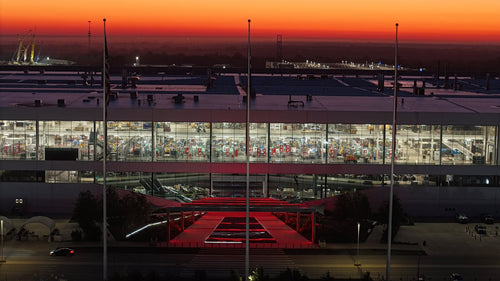
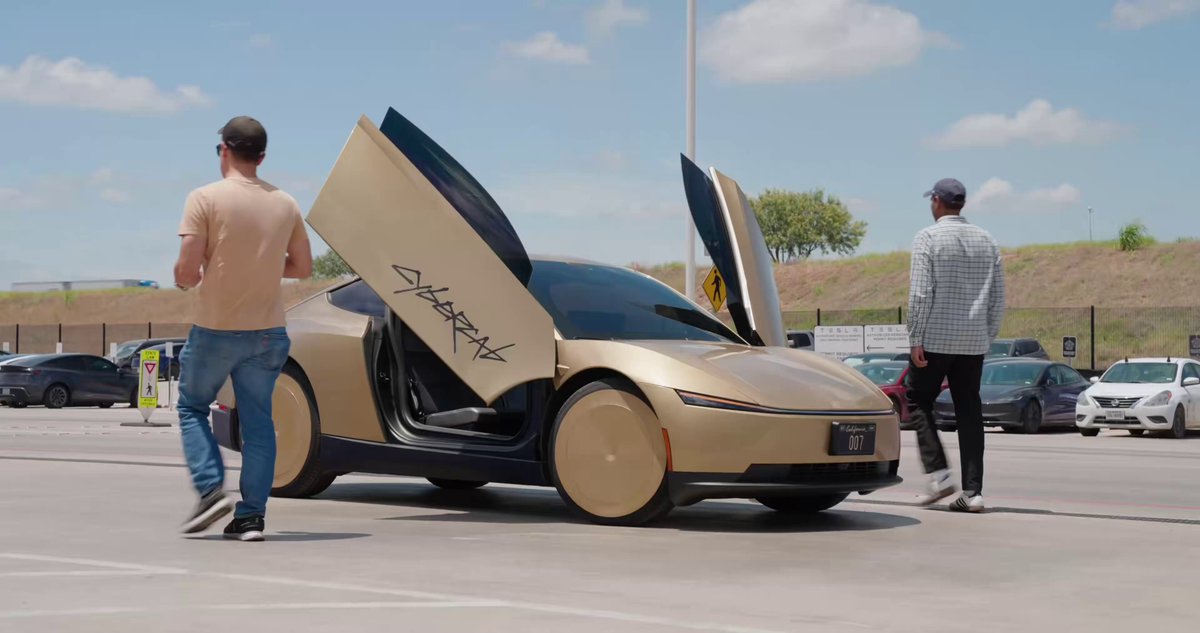
A record 245 Cybercabs were spotted at Giga Texas today, according to drone footage shared by Airwave and reported by @SawyerMerritt. The sighting marks a significant jump in visible Cybercab inventory on-site, suggesting Tesla's production ramp is accelerating well beyond early testing volumes. The distinctive gold-colored vehicles are now visibly populating the Giga Texas lot in large numbers, reinforcing confidence in Tesla's timeline for a broader robotaxi rollout.

📌 UPDATE — July 13, 2026
The Cybercab rollout is accelerating on multiple fronts. Aerial observer Joe Tegtmeyer confirmed the employee shuttle service at GigaTexas is now actively running, with the operations center featuring dedicated covered maintenance bays — including a single-post lift for wheel/tire work and under-car inspections. Separately, a fleet of 100 Cybercabs was spotted at the Houston Cypress Hempstead Center, suggesting a major pre-deployment staging operation in the greater Houston area. Most notably, a Cybercab was photographed in Hampton, New Hampshire — marking the vehicle's first confirmed appearance in the Northeast U.S., signaling that testing is expanding well beyond Texas.

🔍 ~100 Cybercabs staged at Houston Cypress Hempstead Center — @TeslaNewswire

First Cybercab sighting in New Hampshire (Hampton) — @TeslaNewswire
📌 UPDATE — July 11, 2026
Elon Musk posted a cryptic video of the Tesla Cybercab on X, captioning it "Cybercab at a fork in the road" — hinting at a significant strategic or developmental decision point for the autonomous robotaxi program. The post has already racked up over 545,000 views, suggesting the phrase may signal a major announcement or directional shift is imminent. While Musk offered no further context, the timing — as driverless employee rides are actively underway at GigaTexas — adds weight to speculation that a public rollout timeline or expanded deployment decision could be near. 🔍

Tesla has quietly crossed a line that no major automaker has crossed before. As of July 10, 2026, Cybercabs — the two-seat, purpose-built robotaxis with no steering wheel and no pedals — are now giving rides to Tesla employees at Giga Texas. The company confirmed the milestone in a post on X, a move that shifts the Cybercab program from closed-track engineering runs to real internal ride-hailing operations. For a vehicle that has no manual controls of any kind, this is the moment the program becomes real.

Why This Milestone Matters
Every previous public sighting of a Cybercab on the move has come with an asterisk. Engineering tests on Austin public roads that began around June 29-30, 2026 carried a human safety monitor in the passenger seat, according to reporting from Teslarati and Electrek. Fully autonomous laps on the Giga Texas test track — including simulated passenger pickup and drop-off — have been documented, but those were internal validation runs, not ride-hailing.
Employee rides at Giga Texas are a different category. They are the first time real passengers, on a repeatable schedule, are stepping into a production Cybercab and being moved from point A to point B by software alone. There is no steering wheel to grab. There are no pedals to stomp. There is no rear window, no side mirrors, and the butterfly doors have no external handles. Once you are in, you are in the software's hands. That is precisely the value proposition Tesla has been selling since the "We, Robot" reveal — and it is the value proposition that must be proven before the vehicle can carry paying customers.
How We Got Here
The pace of the Cybercab program in 2026 has been faster than most observers expected. The first production Cybercab rolled off the Giga Texas line on February 17, 2026, according to Electrek and Teslarati. EPA documents filed in May and certified through June 2026 locked in the vehicle's core specifications. By late June, engineering test units were operating on Austin public roads with safety monitors. By early July, industry trackers had counted more than 100 Cybercabs staged in the outbound lots at Giga Texas.
The employee ride program is the logical next step. It gives Tesla a controlled but realistic operational environment: a large campus, mixed traffic with delivery trucks and worker vehicles, real pickup requests, and a passenger population that has signed liability paperwork and can provide detailed feedback. It is the same playbook Waymo ran with employees in Chandler, Arizona before opening public rides — just compressed into a much tighter timeline and executed on a vehicle with no manual override.
Key Cybercab Specifications
Based on EPA filings certified in May and June 2026, alongside prior Tesla statements:
| Spec | Value |
|---|---|
| Curb Weight | 3,113 lbs |
| Motor | Single AC 3-phase PM, 219 hp / 163 kW, front-wheel drive |
| Battery | ~47.6 kWh (146 Ah) |
| EPA Range | ~280 miles (lab result: 418 miles) |
| Efficiency | 165 Wh/mile |
| Compute | AI4+ (32-64GB RAM); AI5 anticipated mid-2027 |
| Manual Controls | None — no steering wheel, no pedals |
| Target Price | $25,000-$30,000, per Musk statements |
What Tesla Owners Should Take From This
If you already drive a Tesla, the Cybercab program is not a distant sci-fi project — it is the accelerator pedal for the FSD stack you already use. Every mile a driverless Cybercab logs at Giga Texas feeds validation data back into the same neural nets that ship in Model 3, Model Y, Model S, and Model X vehicles running FSD. The AI4+ compute in the Cybercab is a direct sibling to the hardware already deployed in the fleet, meaning improvements Tesla proves out in the no-wheel-no-pedals environment can be translated to consumer FSD updates.
The second-order implication is financial. Tesla has repeatedly framed the robotaxi network as the single largest driver of long-term margin expansion. Employee rides at Giga Texas are the first operational checkpoint that has to be passed before that revenue line becomes anything more than a slide in an investor deck.
What to Watch Next
Three signals will determine how fast this program scales:
- Ride volume and incident reports. Watch for leaks from Giga Texas employees describing how the rides actually feel — pickup wait times, unprotected left turns, pedestrian handling in the parking lots.
- Expansion beyond Giga Texas. The next logical step is employee rides at other Tesla facilities (Fremont, Gigafactory Nevada) or a public pilot in Austin using the same no-controls vehicle rather than the Model Y robotaxis currently operating there with safety monitors.
- Regulatory posture. A vehicle with no steering wheel is not federally certified under standard FMVSS crash-protection rules. Tesla will need either an NHTSA exemption or a rule change before Cybercabs can carry non-employees on public roads at scale.
For now, the story is simple: Tesla has flipped the switch from "testing a driverless vehicle" to "using a driverless vehicle." The gap between those two verbs is where the entire robotaxi thesis lives, and it just got a lot smaller.
🚕 Following the Robotaxi rollout? See every operating city, launch date and announced market in our Tesla Robotaxi Tracker.
Related Gear
Gear up your Tesla with tested, custom-fit BASENOR accessories — shop Tesla accessories →
Sources & reporting notes
The links below identify the material source records used for this report.
- @TeslaNewswire on X (2026-07-11T06:49:07.000Z) — Direct source
- @elonmusk on X (2026-07-11T10:32:43.000Z) — Direct source
- @JoeTegtmeyer on X (2026-07-13T16:20:47.000Z) — Direct source
- @JoeTegtmeyer on X (2026-07-13T16:18:18.000Z) — Direct source
- @TeslaNewswire on X (2026-07-13T16:32:11.000Z) — Direct source
- @TeslaNewswire on X (2026-07-13T16:03:26.000Z) — Direct source
Source links are preserved as published or accessed. See our editorial standards and corrections policy.
The BASENOR Editorial Desk covers Tesla, SpaceX, and related technology, curating reporting from primary sources — official accounts, regulatory filings, and software release data. Every article passes source-record and fact-checking review before publication. About the newsroom.
This report was curated by the BASENOR Editorial Desk from the sources listed above. Read our editorial standards or email editorial@basenor.com to report an error.