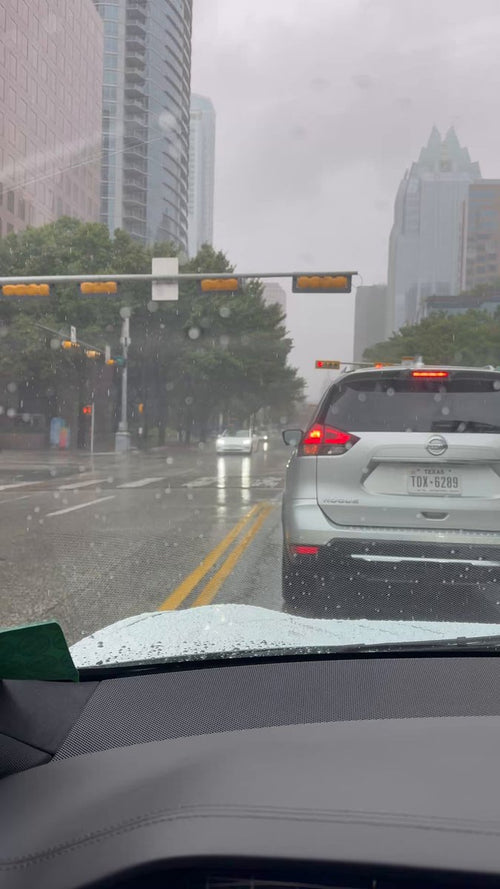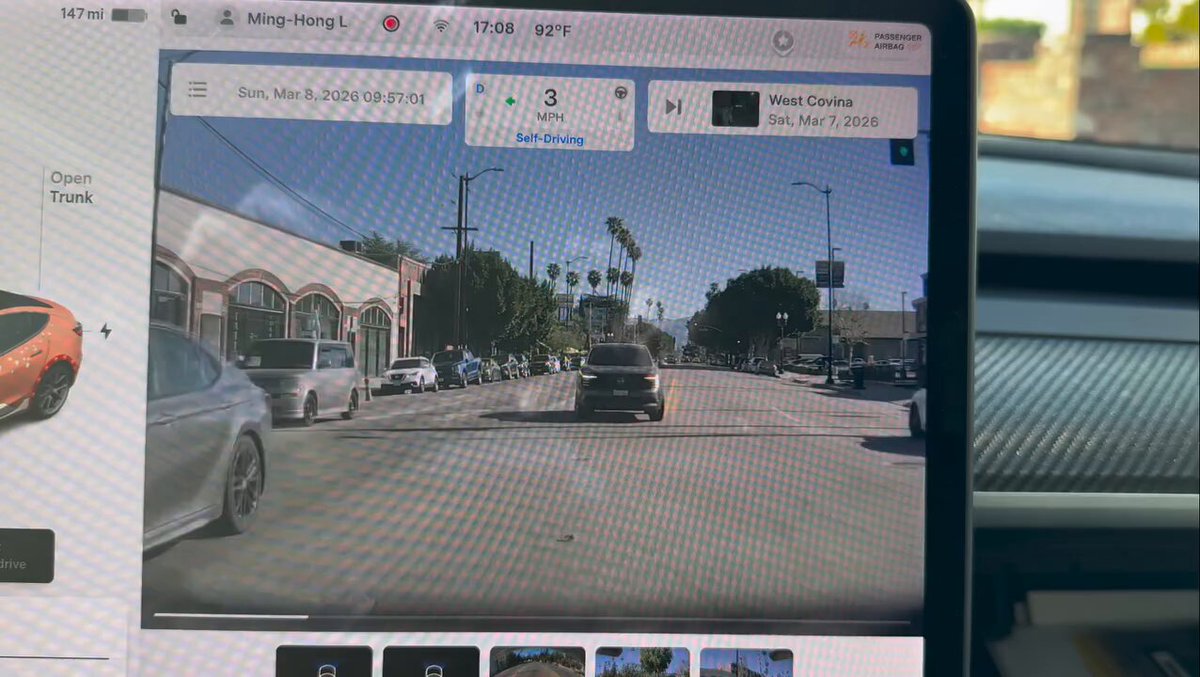
The News: Dashcam footage shows a Tesla Model 3 operating on Full Self-Driving (FSD) mode driving straight through lowered railroad crossing barriers near West Covina, California on March 8, 2026.
Why It Matters: The incident — which the FSD system appeared to handle without slowing or stopping — occurred on the same day as an NHTSA deadline for Tesla to submit data on FSD railroad crossing failures, adding significant regulatory pressure to an already open federal investigation.
Source: @FredLambert on X
What the Dashcam Footage Shows
On Sunday, March 8, 2026, a Tesla Model 3 driver named Laushi Liu captured what is now one of the most closely scrutinized FSD incidents in recent memory. The dashcam video, originally posted to Threads, shows the vehicle traveling at 23 mph toward a railroad crossing near West Covina, California — with the crossing barriers already fully lowered.
According to the footage and background reporting, the FSD system showed no visible signs of detecting the barriers or initiating a slowdown. The car drove directly through them. Dashcam data indicates the brakes were pressed around the moment of impact, but not in time to prevent the vehicle from crossing the barrier threshold.

📊 Key Figures
| Metric | Detail |
|---|---|
| Vehicle Speed | 23 mph at time of incident |
| Location | West Covina, California |
| Date of Incident | Sunday, March 8, 2026 |
| FSD Version | Awaiting confirmation from owner |
| NHTSA Investigation Opened | October 10, 2025 |
| Known Social Media Reports (NBC News) | 40+ FSD railroad crossing incidents documented |
The Regulatory Context: Worst Possible Timing
This incident did not happen in a vacuum. March 8, 2026 — the same day the video was recorded — was the NHTSA's deadline for Tesla to submit critical data as part of its ongoing investigation into FSD traffic safety violations. That investigation, opened by the NHTSA's Office of Defects Investigation (ODI) on October 10, 2025, specifically includes railroad crossing approach failures alongside red light running and dangerous lane changes.
The regulatory pressure around this issue has been building for months. In late September 2025, Senators Edward J. Markey and Richard Blumenthal formally urged the NHTSA to investigate FSD's railroad crossing behavior, citing the risk of catastrophic crashes. NBC News, reporting in September 2025, found over 40 documented incidents of FSD mishaps at railroad crossings on social media, and interviewed six Tesla drivers — four of whom provided video evidence of their own near-misses.
⚠️ NHTSA Investigation Timeline
September 17, 2025 — NHTSA confirms awareness of FSD railroad crossing incidents; begins communication with Tesla.
Late September 2025 — Senators Markey and Blumenthal formally urge NHTSA to investigate FSD railroad crossing failures.
October 10, 2025 — NHTSA ODI opens formal investigation into FSD traffic violations, including railroad crossings.
March 8, 2026 — NHTSA data submission deadline for Tesla. Same day as the West Covina incident.
🔭 The BASENOR Take
| Timeline | Active federal investigation; regulatory response likely within weeks to months |
| Impact Level | HIGH — Potential for forced FSD software update or usage restrictions |
| Confidence | High — Incident confirmed by dashcam footage; regulatory context verified |
| FSD Classification | Level 2 — driver supervision required at all times |
The core issue here isn't just one incident — it's a pattern. With 40+ social media reports, multiple videos, and now a formal federal investigation, the railroad crossing problem is no longer an edge case that can be attributed to unusual road markings or sensor occlusion. The West Covina footage is particularly damaging because the barriers were already fully down, which represents one of the clearest possible signals a vehicle should stop for.
FSD is a Level 2 system, meaning Tesla's legal and technical position is that the driver is responsible for intervention at all times. That framing will be tested hard as regulators review this latest footage alongside the data Tesla was required to submit on the same day it was recorded. Whether this accelerates a mandatory software patch, usage restrictions, or deeper recalls will depend heavily on what Tesla's submitted data shows about the scope of the problem across its fleet.
For owners using FSD near railroad crossings: the system's behavior in this scenario is demonstrably inconsistent. Until Tesla issues an update specifically addressing this failure mode, treating FSD as unreliable at railroad crossings — and being prepared to intervene immediately — is the only responsible approach. For more on how FSD handles complex road scenarios, see our FSD coverage.
📰 Deep Dive
What makes this incident stand out from previous FSD railroad crossing reports is the timing and visibility. Posting to Threads rather than X gave the video a different distribution path, but it spread quickly once picked up by automotive journalists. The fact that the specific FSD version running during the incident has not yet been confirmed matters more than it might seem: if this occurred on a recent build, it signals the problem persists despite months of regulatory scrutiny. If it was an older version, Tesla will likely point to subsequent updates — though that argument becomes harder to sustain when the NHTSA investigation is still open.
The driver's partial brake input captured on dashcam is a detail worth watching as this story develops. It suggests some level of awareness and reaction, but the timing was insufficient. This is precisely the scenario Tesla's own safety guidelines are designed to address — FSD requires constant attention and a hand near the wheel — yet the footage illustrates how quickly a Level 2 system can place a driver in a position where reaction time runs out.
Regulators now have fresh, high-profile footage arriving on the exact day they set a data deadline. That is not a coincidence that will be ignored in Washington. The coming weeks will likely determine whether the NHTSA moves toward a formal recall, a software mandate, or additional data requests. Tesla owners who regularly use FSD on routes that cross railroad tracks should monitor official communications closely and be ready to adjust their usage habits if guidance changes.
Related Gear
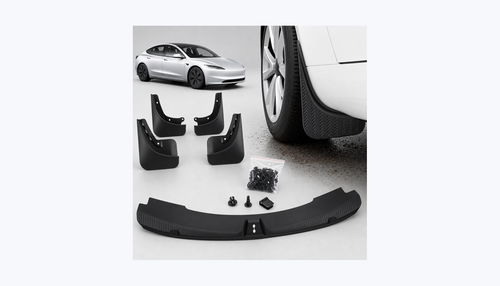
Gear up your Model 3 with tested, custom-fit BASENOR accessories — shop Model 3 accessories →
Sources & reporting notes
The links below identify the material source records used for this report.
- @FredLambert on X (2026-03-09T14:44:52.000Z) — Direct source
Source links are preserved as published or accessed. See our editorial standards and corrections policy.
The BASENOR Editorial Desk covers Tesla, SpaceX, and related technology, curating reporting from primary sources — official accounts, regulatory filings, and software release data. Every article passes source-record and fact-checking review before publication. About the newsroom.
This report was curated by the BASENOR Editorial Desk from the sources listed above. Read our editorial standards or email editorial@basenor.com to report an error.