📌 UPDATE — July 17, 2026
Tesla's FSD (Supervised) has now surpassed 12 billion miles driven globally — a significant jump from the 8 billion miles cited when this article was first published. Tesla owners are collectively logging approximately 27 million miles (~43 million km) per day with FSD active, underscoring the system's rapid real-world adoption. For senior drivers in particular, this expanding dataset continues to strengthen the safety case: more miles mean more edge cases learned, and a more reliable co-pilot on the road.

📌 UPDATE — July 17, 2026
Tesla's Full Self-Driving system has surpassed 12 billion miles traveled — a significant jump from the 8 billion miles cited when this article was first published. Of those 12 billion miles, more than 4.5 billion were logged on complex city streets, the most demanding real-world driving environment. For senior drivers relying on FSD, this expanding dataset translates directly into a more capable and refined system navigating the unpredictable conditions of everyday urban life.

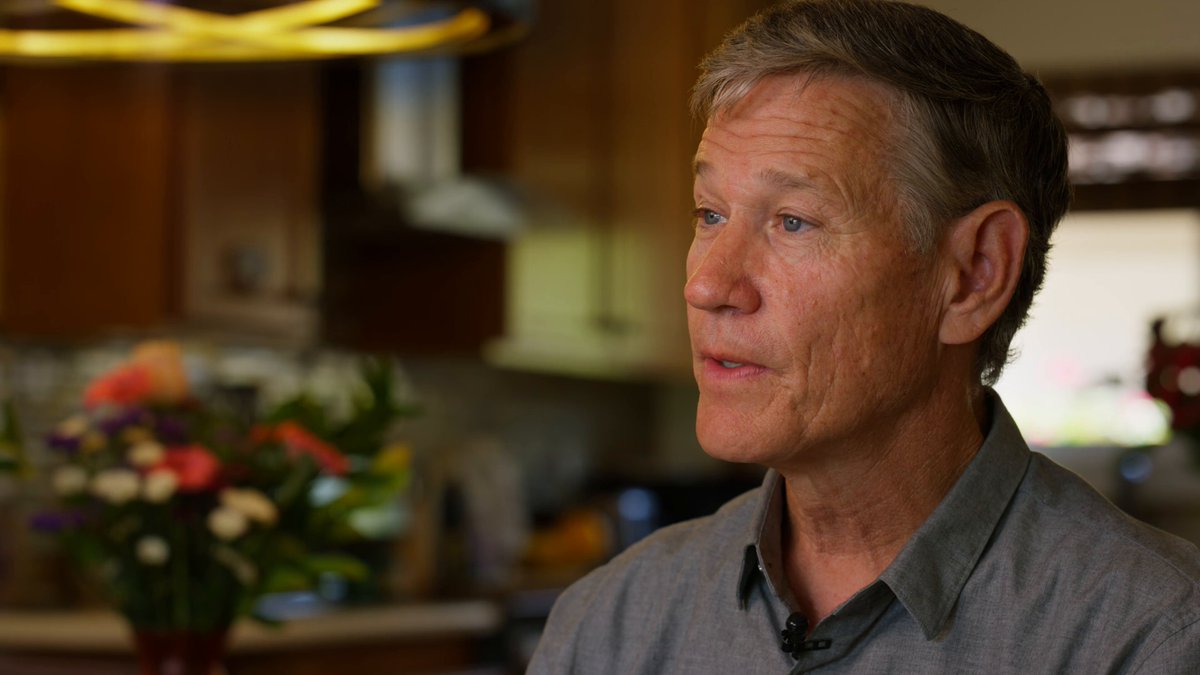
Elon Musk pointed to one of the most underappreciated use cases for Tesla's self-driving technology this week: giving senior citizens a safer, more independent way to get around. The comment, brief as it was, touches on a demographic challenge that no incremental car safety feature has fully solved — and where FSD's capabilities may matter most.

Why Seniors Are the Clearest FSD Beneficiary
For most Tesla owners, FSD is a convenience — a way to reduce highway fatigue or navigate stop-and-go traffic with less effort. For older drivers, the calculus is different. Reaction times slow with age, night vision deteriorates, and the cognitive load of dense urban driving increases. Many seniors face a binary choice: keep driving with elevated risk, or give up the keys entirely and lose independence.
FSD Supervised doesn't eliminate that tension, but it meaningfully shifts it. The system handles lane changes, navigates intersections, and responds to hazards faster than a human driver can. According to Tesla's own safety data, vehicles with FSD Supervised engaged record one major collision every 5,300,676 miles — approximately 8 times better than the U.S. average of one collision every 660,164 miles. That gap is significant for any driver, but for someone whose reflexes are no longer at their peak, it could be the difference between staying mobile and staying home.
Tesla Has Been Building Toward This
Musk's comment isn't an isolated observation — it reflects a deliberate product direction. In December 2025, he confirmed that the upcoming Model 2 is being designed with senior citizens as a core user group, with particular attention to ease of entry and exit and a simplified instrument layout. That's a notable admission: Tesla is explicitly thinking about accessibility as a product requirement, not an afterthought.
In June 2026, Tesla North America ran a campaign encouraging owners to demonstrate FSD Supervised to their parents or grandparents, a direct push to expand adoption among older drivers who might not have considered the technology on their own. The framing was practical — show them, don't just tell them.
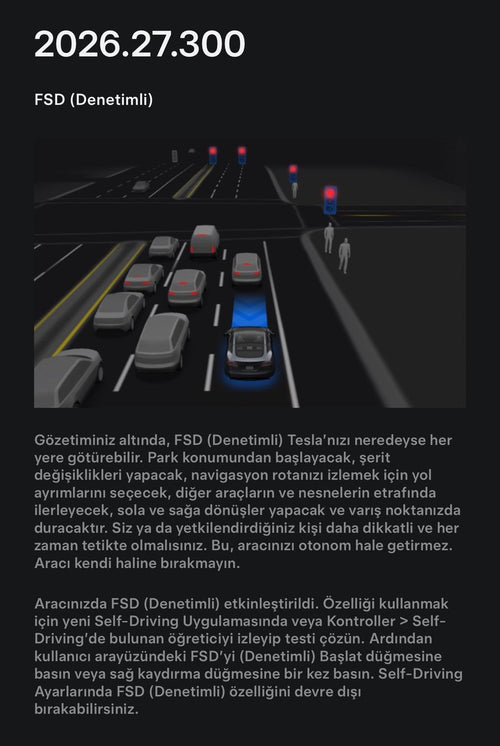
The technology itself has continued to mature. FSD Supervised v14.3.3, rolling out as of late May 2026, includes a rewritten AI compiler, an improved neural network vision encoder, and a reported 20% faster reaction time compared to prior versions. Faster reaction time is precisely the capability gap that matters most for senior drivers.
The Subscription Question
One friction point worth noting: Tesla moved FSD to a subscription-only model in February 2026, priced at $99 per month. For seniors on fixed incomes, that's a recurring cost that may limit adoption even among those who would benefit most. It's a tension Tesla hasn't publicly addressed — the demographic most likely to gain safety value from FSD is also among the most price-sensitive.
Whether Tesla adjusts pricing or introduces a reduced tier for accessibility-focused use cases remains an open question. The Model 2's senior-friendly design signals intent, but affordability of the software layer will determine how many older drivers actually benefit.
A Use Case That Deserves More Attention
The broader FSD conversation tends to center on full autonomy timelines, regulatory hurdles, and competitive positioning. Musk's post is a reminder that the technology already delivering measurable value today — 8 billion cumulative miles of FSD Supervised driving as of February 2026 — has a human story that rarely gets told. Safer mobility for aging populations isn't a niche application. It's one of the most consequential problems autonomous vehicle technology could solve, and Tesla is closer to solving it than the mainstream conversation acknowledges.
For owners with elderly parents or grandparents still behind the wheel, the practical implication is straightforward: a test drive with FSD Supervised engaged may be more persuasive than any safety statistic. For our FSD coverage, the senior mobility angle is one we'll be watching closely as the Model 2 approaches launch.
Related Gear
Gear up your Tesla with tested, custom-fit BASENOR accessories — shop Tesla accessories →
📋 Tracking Tesla software? See every firmware, FSD and app version in one place in our Tesla Software Update Tracker.
Sources & reporting notes
The links below identify the material source records used for this report.
- @elonmusk on X (2026-07-11T20:17:06.000Z) — Direct source
Source links are preserved as published or accessed. See our editorial standards and corrections policy.
The BASENOR Editorial Desk covers Tesla, SpaceX, and related technology, curating reporting from primary sources — official accounts, regulatory filings, and software release data. Every article passes source-record and fact-checking review before publication. About the newsroom.
This report was curated by the BASENOR Editorial Desk from the sources listed above. Read our editorial standards or email editorial@basenor.com to report an error.