
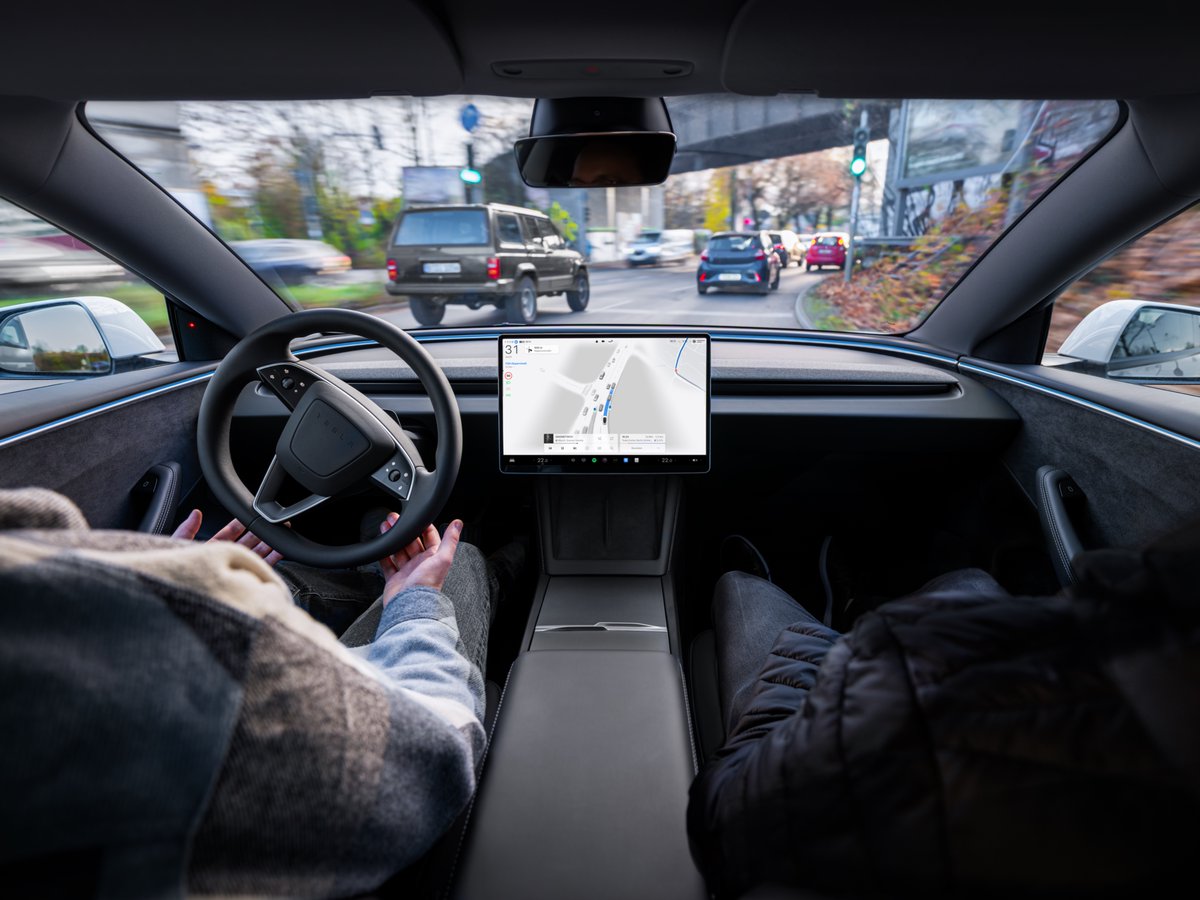
⚡ 30-Second Brief
The News: Tesla has officially launched Full Self-Driving (Supervised) in the Netherlands, making it the first EU country with regulatory approval for the advanced driver assistance system.
Why It Matters: Dutch Tesla owners gain immediate access to FSD (Supervised), while this regulatory breakthrough could accelerate approval across all EU member states through mutual recognition provisions.
Source: @teslaeurope on X
🚨 What Just Happened
Tesla Europe's two-word announcement — "Now in Netherlands 🇳🇱" — confirms what regulatory watchers have anticipated since December: Full Self-Driving (Supervised) is officially live in the Netherlands, marking Tesla's first approved deployment of the advanced driver assistance system in the European Union.

The Dutch road authority RDW granted approval in February 2026 using Article 39 of EU regulations — a provision that allows individual member states to approve advanced systems through exemptions. This marks a significant shift from Tesla's years-long struggle to bring FSD to European markets, where regulatory frameworks differ substantially from the U.S. approach.
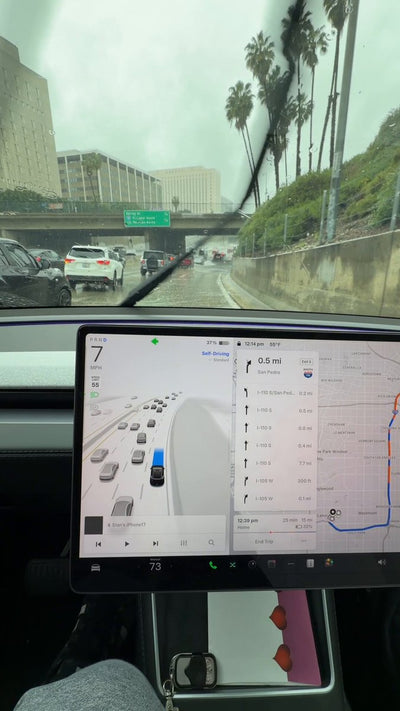
For Dutch owners, this means immediate access to the same FSD capabilities available in North America: highway navigation, automatic lane changes, traffic light and stop sign control, and city street driving assistance — all under driver supervision.
📊 Key Figures
| Metric | Detail | Context |
|---|---|---|
| Approval Date | February 2026 | First EU regulatory approval for Tesla FSD |
| Regulatory Path | Article 39 Exemption | Allows other EU states to recognize approval |
| Campaign Launch | December 2, 2025 | Tesla's "Future Holidays" ride-along events began |
| Market Position | 1st EU Country | Netherlands leads European FSD rollout |
🔭 The BASENOR Take
📅 Timeline: Live Now — Dutch owners can activate FSD (Supervised) immediately through vehicle settings.
📊 Impact Level: HIGH — This approval creates a precedent for EU-wide expansion through mutual recognition provisions.
🎯 Confidence: 95% — The announcement comes from Tesla's official European account and aligns with December regulatory signals from RDW.
Why the Netherlands matters beyond Dutch borders: Article 39 exemptions can be recognized by other EU member states, potentially creating a domino effect for approvals across Germany, France, Belgium, and beyond. Tesla explicitly noted this mutual recognition pathway when discussing the Dutch approval process.
The strategic timing is notable. Tesla began its European FSD push with "Future Holidays" ride-along events in December 2025, allowing prospective buyers and regulators to experience the technology firsthand. This experiential approach appears to have influenced RDW's approval decision — a playbook Tesla could replicate in other EU markets.
The competitive landscape shifts: While European automakers have focused on Level 2+ systems designed specifically for EU regulations, Tesla's approach of seeking regulatory approval for its North American-proven system creates a different value proposition. Dutch owners now have access to a system with billions of real-world miles of training data, versus domestically-developed alternatives with more limited deployment scope.
What comes next: Watch for similar announcements in Belgium, Germany, and Nordic countries where Tesla has strong market penetration. The Article 39 pathway means each additional approval strengthens the case for mutual recognition across the EU's 27 member states.
🌍 European Market Context
The Netherlands represents a strategically important market for Tesla's European operations. The country has historically been among Tesla's strongest European markets, though recent sales data shows increased competition. In October 2025, Tesla's Dutch sales dropped 50% year-over-year, highlighting the urgency of differentiating features like FSD to maintain market position.
The timing also coincides with Tesla's broader product expansion in the Netherlands. The company recently introduced the Model 3 Standard at €36,990 and launched the refreshed Model Y Standard from €39,990, creating a more accessible entry point for Dutch buyers. FSD (Supervised) availability adds a premium feature that justifies higher-trim purchases.
⚙️ Technical Implementation
According to Tesla's previous statements, the Dutch FSD deployment includes the full feature set available in North America, operating under "supervised" designation — meaning drivers must remain attentive and ready to take control at any time. The system is expected to leverage Tesla's Vision-based approach rather than relying on high-definition maps, allowing it to navigate Dutch roads it has never encountered before.
The regulatory approval process involved demonstrating the system's safety performance to RDW standards, which differ from U.S. NHTSA requirements but align with broader EU safety frameworks. This suggests Tesla has developed region-specific validation protocols that could streamline future European approvals.
📰 Deep Dive: Why This Changes Everything for EU Tesla Owners
For years, European Tesla owners have watched FSD development from the sidelines, accessing only basic Autopilot features while North American counterparts gained Navigate on Autopilot, auto lane change, and eventually city street navigation. The regulatory gap wasn't technical — Tesla's hardware has been FSD-capable since 2016 — but legal, as EU type-approval processes require substantially different validation than U.S. regulations.
The Netherlands breakthrough resolves this impasse through a clever regulatory pathway. Rather than waiting for EU-wide autonomous vehicle frameworks (which remain years away), RDW used Article 39 exemptions to approve FSD as an advanced driver assistance system with appropriate human supervision requirements. This classification acknowledges FSD's capabilities while maintaining driver accountability — a framework other EU regulators can adopt without extensive new legislation.
The strategic implications extend beyond features. Tesla has positioned FSD as a recurring revenue stream through its subscription model, potentially priced similarly to North American markets (around $99/month or equivalent). For European operations facing margin pressure from local competition and Chinese imports, FSD subscriptions represent high-margin revenue that doesn't require manufacturing new vehicles. Dutch approval opens this revenue channel across potentially 27 member states.
Most critically for owners: this transforms Tesla's value proposition in the European premium EV segment. While competitors like Mercedes-Benz, BMW, and Audi offer Level 2+ systems, none match FSD's scope of city street navigation and continuous improvement through over-the-air updates. Dutch buyers considering a Model 3 or Model Y against German alternatives now have a differentiating feature that competitors cannot easily replicate — and owners in neighboring countries have a compelling reason to pressure their own regulators for similar approvals.
![BASENOR Phone Mount for 2025 2026 Tesla Model Y Juniper/Model 3 Highland, Dashboard Phone Holder Does Not Block View [No Adhesive][Dual Arms][360° Adjustable] Tesla Accessories Fit All Smartphone](http://www.basenor.com/cdn/shop/files/basenor-phone-mount-for-2025-2026-tesla-model-y-juniper-model-3-highland.jpg?v=1768393169&width=400)


