30-Second Brief
The News: Tesla Korea opened the Gyeongju Supercharger on April 4, 2026 — the first former gas station in Asia to be converted into an EV charging site.
Why It Matters: The opening event offered free charging to all EV brands, not just Tesla — a clear signal that Tesla's open-network strategy is expanding in Asia's fast-growing EV market.
Source: @TeslaNewswire on X
Tesla Opens First Gas Station Converted Supercharger in Asia — Right in South Korea's Historic Heartland
Tesla has quietly pulled off a landmark move in Asia's EV infrastructure story. On April 4, 2026, Tesla Korea inaugurated the Gyeongju Supercharger — and this isn't just another station opening. It's the first time a gas station in Asia has been converted into a dedicated EV charging site. The location? Gyeongju, a city in southeastern South Korea known as the country's ancient capital. The symbolism of replacing fossil fuel infrastructure with EV charging in a place steeped in history isn't lost on anyone watching Tesla's global strategy.

What makes this opening particularly notable isn't just the gas-station-to-Supercharger angle. Tesla Korea held a formal opening event and offered free charging to drivers of non-Tesla EVs — a deliberate, public-facing demonstration that the Supercharger network is no longer a Tesla-exclusive club in South Korea.
📊 Key Figures
| Metric | Value | Context |
|---|---|---|
| Supercharger posts open to non-Tesla EVs in South Korea | ~570 | Across 84 stations as of Nov 2023 |
| Total Supercharger posts in South Korea (planned open access) | 1,007 | Full network rollout target |
| First Supercharger in South Korea | May 2017 | Grand Intercontinental Hotel, Seoul |
| 100th Supercharger milestone in South Korea | Nov 2022 | Rapid network expansion phase |
| Gas-station-to-Supercharger conversions in Asia | 1 (first) | Gyeongju, South Korea — April 2026 |
Gas Station Conversions: A Playbook Tesla Is Scaling Globally
Tesla has been quietly converting former gas stations into Supercharger sites in Europe for over a year. A former Shell filling station in Córdoba, Spain was converted into a Supercharger with eight V4 chargers offering up to 250 kW, reported in early 2025. Similar projects have been documented in London. The Gyeongju opening marks the first time this model has been deployed in Asia — and South Korea is a strategically significant market to do it in first.
South Korea has one of the highest EV adoption rates in Asia, with a competitive domestic market featuring brands like Hyundai, Kia, and Genesis alongside global players. Opening a converted gas station to all EV brands on day one isn't just a goodwill gesture — it's a land-grab for charging infrastructure dominance in a market where the battle for EV drivers' loyalty is intensifying.

Multi-Brand Charging: Tesla Korea Walks the Walk
Tesla began opening its Supercharger network to non-Tesla EVs in South Korea back in November 2023, making approximately 570 posts across 84 stations accessible via the Tesla app. Non-Tesla drivers with CCS-compatible vehicles can charge at these stations, with fees varying by location. The Gyeongju opening event took this a step further by offering free charging to all EV brands — a calculated move to introduce non-Tesla EV owners to the Supercharger experience in a zero-friction, zero-cost setting.
This is the kind of market development play that builds long-term network effects. A Hyundai IONIQ 6 driver who charges for free at Gyeongju today is a potential repeat customer — and a data point in Tesla's argument that the Supercharger network is the best charging infrastructure in the region, regardless of what you drive.
🔭 The BASENOR Take
Timeline: Tesla's South Korea network launched in 2017 → 100-station milestone in 2022 → multi-brand access opened November 2023 → first gas station conversion in Asia, April 2026.
Impact Level: 🟡 Medium — Significant as a regional first and strategic signal, but one station doesn't reshape the market overnight.
Confidence: 🟢 High — Reported by @TeslaNewswire with a direct source link. Background context on South Korea's open network is verified.
What to Watch: Whether Tesla Korea accelerates gas station conversions across other South Korean cities, and whether the multi-brand free charging event format gets replicated at future openings.
📰 Deep Dive
The gas station conversion model solves a real problem in dense urban and suburban markets: prime real estate for EV charging is scarce, but former gas stations already have the grid connections, canopies, and high-traffic locations that make ideal Supercharger sites. In Europe, Tesla has used this model to deploy V4 hardware in city-center locations that would otherwise be difficult to develop from scratch. Bringing that playbook to Asia — starting in South Korea — suggests Tesla sees the region as mature enough for its next phase of infrastructure investment.
South Korea is also a useful testing ground because of its regulatory environment and the sophistication of its EV consumer base. Korean EV buyers are technically literate, brand-conscious, and increasingly open to cross-brand charging if the experience is seamless. By hosting a formal opening event with free multi-brand charging, Tesla Korea is doing grassroots network marketing at the infrastructure level — letting the product speak for itself.
The broader implication is that Tesla's charging infrastructure is increasingly becoming a platform business, not just a perk for Tesla owners. As the Supercharger network opens to more brands across Asia, Tesla collects charging revenue, builds brand familiarity with non-Tesla EV drivers, and positions itself as the default charging standard in markets where no single standard has yet won out. The Gyeongju station is one data point — but it's pointing in a very clear direction. For more on Tesla's charging network expansion, we're tracking every development as it happens.
Related Gear
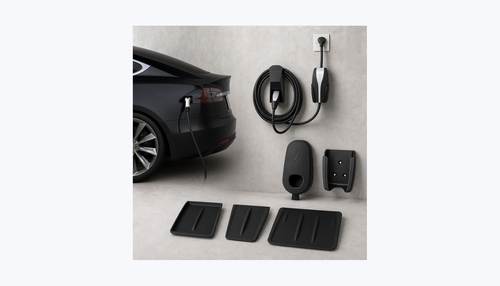
Gear up your Tesla with tested, custom-fit BASENOR accessories — shop Tesla accessories →
Sources & reporting notes
The links below identify the material source records used for this report.
- @TeslaNewswire on X (2026-04-06T12:31:45.000Z) — Direct source
- @TeslaNewswire on X (2026-04-06T12:31:46.000Z) — Direct source
Source links are preserved as published or accessed. See our editorial standards and corrections policy.
The BASENOR Editorial Desk covers Tesla, SpaceX, and related technology, curating reporting from primary sources — official accounts, regulatory filings, and software release data. Every article passes source-record and fact-checking review before publication. About the newsroom.
This report was curated by the BASENOR Editorial Desk from the sources listed above. Read our editorial standards or email editorial@basenor.com to report an error.