The News: Prominent Tesla community account @wholemars posted a two-word tease — "Project Apex" — with no further context, reigniting speculation about Tesla's next-generation vehicle platform.
Why It Matters: Project Apex is widely understood to be the internal codename for Tesla's third mainstream vehicle architecture — the platform expected to underpin both the Cybercab (Robotaxi) and a future affordable compact EV. Any signal of movement here is significant for Tesla's entire product roadmap.
Source: @wholemars on X

What Is Project Apex?
Two words. No image. No thread. Just "Project Apex" — and the Tesla community lit up.
For context: Project Apex is the widely reported internal codename for Tesla's third mainstream vehicle platform, a ground-up architecture that has been in development since at least 2022. It is distinct from the platform underpinning the Model 3 and Model Y, and represents Tesla's most ambitious manufacturing leap since the original Model S.
The name has also surfaced in connection with SpaceX's planned IPO and xAI initiatives — but in the Tesla vehicle context, it refers specifically to this next-generation chassis and production system. That's the angle worth watching here.
📊 Key Figures
| Metric | Detail | Context |
|---|---|---|
| Cost Reduction Target | Up to 50% | vs. Model 3/Y production cost |
| Cybercab Price Target | < $30,000 | Announced by Elon Musk at unveil |
| Structural Parts Reduction | ~60% fewer | ~80 parts vs. ~200 in Model Y |
| Cybercab Volume Production | Target: April 2026 | Musk: "before 2027" |
| Platform Development Start | 2022 | Third mainstream Tesla architecture |
The Engineering Ambition Behind the Name
Project Apex isn't just a new car — it's a new way of building cars. The platform is designed around several interlocking manufacturing breakthroughs that Tesla has been developing in parallel:
- Unboxed Process: Rather than assembling a vehicle sequentially on a line, sub-assemblies are built simultaneously and joined at the end — dramatically compressing factory floor space and time.
- Large single-unit castings: Extending the Giga Press concept further, reducing the number of individual structural components to roughly 80 — compared to around 200 in the Model Y.
- 48-volt architecture: A full low-voltage electrical system redesign that enables thinner wiring, lighter harnesses, and new supplier relationships.
- Structural battery pack with 4680 cells: The battery becomes part of the vehicle's structure, eliminating redundant framing and reducing weight.
Taken together, Tesla has stated these changes are designed to reduce production costs by up to 50% compared to the Model 3 and Model Y. That's not incremental improvement — that's a structural reset of Tesla's unit economics.
Two Vehicles, One Platform
The Apex platform is expected to underpin at least two distinct vehicles:
The Cybercab (Robotaxi): Unveiled in October 2024, the Cybercab is a driverless two-door, two-seat vehicle with no steering wheel, no pedals, and no traditional charging port. It charges via inductive (wireless) charging and V4 Supercharging. Priced under $30,000, it's Tesla's bet on autonomous ride-hailing. A limited Robotaxi service already launched in Austin in June 2025 using modified Model Y vehicles; unsupervised vehicles began integrating into the fleet in January 2026, with expansion to seven additional cities planned for the first half of 2026.
An affordable compact EV: Widely referred to in the community as "Model 2" or "Model Q," this vehicle is expected to bring Tesla's entry price point significantly below the current Model 3. Specific details remain unconfirmed beyond the platform's cost-reduction goals.
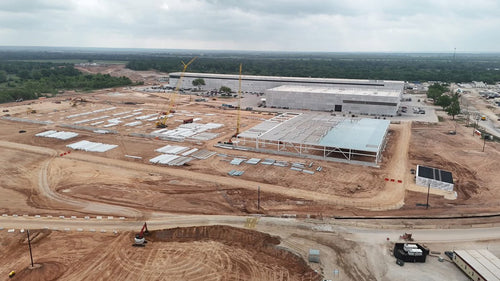
Production for the Apex-based vehicles is expected to span Gigafactory Texas, Gigafactory Berlin-Brandenburg, and the planned Gigafactory Mexico — giving Tesla the global manufacturing footprint to hit meaningful volume quickly once the platform is ready.
🔭 The BASENOR Take
Timeline: Cybercab volume production targeted April 2026 (now) — affordable compact EV timeline unconfirmed
Impact Level: 🔴 High — this platform defines Tesla's next decade of products
Confidence: Platform details well-sourced; @wholemars tease adds no new confirmed data, but the timing is notable
A two-word post from @wholemars — one of the more plugged-in Tesla community accounts — is easy to dismiss. But the timing matters. We are at the exact window when Cybercab volume production was supposed to begin. If Project Apex tooling, software, or production logistics are reaching a milestone right now, a cryptic tease is exactly how these things tend to surface before any official announcement.
What owners should understand is that Project Apex isn't just about the Cybercab or a cheaper Tesla. It's about whether Tesla can rebuild its margin structure at scale. The Model 3 and Model Y are excellent vehicles, but they were built on cost structures designed years ago. Apex is the answer to the question: how does Tesla grow from a premium EV brand into a mass-market one without destroying profitability? A 50% reduction in production cost per vehicle is the mechanism. Everything else — the Unboxed Process, the 48V architecture, the structural battery — is in service of that number.
For existing Tesla owners, the near-term relevance is the Cybercab service expansion. If volume production is genuinely ramping now, the ride-hailing network that launched in Austin could scale meaningfully by late 2026. For prospective buyers waiting on an affordable Tesla, Apex is the platform that makes it possible — though a firm timeline for that vehicle remains elusive.

Marcus covers Tesla's software releases, FSD rollouts, and OTA changes. Background in automotive engineering. Based in Austin.
Sources verified at publish time. Spotted an inaccuracy? Email editorial@basenor.com.