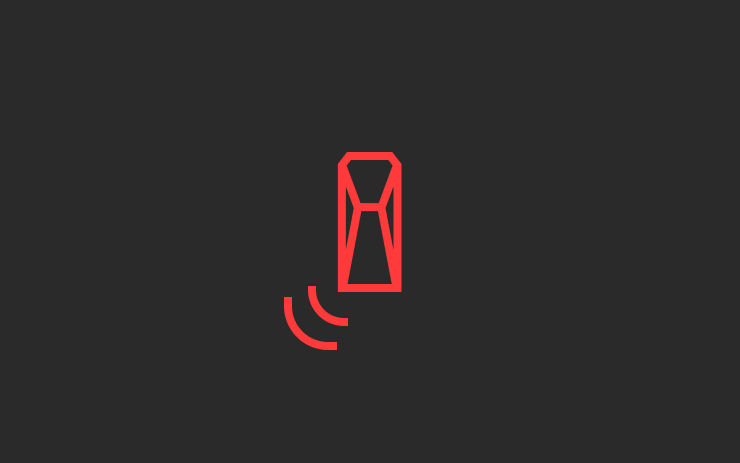
The News: Teslascope has detected a new undocumented Tesla feature called Blind Spot Warning While Parked, designed to alert occupants to approaching hazards before they open a door.
Why It Matters: This is a genuine safety upgrade — the kind that prevents dooring incidents with cyclists and pedestrians. Cybertruck owners on 2026.8+ have it now; other HW4 vehicles are next in line.
Source: @teslascope on X
Tesla Quietly Adds 'Blind Spot Warning While Parked' — Here's What We Found
Teslascope — the independent Tesla fleet monitoring service — has just flagged a new safety feature appearing in Tesla vehicles: Blind Spot Warning While Parked. It wasn't in any official release notes. Tesla didn't announce it. But it's there, and for owners who park in busy urban environments, it could matter a great deal.

🔍 Evidence: How We Know This Is Real
Teslascope detects features by parsing Tesla's software strings and vehicle telemetry across its tracked fleet. When a new feature label surfaces — especially one with a self-explanatory name like Blind Spot Warning While Parked — it's a reliable signal that Tesla has quietly deployed or is actively staging the capability.
This isn't speculation. Background research confirms the feature has been in development and rolling out in stages since late 2024, first appearing in China with the 2024.26.9 Summer Update for the refreshed Model 3, then expanding globally via the 2024.44+ Holiday Update. The most recent and significant deployment came with software version 2026.8, which brought the feature officially to the Cybertruck on March 31, 2026.
🔍 Undocumented Change — Evidence Summary
Detection method: Teslascope fleet telemetry string detection
Evidence strength: Strong — corroborated by prior rollout history across multiple software versions
Official changelog mention: None at time of publication
📊 What Changed
| Change | Type | Models |
|---|---|---|
| Blind Spot Warning While Parked | 🔍 Undocumented | Cybertruck (confirmed); Model 3, Y, S, X (HW4 — pending) |
| Sensitivity & Geofence Customization | 🔍 Undocumented | Cybertruck (2026.8+) |
| Low-Power Parked Monitoring State | 🔍 Undocumented | Cybertruck (2026.8+) |
How the Feature Actually Works
Here's the practical experience when the feature is active: you pull into a parking spot, put the car in Park, and reach for the door handle. If one of Tesla's rear-facing side repeater cameras detects an approaching cyclist, pedestrian, or vehicle in your blind spot, the system kicks in — the blind spot indicator light flashes, an audible chime sounds, and critically, the door will not open on the first press of the button.
That last detail is the key design decision. Tesla isn't just warning you — it's creating a deliberate pause. A second press of the button overrides the warning and lets you open the door, so you're never actually locked in. The infotainment display may also show a message explaining why the door opening was blocked.
The system runs in a specialized low-power monitoring state when parked, integrated with Tesla's power management and Sentry Mode logic. It is not running full cameras 24/7 — Tesla has clearly engineered this to minimize battery drain, which is a smart tradeoff for a parked-vehicle feature.
On the Cybertruck with 2026.8, owners can also customize the feature's sensitivity and set geofenced "Safe Locations" (like your home garage) where the warning is automatically disabled.
Which Vehicles Have It Right Now?
📋 Current Rollout Status
The feature relies entirely on Tesla's Hardware 4 (HW4) vision suite and advanced neural networks, using the rear-facing side repeater cameras. HW4-equipped Model 3, Model Y, Model S, and Model X vehicles have the physical hardware needed — Tesla simply hasn't pushed the software activation to those platforms yet. The most likely reason: they're gathering real-world data from the Cybertruck rollout before expanding.
🚦 Owner's Action Plan
Verdict: RECOMMENDED — Check your version now if you're on a Cybertruck
If you own a Cybertruck:
- Check your software version. Go to Controls → Software. If you're on 2026.8 or later, you likely already have this feature.
- Look for the setting. Navigate to Controls → Safety (or search "Blind Spot" in the search bar). The feature and its sensitivity controls should appear there.
- Configure your Safe Locations. If you park in a private garage where the warning would be unnecessary, set it as a geofenced Safe Location to avoid false alerts at home.
- Test it deliberately. In a safe environment (like a parking lot), have someone walk past the car while you attempt to open the door. Confirm the warning fires correctly.
- Don't fight the first press. If the door doesn't open, there's something in your blind spot. Look before pressing again.
If you own a Model 3, Y, S, or X with HW4:
- Verify your hardware. Go to Controls → Software → Additional Vehicle Information. Look for "Autopilot computer: Hardware 4.0" or similar.
- No action needed yet — but keep your software updated. When Tesla activates this for your platform, it will arrive via OTA. Staying current on updates is the only prerequisite.
- Watch for it in release notes — or follow our all software updates coverage for the moment it drops.
If you own an older vehicle (HW3 or earlier):
- This feature is not coming to your vehicle — the camera hardware required isn't present. No action needed.
📰 Deep Dive
"Dooring" — the collision that happens when a car occupant opens a door into the path of a cyclist or passing vehicle — is a well-documented urban safety hazard. Some cities have introduced legislation around it; the Netherlands famously teaches the "Dutch Reach" (opening your door with your far hand, forcing you to turn and look). Tesla's approach is more direct: use the cameras that are already watching to intervene before the door opens. It's a logical extension of the blind spot monitoring system that already exists while driving, applied to the parked state.
The Cybertruck-first rollout makes sense given the vehicle's dimensions. A Cybertruck door swinging open in a tight urban bike lane presents a significantly larger hazard than a Model 3 door would. Tesla is also being methodical here — the feature first appeared in China in mid-2024, expanded globally through the Holiday Update, and is now being refined with customization options on the Cybertruck. That's a 16-month development arc before broader HW4 deployment, which suggests Tesla is being deliberate rather than rushed.
The power management integration is worth noting. Running cameras continuously while parked would create real range anxiety for owners who leave their cars for extended periods. By tying the system into the existing Sentry Mode low-power architecture, Tesla has found a way to make the feature practical — it's not burning through your battery watching for cyclists while you're at work all day. The system activates when it needs to: when an occupant is present and attempting to exit.
For HW4 owners on non-Cybertruck platforms, the wait is likely measured in software update cycles rather than years. The hardware is already there. Tesla's pattern with features like this — China first, Cybertruck second, broader fleet third — suggests Model 3 and Model Y HW4 owners should expect this before the end of 2026. When it arrives, it will be one of those features that quietly makes you wonder how you parked without it.

Marcus covers Tesla's software releases, FSD rollouts, and OTA changes. Background in automotive engineering. Based in Austin.
Sources verified at publish time. Spotted an inaccuracy? Email editorial@basenor.com.