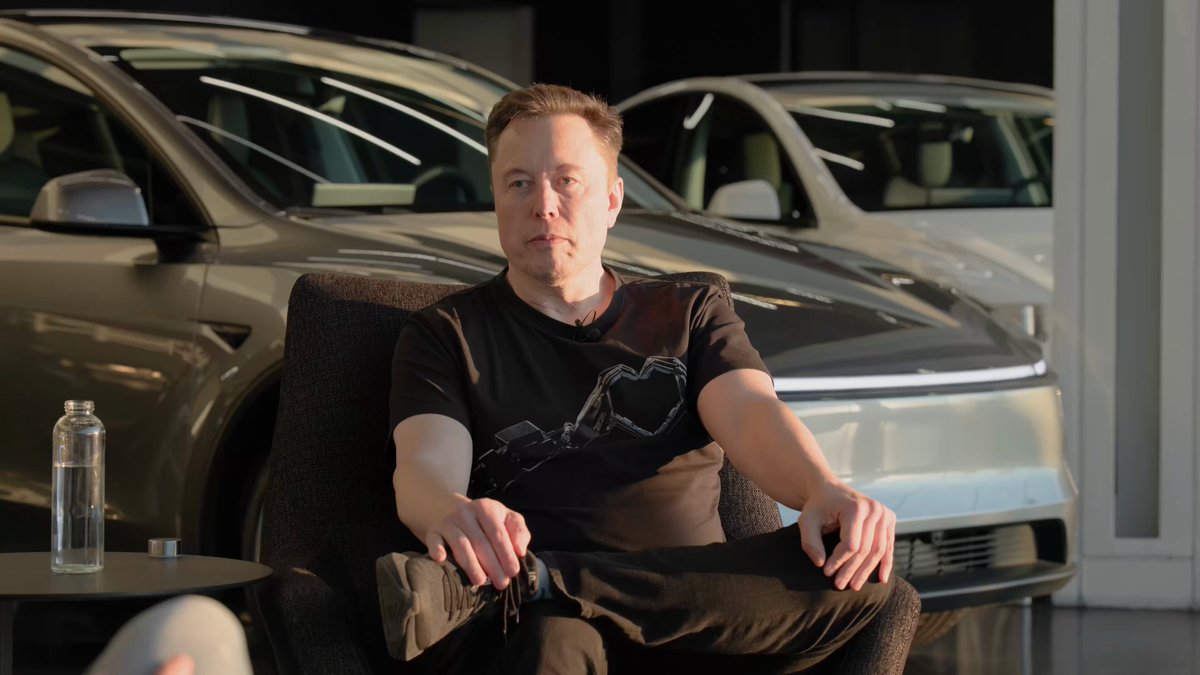
The News: Tesla Manufacturing (@gigafactories) has published a video update laying out the full European roadmap — covering FSD approval progress, Cybercab and Semi launch plans for Europe, Optimus development, and Giga Berlin's expansion trajectory.
Why It Matters: This is the clearest, most official summary of what European Tesla owners and the broader EV market can expect over the next 12–24 months — straight from Tesla's own manufacturing account.
Source: @gigafactories on X — February 26, 2026

Tesla Manufacturing has dropped what may be the most comprehensive official update on the company's European ambitions to date. The video, published on the @gigafactories account on February 26, covers a tightly structured five-chapter roadmap spanning Full Self-Driving, Optimus, Cybercab, the Tesla Semi, and the state of Giga Berlin — all within under five minutes. For European Tesla owners and EV watchers, this is required viewing.
📊 Key Figures
| Metric | Value | Context |
|---|---|---|
| Giga Berlin workforce | ~11,000 | Current employees |
| Model Y weekly output | ~5,000 units/week | Current rate |
| Markets supplied by Giga Berlin | 30+ | Including Canada (newly added) |
| Cybercab production start | April 2026 | At Giga Texas |
| Cybercab consumer price target | Under $30,000 | By 2027 (Musk confirmed) |
| Giga Berlin battery cell production start | 2027 | Target: up to 8 GWh/year |
| Optimus consumer availability | End of 2026 | Target production cost: $20,000 |
| Tesla Semi Europe arrival | No earlier than 2026 | Megacharger infrastructure in development |
⚡ Full Self-Driving: The European Regulatory Moment
FSD Supervised is the centerpiece of Tesla's European ambitions — and the biggest regulatory hurdle it faces. While FSD is already available in North America and China, European owners have been locked out due to regional type-approval requirements.
The clearest path forward runs through the Netherlands' vehicle authority, the RDW, which serves as a pan-European regulatory gateway. According to Elon Musk's comments at the World Economic Forum in January 2026, approval could come as early as this year — though the RDW itself framed their February 2026 milestone as a demonstration deadline, not a guaranteed green light.
In the meantime, Tesla has been running FSD ride-along programs across Germany, France, and Italy since late 2025 — extended through March 2026 due to high demand. These aren't public launches; they're structured demo drives designed to build regulator confidence and public familiarity. A broader European rollout across key markets including Sweden, Norway, Germany, France, and the UK is anticipated later in 2026. For more on the self-driving regulatory picture in Europe, see our ongoing FSD coverage.
🚕 Cybercab and Semi: New Products Coming to Europe

The @gigafactories video dedicates a full chapter to Cybercab, Semi, and future European products. Here's the current picture based on verified information:
Cybercab: Tesla produced its first Cybercab — a two-seater robotaxi with no steering wheel or pedals — at Giga Texas. Volume production is scheduled to begin in April 2026. Musk has confirmed a consumer version priced under $30,000 by 2027. The Cybercab has already completed a six-city European tour (Paris, London, Berlin, Stockholm, Oslo, Amsterdam), signaling serious intent for the region even before a formal launch date is set.
Tesla Semi: European deployment is expected no earlier than 2026. Tesla has already begun laying groundwork with Megacharger infrastructure job postings for Central Europe and the appointment of a dedicated Head of Business Development for the EMEA region. High-volume Semi production for North America kicks off at Giga Nevada in March 2026 — Europe follows once that pipeline is established.
🤖 Optimus: Closer Than You Think
The video's Optimus chapter reflects how seriously Tesla is treating its humanoid robot program. Optimus Gen 2 — standing 5'8" and weighing roughly 125 lbs — is already being tested inside Tesla factories for tasks like self-charging, object sorting, and assembly. A pilot production line is running at Fremont, with a larger third-generation line targeting 1 million units annually by late 2026.
The commercial target: consumer availability by end of 2026 at a manufacturing cost of $20,000 per unit at scale. For a company that also makes cars and energy products, shipping a humanoid robot at meaningful volume within 12 months would be a landmark moment in industrial history.
🏭 Giga Berlin: Europe's Production Anchor
The video frames Giga Berlin not just as a factory, but as the structural foundation for everything Tesla is building in Europe. With approximately 11,000 workers and roughly 5,000 Model Y units produced per week, the facility already supplies more than 30 global markets — including Canada, added recently.
Expansion approvals are in progress, with battery cell production at the site targeted for 2027 at up to 8 GWh per year. That local cell production capability would meaningfully reduce Tesla's European supply chain exposure and support the volume ramp required if FSD, Cybercab, and new model lines all land in the same window.
🔭 The BASENOR Take
| Dimension | Assessment |
|---|---|
| Timeline | 2026 is the inflection year — FSD approval, Cybercab production, Semi groundwork, Optimus consumer launch all converge |
| Impact Level | High — Structural shift for European Tesla owners and the broader EV market |
| Confidence | Medium-High — Production timelines and regulatory milestones carry execution risk, but the direction is clear |
| Key Risk | FSD regulatory approval in Europe remains the single biggest gating factor for Tesla's autonomous ambitions on the continent |
📰 Deep Dive
What makes this @gigafactories update significant isn't any single announcement — it's the convergence. Tesla is communicating, in a single structured video, that FSD, Cybercab, Semi, Optimus, and Giga Berlin expansion are all moving in parallel. That's a deliberate messaging choice. The company is signaling to European regulators, partners, and owners that the roadmap is real, sequenced, and funded.
The FSD situation in Europe is the most consequential near-term variable. Every other product — Cybercab in particular — depends on autonomous driving being legally operational. The RDW pathway through the Netherlands is the fastest route to pan-European type approval, and the demo drive program running through March 2026 is the most visible piece of that regulatory campaign. If approval lands in the first half of 2026, the downstream timeline for everything else accelerates.
Giga Berlin's role in all of this is also worth watching closely. The factory currently exports to 30+ markets while simultaneously pursuing capacity expansion approvals and planning a 2027 battery cell line. That combination — export hub, expansion project, and future cell producer — makes it one of the most strategically loaded EV facilities on the planet. Tesla's decision to frame the broader European roadmap around a Giga Berlin update signals how central the facility is to the company's regional identity.
For European owners specifically: 2026 is the year to watch. FSD access, a new product category in Cybercab, and the beginning of Semi infrastructure all sit on the horizon. The ride-along programs are worth signing up for if you haven't — they're the clearest window into what FSD will feel like before it's officially available in your market.
🚕 Following the Robotaxi rollout? See every operating city, launch date and announced market in our Tesla Robotaxi Tracker.
🤖 Tracking Tesla's humanoid robot? See every Optimus production milestone and appearance in our Tesla Optimus Tracker.
Related Gear
Gear up your Tesla with tested, custom-fit BASENOR accessories — shop Tesla accessories →
Sources & reporting notes
The links below identify the material source records used for this report.
- @gigafactories on X (2026-02-26T22:11:04.000Z) — Direct source
- @gigafactories on X (2026-02-26T22:11:03.000Z) — Direct source
Source links are preserved as published or accessed. See our editorial standards and corrections policy.
The BASENOR Editorial Desk covers Tesla, SpaceX, and related technology, curating reporting from primary sources — official accounts, regulatory filings, and software release data. Every article passes source-record and fact-checking review before publication. About the newsroom.
This report was curated by the BASENOR Editorial Desk from the sources listed above. Read our editorial standards or email editorial@basenor.com to report an error.