30-Second Brief
The News: Tesla is now starting production using the Unboxed Process — a radical parallel-assembly method that marks the biggest shift in how the company builds cars since its founding.
Why It Matters: This directly affects the cost, quality, and long-term value of every Tesla built from here forward — including the Cybercab and upcoming affordable model.
Source: @wholemars on X
Tesla's Unboxed Process Is Now in Production — The Biggest Manufacturing Shift in the Company's History
Tesla didn't build its manufacturing dominance overnight. From the hand-assembled Model S and X to the giga-cast Model Y, every generation of Tesla production has been meaningfully more efficient than the last. But what's happening right now at Gigafactory Texas is a different order of magnitude entirely — and it has real implications for what you'll pay, how long your Tesla lasts, and what future models will look like.

From Model S to Unboxed: A Decade of Manufacturing Reinvention
The Model S and X were extraordinary cars — but they were built with a conventional automotive mindset. Long sequential assembly lines, hundreds of individual stamped and welded components, and a factory floor logic borrowed largely from the traditional auto industry. Tesla learned from it. A lot.
The next leap was structural castings — replacing what used to be 70+ individual welded parts in the Model Y's rear underbody with a single large aluminum casting produced by a Giga Press. That one change alone reduced the length of the Model Y final assembly line by 10%. Tesla then went further, introducing a 9,000-ton Giga Press for the Cybertruck and pairing structural castings with a structural battery pack — where the battery cells themselves become load-bearing elements of the car's floor.
📊 Key Manufacturing Milestones
| Era | Innovation | Impact |
|---|---|---|
| Model S / X era | Sequential assembly line | Baseline — conventional automotive |
| Model Y (Giga Texas / Berlin) | Rear + front giga-castings; structural battery | 70 parts → 1 casting; 10% shorter assembly line |
| Cybertruck | 9,000-ton Giga Press | Larger structural components at scale |
| Cybercab / Model 2 (2026) | Full Unboxed Process | Target: 50% cost reduction, 40% smaller factory |
What the Unboxed Process Actually Is
Tesla unveiled the Unboxed Process at its 2023 Investor Day, but the concept is now moving from slide deck to factory floor. Instead of a single long assembly line where a car body moves sequentially through every stage of production, the Unboxed Process builds major vehicle sections — front, rear, cabin, underbody — in parallel on separate sub-assembly lines. Those sections are then joined together in a final merge step.
Think of it like building a house by constructing the kitchen, bedrooms, and bathrooms simultaneously in different locations, then assembling them into a finished structure — rather than building room by room in sequence. The efficiency gains are dramatic. Tesla's stated targets: a 50% reduction in production costs and a 40% reduction in factory footprint.
Elon Musk has described the Cybercab production target as one vehicle every 5 to 10 seconds — compared to the Model Y's current cycle time of 33 seconds at Giga Shanghai. The US Patent and Trademark Office granted Tesla a patent for the Unboxed Process in September 2025, and Cybercab production officially began at Gigafactory Texas in February 2026.
Which Vehicles Use It — And Which Don't (Yet)
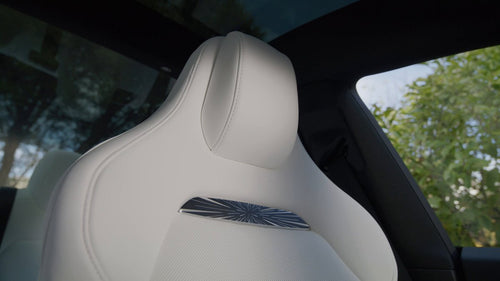
As of now, none of Tesla's current production models — Model 3, Model Y, Cybertruck — are using the full Unboxed Process. The Model Y has seen partial implementation: the structural battery pack and seat sub-assembly have been tested as a combined unit, which is conceptually aligned with the Unboxed approach. But the full parallel-assembly architecture is reserved for next-generation vehicles.
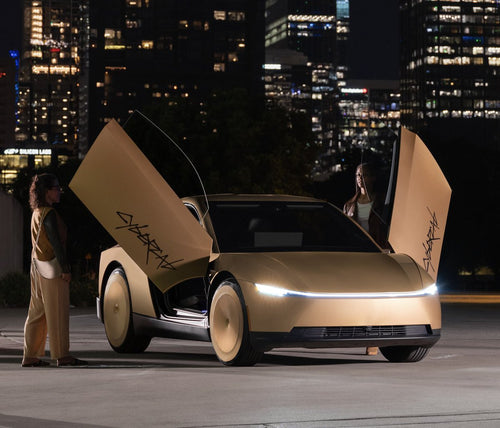
The Cybercab is the first vehicle confirmed to use the complete Unboxed Process, with volume production underway at Giga Texas. The upcoming affordable Tesla — widely referred to as the Model 2 or Project Redwood, targeting a ~$25,000 price point — is also planned to use the Unboxed method, with mass production scheduled for mid-2026.
🔭 The BASENOR Take
The @wholemars observation cuts to something important that often gets lost in the day-to-day Tesla news cycle: the Model S and X, for all their brilliance as vehicles, were built on a manufacturing foundation that Tesla has now completely outgrown. They were proof-of-concept at scale. What's happening at Giga Texas right now is proof-of-future.
The structural casting story is already well-established — the Model Y's giga-cast underbody is a proven, production-validated approach that has demonstrably reduced cost and complexity. What's newer and more consequential is the Unboxed Process reaching actual production. A 50% cost reduction target isn't a rounding error. If Tesla achieves even half of that on the Cybercab and Model 2, it changes the competitive math for every other automaker trying to hit sub-$30,000 EV price points.
There's also a repairability angle worth noting. A 2025 Thatcham Research study found that Tesla's mega-cast structures can actually be cheaper to repair than traditional steel construction — provided the manufacturer designs for repairability from the start and supplies detailed repair guidelines. That's a meaningful counterpoint to the early criticism that giga-castings would make minor accidents write-off events. Tesla appears to have taken that feedback seriously in its newer designs.
For current Tesla owners, the Unboxed Process doesn't change anything about your existing vehicle. But it does signal that the next wave of Tesla products — starting with the Cybercab and the affordable model — will be built with a cost structure and manufacturing efficiency that no legacy automaker can currently match. That matters for resale values, for Tesla's margin trajectory, and for how aggressively the company can price future vehicles. The Model S and X were the beginning. This is what Tesla was always building toward.
🚕 Following the Robotaxi rollout? See every operating city, launch date and announced market in our Tesla Robotaxi Tracker.
Related Gear
Gear up your Tesla with tested, custom-fit BASENOR accessories — shop Tesla accessories →
Sources & reporting notes
The links below identify the material source records used for this report.
- @wholemars on X (2026-04-05T08:46:24.000Z) — Direct source
Source links are preserved as published or accessed. See our editorial standards and corrections policy.
The BASENOR Editorial Desk covers Tesla, SpaceX, and related technology, curating reporting from primary sources — official accounts, regulatory filings, and software release data. Every article passes source-record and fact-checking review before publication. About the newsroom.
This report was curated by the BASENOR Editorial Desk from the sources listed above. Read our editorial standards or email editorial@basenor.com to report an error.