📌 UPDATE — April 30, 2026
Tesla's unsupervised Robotaxi fleet has grown again, adding 5 more Model Ys in a matter of hours to bring the total to 25 vehicles. Austin leads the expansion with 3 new additions (now 19 total), while Dallas and Houston each gained 1 vehicle, bringing both cities to 3 units apiece. The rapid intraday additions suggest Tesla is accelerating its deployment cadence well beyond the monthly growth figures previously reported.

via @TeslaNewswire · Apr 30, 2026
| City | Previous | Added | Total |
|---|---|---|---|
| Austin | 16 | +3 | 19 |
| Dallas | 2 | +1 | 3 |
| Houston | 2 | +1 | 3 |
📌 UPDATE — April 30, 2026
Tesla's unsupervised Robotaxi fleet expansion is accelerating even faster than monthly figures suggested — the fleet reportedly grew 30% in a single day as of April 29, 2026. This single-day jump dwarfs the already-impressive 2.4x month-over-month growth rate covered in our original report, suggesting Tesla may be onboarding vehicles at an exponential pace. If daily growth rates like this continue even intermittently, the fleet could scale to a significant size far sooner than most analysts projected. No official statement from Tesla has accompanied this latest surge, leaving the exact driver of the spike — whether a new city rollout, a software unlock, or a fleet batch approval — currently undocumented. 🔍

Source: @wholemars on X · April 29, 2026
📌 UPDATE — April 29, 2026
Tesla added 5 more unsupervised Model Y Robotaxis to its Texas fleet today, bringing the total to 24 vehicles across three cities: Austin (19), Dallas (3), and Houston (2). Dallas notably received its latest addition just hours after critics questioned the pace of expansion — underscoring that today's additions came in a single day. The rapid single-day additions suggest Tesla's deployment cadence is accelerating beyond the monthly growth figures previously reported.

via @SawyerMerritt · Apr 29, 2026
📌 UPDATE — April 29, 2026
Tesla added four unsupervised Model Ys to its Austin fleet in a single day — a pace observers say is unprecedented. Commentators are directly linking the accelerated expansion to growing confidence in FSD v14.3, which appears to be clearing internal safety thresholds fast enough to unlock rapid fleet scaling. Sawyer Merritt noted three additional vehicles were added shortly after his initial post, bringing the single-day total to four. Whole Mars Catalog called it a first: "I don't think they've ever added four new unsupervised cars in one day before."


📌 UPDATE — April 25, 2026
Tesla's unsupervised Robotaxi rollout in Texas is accelerating faster than expected. According to prominent Tesla watcher Whole Mars Catalog (@wholemars), the majority of Robotaxi rides in Texas will be unsupervised "very soon" — a notable threshold that would signal the program has crossed from early testing into mainstream autonomous operation. This comes on top of the 2.4x month-over-month fleet growth already reported, suggesting Tesla is compounding both scale and autonomy rate simultaneously. If the majority of rides flip to unsupervised, it would represent a meaningful commercial and regulatory milestone for the program.

📌 UPDATE — April 25, 2026
Tesla has officially launched its Robotaxi network to the public, releasing an Android app today that lets riders book unsupervised Tesla robotaxis. If the fleet maintains its 2.4x monthly growth rate, projections suggest Tesla could have 21,000 driverless vehicles on the road by end of 2026 — more than 7x Waymo's current fleet of ~3,000 cars. The Android app launch marks a significant milestone, signaling Tesla's transition from internal testing to a consumer-facing autonomous ride-hailing service.


30-Second Brief
The News: Tesla's unsupervised Robotaxi fleet has grown 2.4x month-over-month, with at least 19 vehicles now operating without a safety driver.
Why It Matters: Even at small scale, unsupervised operation is the critical threshold — it's the proof point that Tesla's autonomy stack can run without human backup, setting the stage for rapid fleet expansion.
Sources: @wholemars on X, April 25, 2026
Tesla's Unsupervised Robotaxi Fleet Grows 2.4x in One Month — The Small Number That Signals a Big Shift
April 25, 2026 • Self-Driving
The fleet is small. The growth rate is not. According to Whole Mars Catalog, Tesla's unsupervised Robotaxi fleet — vehicles operating with zero human supervision — grew 2.4x in a single month. The current count sits at a minimum of 19 vehicles, a number that sounds modest until you remember what it actually represents: a car driving strangers around a city with no one behind the wheel and no one ready to take over.
That's not a demo. That's a commercial operation. And the month-over-month growth rate is what demands attention.

📊 Key Figures
| Metric | Value | Context |
|---|---|---|
| Unsupervised Robotaxis (current) | ≥ 19 | No safety driver |
| Month-over-month growth | 2.4x | ~140% increase |
| Operation type | Unsupervised | Fully driverless |
Why 19 Vehicles Is the Wrong Number to Focus On
The instinct is to look at 19 and compare it to the thousands of vehicles Waymo operates or the ambitions Tesla laid out in previous investor presentations. That comparison misses the point entirely.
The relevant question isn't "how many?" — it's "are they supervised?" Every vehicle in Tesla's current unsupervised count is operating without a fallback human. That's the hard part. Scaling from 19 to 190 to 1,900 is an operational and production challenge. Proving the autonomy stack is safe enough to remove the human entirely is the technical and regulatory mountain. Tesla appears to have cleared it, at least in the geographies where these vehicles are currently running.

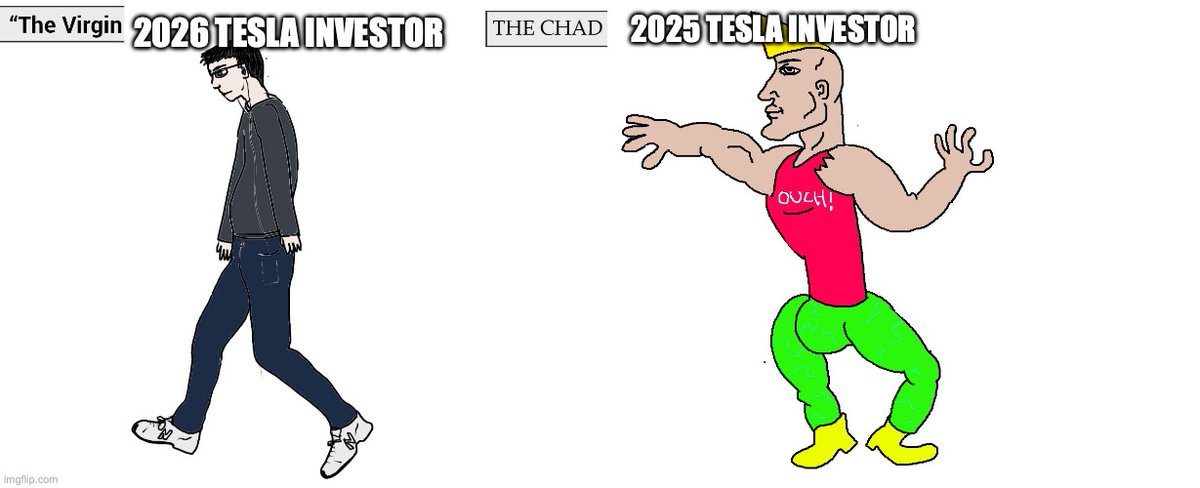
The satirical framing in the tweet above captures the sentiment well: a year ago, the idea of any unsupervised Tesla operating commercially would have been the headline. Now it's a footnote to a growth rate discussion.
The Uber Question

The boldest claim in today's thread is also the most structurally sound: "Uber is obsolete in a world where your car can pick you up autonomously."
This isn't hyperbole — it's a description of the business model collision that's coming. Uber's value proposition is connecting riders to drivers. Remove the driver, and the equation changes fundamentally. A Tesla owner who can dispatch their own vehicle as a Robotaxi while they're at work — earning revenue rather than paying for parking — doesn't need a ride-sharing intermediary. The car IS the driver. The owner IS the fleet operator.
That model doesn't just compete with Uber. It inverts it. For our FSD coverage, this is the moment we've been tracking toward — the point where supervised autonomy transitions into a genuine commercial service.
🔭 The BASENOR Take
The 2.4x monthly growth figure is the number to bookmark. If Tesla sustains even a fraction of that trajectory — say, 1.5x per month — the fleet crosses 100 vehicles within two months and 1,000 within five. That's when the network effects kick in, route data compounds, and the regulatory conversation in new cities becomes much easier to have. The current rollout is proceeding with geographic caution, per background reporting, which is the right call: a clean safety record in the early cities is worth more than speed. What today's data confirms is that Tesla is no longer in the "will they or won't they" phase of Robotaxi deployment. They're in the scaling phase. The question is now purely about rate.
📰 Deep Dive
The significance of unsupervised operation cannot be overstated from a regulatory and liability standpoint. Every mile driven without a safety driver is a data point that regulators can evaluate. Tesla's cautious geographic approach — limiting initial operations to specific corridors — mirrors the strategy that allowed Waymo to build its safety case incrementally before expanding. The difference is Tesla's potential scale advantage: Waymo builds and operates its own fleet, while Tesla's end-state involves millions of privately-owned vehicles that owners can opt into the network. The infrastructure investment required to reach fleet scale is fundamentally different.
The Cybercab production ramp adds another dimension. Background reporting confirms Tesla has begun production of its dedicated Cybercab vehicle — a purpose-built robotaxi platform without a steering wheel or pedals. When Cybercab units enter the unsupervised fleet count, the monthly growth figures will look very different from today's numbers. The current 19-vehicle figure almost certainly represents Model 3 and Model Y hardware running the production autonomy stack, not Cybercab units. That means the fleet we're watching grow today is essentially a proof-of-concept layer on top of what the dedicated platform will eventually deliver.
For Tesla owners watching this unfold, the near-term question is access: when does the unsupervised network open to vehicles outside Tesla's own managed fleet? The answer to that question determines whether today's 2.4x growth rate becomes a footnote or a foundation.
📋 Tracking Tesla software? See every firmware, FSD and app version in one place in our Tesla Software Update Tracker.
🚕 Following the Robotaxi rollout? See every operating city, launch date and announced market in our Tesla Robotaxi Tracker.
Related Gear
Gear up your Tesla with tested, custom-fit BASENOR accessories — shop Tesla accessories →
Sources & reporting notes
The links below identify the material source records used for this report.
- @wholemars on X (2026-04-25T08:36:34.000Z) — Direct source
- @wholemars on X (2026-04-25T08:28:51.000Z) — Direct source
- @wholemars on X (2026-04-25T08:26:41.000Z) — Direct source
- @wholemars on X (2026-04-25T09:18:36.000Z) — Direct source
- @wholemars on X (2026-04-25T09:02:51.000Z) — Direct source
- @wholemars on X (2026-04-25T17:40:51.000Z) — Direct source
- @SawyerMerritt on X (2026-04-29T21:09:38.000Z) — Direct source
- @wholemars on X (2026-04-29T21:17:35.000Z) — Direct source
- @SawyerMerritt on X (2026-04-29T22:43:07.000Z) — Direct source
- @wholemars on X (2026-04-29T22:50:02.000Z) — Direct source
- @wholemars on X (2026-04-29T23:16:39.000Z) — Direct source
- @TeslaNewswire on X (2026-04-30T04:18:45.000Z) — Direct source
Source links are preserved as published or accessed. See our editorial standards and corrections policy.
The BASENOR Editorial Desk covers Tesla, SpaceX, and related technology, curating reporting from primary sources — official accounts, regulatory filings, and software release data. Every article passes source-record and fact-checking review before publication. About the newsroom.
This report was curated by the BASENOR Editorial Desk from the sources listed above. Read our editorial standards or email editorial@basenor.com to report an error.