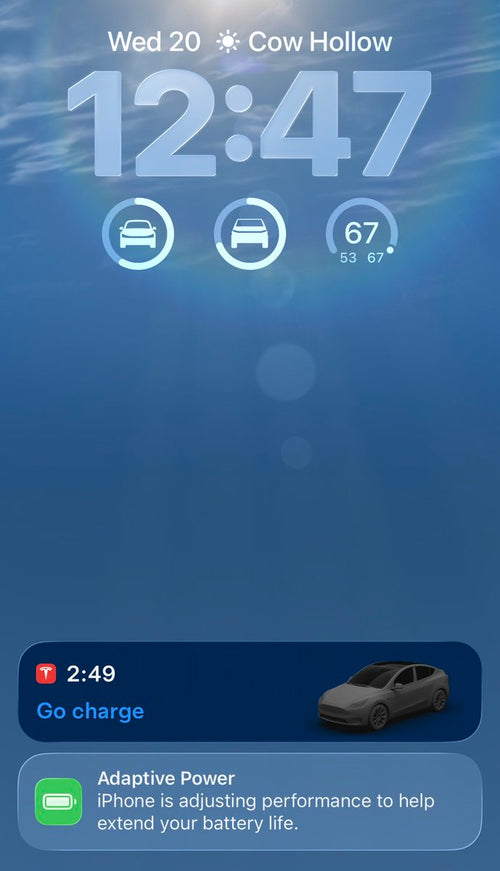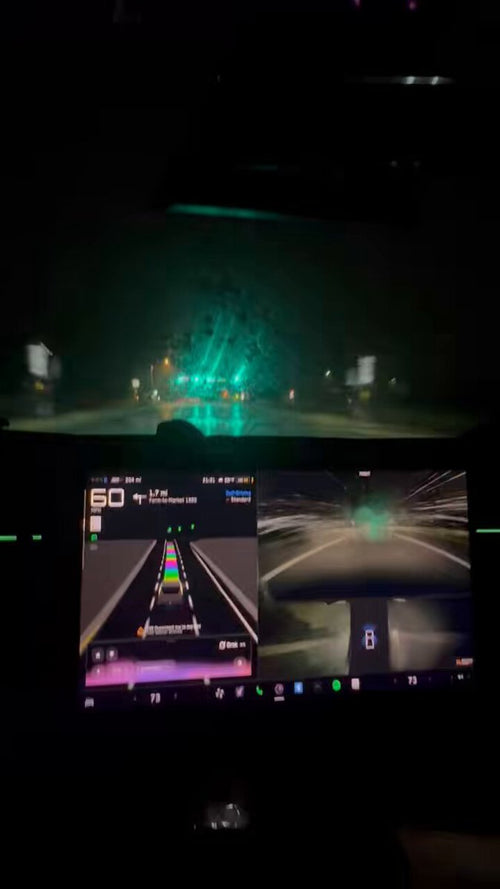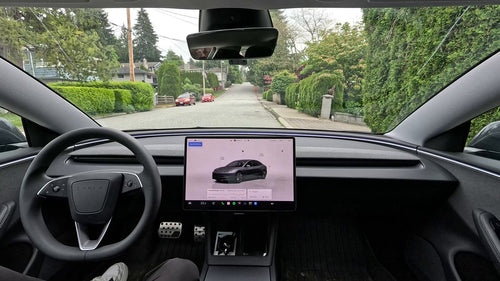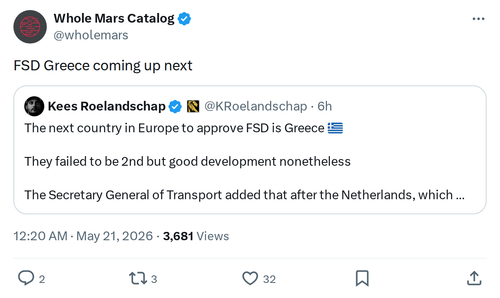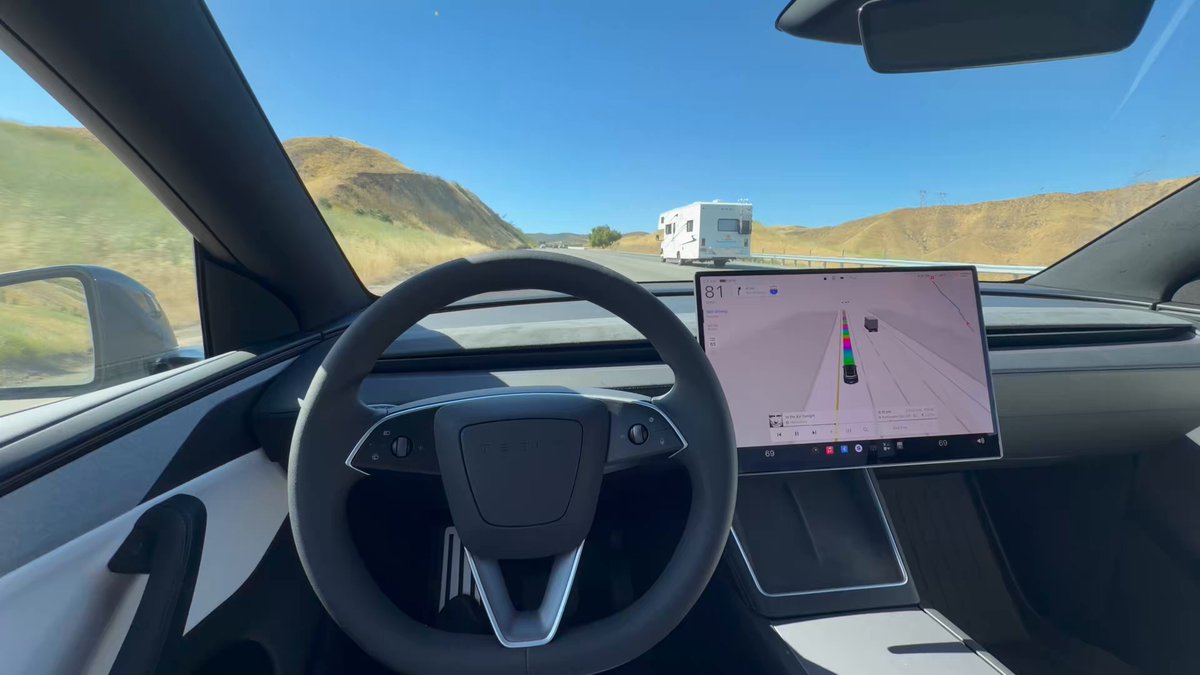
There's a moment on a long FSD drive when you stop watching the road quite so intently — and that shift, according to longtime Tesla observer Whole Mars Catalog, is when it starts to feel genuinely transformative. In a post shared overnight, he described being transported to another city with a single tap on the screen as nothing short of magic.

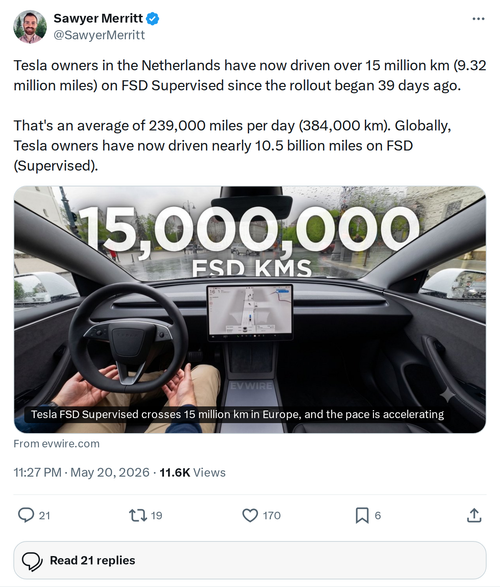
That description lands differently now than it would have two years ago. The current version of FSD — formally called Full Self-Driving (Supervised) — handles highway navigation, city street routing, traffic lights, and stop signs. Recent software releases, including FSD v14.3.3 bundled in update 2026.14.6.6 which began wide rollout around May 15–19, have drawn owner reports of noticeably smoother acceleration, more natural lane changes, and better handling of complex merge scenarios. The system still requires an attentive driver behind the wheel, but the day-to-day experience on a multi-hour interstate run has quietly become a different proposition than it was even six months ago.
Context worth keeping in mind: Tesla currently operates a small unsupervised robotaxi fleet — approximately 38 vehicles across Austin, Dallas, and Houston — without safety monitors. That program is separate from what consumer owners experience, but it signals the direction the technology is heading. Elon Musk stated on May 18 that unsupervised FSD is expected to be widespread across the US by the end of 2026. For now, the supervised version available to subscribers at $99 per month is the closest most owners will get to that road-trip-on-autopilot feeling — and based on recent accounts, it's getting harder to dismiss as a party trick.

Marcus covers Tesla's software releases, FSD rollouts, and OTA changes. Background in automotive engineering. Based in Austin.
Sources verified at publish time. Spotted an inaccuracy? Email editorial@basenor.com.