Tesla Guides · Updated April 2026 · By BASENOR Product Testing Lab
Tesla First 30 Days: 12 Gotchas Every New Owner Hits
The first month with a Tesla is not hard, but it is different. We use the first 30 days to catch the small setup, fitment, cleaning, charging, and protection mistakes that become annoying only after the car has already started living in the real world.
Bottom Line Up Front
Best first-month rule: protect high-touch surfaces before they show wear: screen glass, carpet, cargo lip, and road-spray zones.
Most common surprise: the car is low-maintenance, not no-maintenance; tire pressure, tread, cabin odor, and charging habits still need a routine.
Skip if: you are still waiting for delivery-day basics. This guide starts after pickup and focuses on the first month of real ownership, not day-before paperwork.
Why the first month matters more than the delivery day
Delivery day gets all the attention because the car is new, clean, and emotionally expensive. The better ownership test starts the next morning. You park in your actual garage, charge on your actual circuit, drive on your actual roads, carry your actual bags, and clean the first coffee splash or dusty shoe mark. That is when small Tesla-specific habits become visible.
The good news is that most early problems are not dramatic. They are preventable friction points: wrong-fit accessories, unprotected display glass, muddy carpets, loose cargo sliding into trim, tire pressure changes, charger cable clutter, and cabin airflow assumptions. Our lab treats the first month as a calibration period. We do not recommend buying every accessory immediately. We recommend watching where the car actually gets touched, loaded, parked, heated, cooled, and cleaned.
This is especially important for refreshed vehicles. Model 3 Highland and Model Y Juniper share a modern Tesla cabin feel, but they are not the same car. Highland removed the turn-signal stalk and uses steering-wheel buttons. Juniper keeps a physical turn-signal stalk while using touchscreen shifting. Legacy Model 3 and 2020-2024 Model Y accessories should not be treated as automatic fits for current-generation cars. A first-month setup should be exact-generation first, not “close enough.”
The 12 gotchas we see in the first 30 days
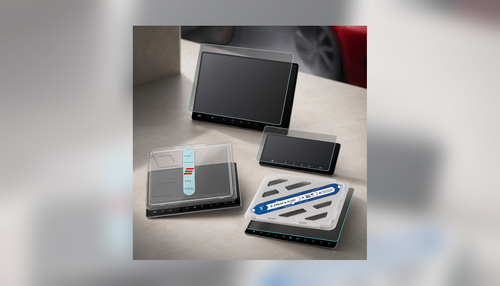
The screen gets touched more than you expect
Navigation, climate, charging, cameras, media, seat heat, and vehicle settings all go through the display. A matte 9H protector is boring until the first ring scrape, key tap, or over-aggressive cleaning cloth shows up.
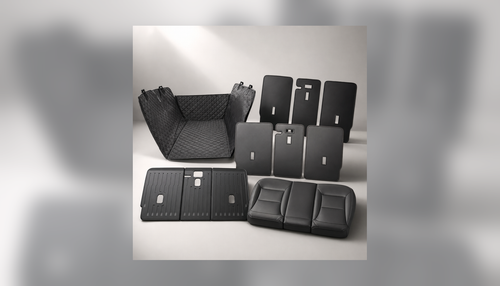
Factory carpet gets dirty before you choose mats
New owners often wait to “see if mats are needed.” By the time they decide, salt, sand, coffee, and heel dirt have already entered the carpet. A removable liner is easier to rinse than factory carpet is to restore.
Cargo loading marks appear fast
Strollers, suitcases, grocery bins, golf bags, and pet crates do not care that the bumper lip is new. The first scratch usually happens while loading something ordinary, not during a dramatic road trip.
EVs still need tire discipline
The Department of Energy notes EVs have fewer moving parts than gasoline cars, but tires remain a real wear item. Torque, weight, alignment, temperature, and pressure habits all show up quickly.
Home charging changes your garage routine
The cable, wall connector position, parking depth, and walking path matter. A messy cable on the floor becomes a daily trip hazard and collects grit that can scuff paint or plastic.
Cabin odor advice gets mistimed
A brand-new car does not need a cabin-filter replacement on day one. The useful first-month habit is learning airflow, drying the HVAC after humid drives, and scheduling inspection after real pollen or dust exposure.
Heat management becomes a daily comfort issue
A large glass cabin heats quickly when parked outdoors. A windshield sunshade does not replace climate preconditioning, but it reduces cabin heat load and protects high-touch interior surfaces from constant sun exposure.
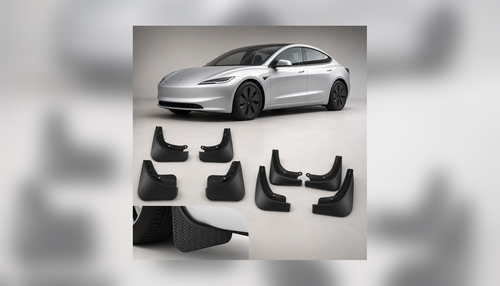
Mud flaps are route-dependent, not cosmetic
If your roads include rain, gravel, slush, construction dust, or winter grit, lower rocker panels take the hit. If your routes are clean and dry, mud flaps are less urgent. Buy based on road conditions.
Storage looks huge until small items scatter
Console bins, door pockets, frunk space, and trunk wells are useful, but sunglasses, badges, cables, wipes, and adapters migrate everywhere. Organization saves time more than it adds style.
Generation fitment mistakes cost more than waiting
Highland, Juniper, Legacy Model 3, and Standard Model Y should be separated when buying interior and exterior accessories. A wrong-fit product can leave gaps or interfere with coverage.
Cleaning products can create new marks
Strong cleaners, dirty towels, and dry wiping can mark gloss trim and display glass. Use clean microfiber, light pressure, and protect removable surfaces when possible.
The first routine matters more than the first haul
The owner who checks tires, wipes screens correctly, dries mats, coils charging cables, and cleans cargo grit once a week has fewer problems than the owner who buys random accessories and never builds habits.
First-month priority table
| Priority | Risk | When it matters | Best action | Wait if |
|---|---|---|---|---|
| Screen | Scratches and cleaning marks | Day 1-7 | Install matte 9H protector | Never touch screen with keys/tools |
| Floors | Salt, sand, spill stains | Day 1-14 | Use exact-fit removable mats | Garage-only dry commuter |
| Cargo lip | Loading scratches | First grocery/stroller trip | Add guard or load carefully | Rarely carry hard cargo |
| Tires | Pressure and uneven wear | Weekly in month one | Check PSI and tread visually | Never wait; inspection is free |
| Cabin air | Odor later, not day one | Month 3+ | Learn HVAC drying habits | New car has no odor |
What we would protect first
Our first-month kit is not a bundle for every owner. It is a ranked protection plan. Start with the surfaces that get touched or loaded immediately, then add route-specific protection after the car has shown its real use pattern. For BASENOR products, we care most about exact fit, removable cleaning, and whether the product prevents a real tradeoff rather than decorating the car.


Highland / Juniper Matte Screen Protector
Best early install for owners who use navigation, climate, and camera views constantly. Tradeoff: matte finish slightly changes the display feel compared with bare glass.
View productModel 3 / Model Y Windshield Sunshade
Useful for outdoor parking and hot climates. Our lab uses the 99.2% UV block claim only for the verified Nano Ice Crystal UV product.
View productTesla Jack Pad Set
Good to keep in the trunk before tire rotation, inspection, or roadside service. Tradeoff: it takes storage space and may never be used by owners who only visit Tesla service centers.
View productActivated Carbon Cabin Air Filter
Do not replace a new filter immediately. Keep this as a month-three to month-six inspection item if odor, pollen, or dusty routes become real.
View productA practical 30-day owner calendar
Days 1-3: drive normally before changing too much. Set your charging limit, test home charging, confirm phone key reliability, learn wiper and climate behavior, and photograph the clean interior. Install screen protection if you already have the correct current-generation part. Avoid ordering old-generation accessories just because delivery is fast.
Days 4-7: check where the car gets dirty. If shoes track grit into the footwells, install exact-fit mats. If the cargo area has already carried hard items, add protection before the next load. If outdoor parking creates cabin heat, test a sunshade and preconditioning routine. If charging cable placement annoys you daily, solve the cable path now rather than stepping around it for a year.
Days 8-14: start the maintenance habit. Check tire pressure cold, look for uneven shoulder wear, inspect wheels after curb-heavy parking, and clean under removable mats. The NHTSA tire-safety material is a useful reminder that tire pressure and tread are safety items, not enthusiast details. EVs reduce some service items, but they do not exempt tires from attention.
Days 15-21: decide which accessories are actually justified. A family Model Y that carries kids, pets, and sports gear usually needs more cargo and seat-back protection than a garage-kept Model 3 commuter. A dusty rural route makes mud flaps more rational than a clean suburban commute. A public-parking car may justify wheel protection sooner than a private-garage car.
Days 22-30: audit the routine. What did you wipe twice? What got scuffed? What slid around? What made charging annoying? What did you buy but not use? Keep the useful pieces and skip the rest. The first month should leave you with fewer daily annoyances, not a trunk full of unused add-ons.
Three first-month owner profiles
The garage commuter: Prioritize screen, floor, and charging-cable routine. Skip heavy exterior protection unless weather or road grit appears. This owner benefits from discipline more than from volume: clean mats weekly, check pressure, and do not let charging gear live on the floor.
The family Model Y: Prioritize cargo, rear-seat, floor, and heat management. The crossover shape invites mess. Strollers, snacks, pets, sports bags, and grocery leaks make removable protection rational. Juniper owners should keep fitment exact and remember that Juniper keeps the turn-signal stalk, so interior assumptions from Highland articles do not always transfer.
The road-trip owner: Prioritize tire inspection, sun control, cargo organization, and jack-pad readiness. This owner sees the fastest feedback from poor organization because every loose item becomes noise after 200 miles. Road-trip accessories should reduce cleanup and service friction, not just fill storage space.
What we would not do in the first 30 days
We would not replace cabin filters immediately on a new car unless there is a real odor or contamination issue. We would not buy a universal mat set for a refreshed vehicle when exact-generation parts exist. We would not install decorative trim that makes cleaning harder. We would not assume a product fits both Legacy Model 3 and Highland, or both Standard Model Y and Juniper, without checking the product page.
We also would not chase every forum complaint. Use the first month to identify your actual car’s wear pattern. Some owners need mud flaps in week one. Some owners never do. Some owners need a sunshade every workday. Some owners park underground and do not. The best first-month setup is specific, boring, and easy to maintain.
The fitment check we run before any first-month accessory
A first-month accessory should pass four questions before it touches the car. First, does it name the exact model generation? A product page that says Model 3 without separating Legacy and Highland is not specific enough for a refreshed 2024-2026 car. A product page that says Model Y without separating Standard and Juniper should be checked carefully, especially for interior, cargo, screen, and exterior trim pieces. Universal parts can be fine for jack pads or some service tools, but not for every surface.
Second, does the product solve a repeatable problem? If the issue happened once, wait. If the issue appears every week, solve it. Mats solve repeated dirt. A sunshade solves repeated outdoor heat. A cable organizer solves repeated charging clutter. A cabin filter does not solve a brand-new car problem unless the car already has odor or contamination evidence.
Third, can the product be removed or cleaned without creating a new problem? We prefer removable liners, protectors, and service aids because the owner can clean, inspect, or replace them without modifying the car. Permanent adhesive trim and vague “universal” pieces need more caution. A good first-month part should reduce maintenance work, not create a future removal project.
Fourth, does the tradeoff make sense for your use case? Matte glass changes screen feel. Mud flaps add visible exterior pieces. A jack pad set occupies storage space. A sunshade takes a few seconds to deploy. These are acceptable tradeoffs for the right owner, but they should be acknowledged before purchase. Honest recommendations are easier to trust than pretending every part has no downside.
The cleaning routine that prevents month-one damage
New Tesla owners often clean too late or too aggressively. Our routine is simple. Once a week in the first month, open every door, pull removable mats if installed, shake out grit, wipe the screen with a clean microfiber cloth, check the cargo lip, and look at the lower rocker panels in daylight. This takes less than ten minutes and teaches you where the car is actually wearing.
Do not dry-wipe dusty display glass with pressure. Do not use household cleaners on screens or interior trim. Do not let sand sit under mats for a month, because trapped grit can grind into surfaces. Do not assume a cargo liner is clean just because the top looks tidy; lift it and check underneath. If a removable protection piece is doing its job, it will collect evidence. That evidence should be cleaned before it becomes odor, abrasion, or staining.
For outdoor-parked cars, add a heat step. Use cabin preconditioning when appropriate, deploy a sunshade when parked in direct sun, and check whether steering wheel, armrest, and screen areas feel hotter than expected. For wet climates, add a drying step. Let wet mats dry fully instead of trapping moisture. For dusty climates, inspect the cabin intake behavior and plan filter inspection later rather than replacing a new filter immediately.
What to track during the first 30 days
We like a small owner log because memory gets optimistic. Track five numbers or observations: cold tire pressure, first-week charging cost, where dirt collects, any repeated cabin odor, and which accessory you actually touch or clean. You do not need a complex spreadsheet. A note in your phone is enough.
Cold tire pressure matters because pressure changes with temperature and driving conditions, and tires are one of the real maintenance costs EV owners still face. Charging cost matters because home charging, workplace charging, and fast charging create different ownership patterns. Dirt location matters because it tells you whether floor mats, cargo protection, mud flaps, or seat-back protection are rational. Cabin odor matters because it separates normal new-car smell from moisture or filter issues. Accessory use matters because it helps you stop buying products that only look useful online.
At the end of month one, keep what solved a repeated problem and stop there. If a product protected a surface you touch every day, it earned its place. If an item stayed in the trunk unused, leave it out of the next purchase decision. A Tesla cabin feels best when it is protected and uncluttered, not when every storage pocket has been filled with emergency gadgets.
FAQ
What should I buy first for a new Tesla?
Start with exact-fit screen and floor protection, then add cargo, sun, mud-flap, or wheel protection only if your real use case needs it.
Should I change the cabin air filter in the first month?
Usually no. A new car has a new filter. Learn HVAC habits first, then inspect at 3-6 months if odor, dust, or pollen becomes noticeable.
Are Model 3 Highland and Model Y Juniper accessories interchangeable?
Not automatically. Highland removed the turn-signal stalk; Juniper retains it. Interior dimensions, screens, cargo trim, and exterior details should be checked by exact product fitment.
Do I need mud flaps immediately?
Only if your roads justify them: rain, gravel, slush, construction dust, or winter grit. Clean dry commuters can usually wait and inspect first.
What is the biggest first-month mistake?
Buying accessories before matching them to your generation and use case. The second biggest mistake is waiting until carpet, glass, or cargo trim already shows wear.
One extra habit helps: keep a small towel, tire gauge, and charging-cable routine in the same place, so inspection becomes automatic instead of another ownership chore.
Sources
Build the first month around real wear
Start with the surfaces you touch, load, clean, and inspect every week — then choose exact-fit BASENOR protection for your Tesla generation.
Shop BASENOR Tesla accessoriesAuthor: BASENOR Product Testing Lab — our team evaluates Tesla accessory fitment by generation and focuses on measurable protection, not decoration.
Last updated: April 2026, with verified first-month maintenance and safety sources.