Tesla Guides · Updated April 2026 · By BASENOR Product Testing Lab
Tesla Year 1 Maintenance: What You Actually Need by Model
A year-old Tesla does not need old-school annual service. It does need tire discipline, wiper inspection, cabin-air judgment, brake checks in salted-road regions, and model-specific fitment awareness.
Bottom Line Up Front
Do now: inspect tires, wipers, washer fluid, visible brake condition, cabin odor/airflow, and lift-point prep before the first rotation.
Do only if evidence appears: replace cabin filters when odor, dust, pollen, wildfire smoke, or weak airflow shows up — not simply because the car reached month 12.
Do not buy blindly: Model 3 Highland, Model Y Juniper, Model S/X, and Cybertruck use different parts. Year-one maintenance shopping must be model-specific.
Year one is an inspection checkpoint, not a fluid-change ritual
Tesla ownership changes the maintenance calendar because there is no engine oil, spark plug, transmission-fluid routine, or exhaust system to service. Tesla service pages still list practical intervals: tire rotation planning, wiper blades, brake-fluid checks on longer intervals, cabin-air filters, and brake-caliper cleaning in salted-road areas. The useful year-one question is not “what can we replace?” It is “what evidence does the car show?”
Our lab approach is intentionally conservative. We check cold tire pressure, tread shoulders, wheel edges, wiper streaking, washer-fluid use, cabin odor, HVAC airflow, brake noise after winter, lift-point readiness, lower-paint spray, screen condition, and the owner’s actual route. That produces better decisions than a generic shopping list.
A new Tesla normally starts with clean filters and fresh wipers. Some owners will still need year-one replacements because of pollen, wildfire smoke, road salt, gravel routes, heavy family use, or intense sun. Others can wait. The honest answer depends on model, climate, mileage, and symptoms.
The year-one checklist by Tesla model
| Model | Do at 12 months | Replace only if | BASENOR tie-in |
|---|---|---|---|
| Model 3 Highland | Tires, wipers, screen condition, cabin odor, lift points. | Filter odor/airflow symptoms or dirty local air. | Jack pads, Highland/Juniper screen protector, Model 3/Y filter. |
| Model Y Juniper | Tires, wipers, lower-paint spray, rear-cabin wear, cabin-air symptoms. | Dust/pollen/odor or heavy family HVAC use. | Juniper mud flaps, Model Y filter, jack pads. |
| Legacy Model 3 / 2020-2024 Model Y | Tires, wipers, cabin air, floor/cargo wear, lift prep. | Filter is dirty or airflow/odor changed. | Model 3/Y cabin filters and jack pads. |
| Model S / Model X | Tires, wipers, suspension-area noise, cabin-air symptoms, lift points. | Filter evidence appears or local conditions demand it. | Model S/X cabin filter and jack pads. |
| Cybertruck | Tires, wipers, stainless-panel cleaning habits, cabin dust, jobsite debris. | Dust load, odor, or airflow symptoms appear. | Cybertruck HEPA cabin filter; jack pads are not positioned as universal Cybertruck lift advice here. |
The key is model separation. Model 3 Highland removed the turn-signal stalk and uses steering-wheel buttons. Model Y Juniper retains the physical turn-signal stalk and uses touchscreen shifting. That does not change tire pressure, but it does change how we describe current-generation ownership and fitment.
BASENOR products that fit the year-one maintenance story
These are not “annual maintenance kits.” They are practical service-prep and inspection-response products. The best year-one stack is small: prepare for tire service, replace cabin filters only when evidence appears, and add route-based protection when the car proves it needs it. We do not sell wipers or brake fluid service, so those stay neutral maintenance recommendations.
2013-2026 Tesla Model 3/Y/S/X Jack Pad

Keeps the lift point centered during tire rotation or shop inspection; useful across Model 3, Model Y, Model S, and Model X.
BASENOR price: $29.99
View product2017-2026 Model 3 / Model Y HEPA Cabin Air Filter 2PCS

Year-one inspection item for odor, pollen, dust, or heavy HVAC use on Model 3 and Model Y.
BASENOR price: $34.99
View product2020-2026 Model Y / Juniper HEPA Cabin Air Filter 4PCS

Model Y-focused filter kit for owners seeing airflow odor or regional pollen/dust load.
BASENOR price: $69.99
View product2022-2026 Model S/X Cabin Air Filter

Model S/X year-one cabin-air inspection option when odor or dust evidence appears.
BASENOR price: $24.99
View product2024-2026 Cybertruck HEPA Cabin Air Filter

Cybertruck-specific cabin-air replacement option after jobsite dust, pollen, or odor symptoms.
BASENOR price: $44.99
View product2025-2026 Model Y Juniper Mud Flaps

Route-based protection for lower paint when year-one driving includes rain, gravel, slush, or salt.
BASENOR price: $38.99
View productTires are still the first year-one cost risk
Electric motors make maintenance quieter, but they do not make tires optional. At year one, we check tread depth, shoulder wear, pressure history, wheel-edge damage, vibration, and whether a rotation is due based on the owner manual and actual wear. Tire wear is where heavy vehicle weight, instant torque, road surface, wheel size, and alignment habits show up.
Jack pads earn their place because tire work eventually happens. They are not a daily-use accessory, and that is the tradeoff. Their job is to make lift-point handling less ambiguous during rotations, inspections, or third-party shop visits. For Cybertruck, follow Tesla’s current service documentation and lift guidance rather than assuming legacy Model 3/Y/S/X habits transfer.
Cabin filters: inspect at year one, replace when the evidence is real
The most common bad advice is telling every new Tesla owner to replace cabin filters immediately. A new car has new filters. Tesla service pages commonly list cabin-air replacement on a longer interval than 12 months for many models. Year one is therefore an inspection point unless your environment is severe.
Replace sooner when the car smells musty after rain, airflow drops, dust appears quickly after cleaning, pollen season was heavy, wildfire smoke was frequent, or the HVAC runs hard with kids and pets. Do not replace just to feel productive. Maintenance should solve a symptom or match a verified interval.
Wipers, washer fluid, and brakes: neutral maintenance, no product push
Wiper blades deserve a year-one look because streaking, chatter, and parked-outdoor UV exposure vary widely. BASENOR does not sell wipers, so we keep this advice clean: inspect them, replace when they streak, and top off washer fluid with the correct seasonal fluid for your climate.
Brake service is also climate-dependent. Regenerative braking reduces friction-brake use, but low use plus salted winter roads can create its own inspection needs. If you live where roads are salted, Tesla’s service guidance around brake caliper cleaning and lubrication matters. If you hear scraping, feel vibration, or see corrosion concerns, get service guidance instead of treating an accessory as the fix.
Five mistakes we would avoid at year one
1. Calling a Tesla no-maintenance. It is lower-maintenance than an ICE car, not maintenance-free. Tires, wipers, brakes, cabin air, washer fluid, software awareness, and service records still matter.
2. Replacing cabin filters too early. Inspect first. Replace when odor, dust, pollen, airflow, or the service interval justifies it.
3. Buying wrong-generation parts. Highland, Juniper, legacy Model 3, standard Model Y, Model S/X, and Cybertruck should not be treated as one fitment bucket.
4. Ignoring tire wear because the car feels new. Year one can already show shoulder wear, curb rash, pressure habits, and alignment clues.
5. Turning maintenance into a shopping spree. The right year-one list is short. Service what is due, inspect what is uncertain, and only buy products tied to a real model-specific problem.
The year-one calendar we would actually follow
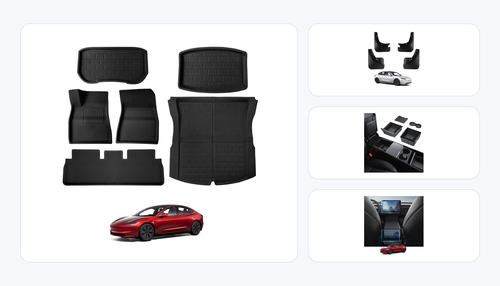
Month 1: record baseline tire pressure, note the delivery tire size, photograph the wheel edges, and confirm which generation you own. This is also when we install protection that is easiest before the car gets dirty: exact-fit mats, a screen protector, and route-specific splash protection if rain, gravel, or winter slush is already part of the commute. We do not replace filters in month one unless the car has a clear odor or contamination issue.
Month 3: inspect the wear pattern. Look at driver-footwell grit, lower-door spray, rear-cabin scuffs, cargo-lip marks, wiper streaks, and whether the HVAC has developed a smell after rain. This is where Model Y family use often separates itself from Model 3 commuter use. A family Model Y may justify seat-back, cargo, and mud-flap protection sooner; a garage-kept Model 3 may only need tire and wiper discipline.
Month 6: check tread shoulders in daylight, not just the easy center tread. EV tire wear can hide on inner or outer edges when pressure, alignment, wheel size, or driving habits are off. If the car is due for rotation by Tesla guidance or visible wear, schedule it and keep jack pads with the service kit. This is also a good time to clean the cabin filter area if dust or leaves are collecting, while still avoiding replacement unless symptoms support it.
Month 12: make the actual maintenance decision. Replace wipers if they streak. Replace cabin filters if airflow, odor, dust, pollen, or regional conditions justify it. Inspect brake condition more carefully if the car lived through salted roads. Update your records with tire pressure habits, rotation date, tread notes, and any service alerts. The goal is a short, evidence-based list, not a receipt pile.
Climate and mileage matter more than the calendar
A 6,000-mile garage-kept Model 3 in mild coastal weather and a 18,000-mile Model Y in salted winter roads are not the same maintenance case. The first car may need little beyond wiper inspection, tire checks, and basic cleaning. The second car may justify earlier brake-caliper attention, mud flaps, cabin-air inspection, and deeper wheel/tire review. A single “year-one Tesla kit” ignores the actual stress on the vehicle.
We split year-one owners into three usage groups. Low-mileage commuters should avoid overbuying and focus on tire pressure, wipers, and screen/cabin protection. Family crossovers should inspect rear seats, cargo, lower doors, and floor areas because kids, pets, strollers, sports gear, and groceries create visible wear quickly. High-mileage or harsh-climate owners should be more serious about tires, brake inspection, filters, lower-paint protection, and service records.
This is why we phrase BASENOR products as conditional tools. Jack pads make sense before service. Filters make sense when the cabin shows evidence. Mud flaps make sense when the route throws debris. A sunshade makes sense when heat and UV are part of daily parking. A product that is excellent for one owner can be unnecessary clutter for another.
The year-one record we would keep
A useful maintenance record can fit in one note on your phone. Record tire pressure checks, rotation dates, tread observations, wiper replacement, filter replacement if it happens, service visits, and any recurring noise or odor. Add model-generation notes too: Highland, Juniper, legacy Model 3, standard Model Y, Model S/X, or Cybertruck. Those details help later when you buy parts, request service, or explain the car to a future buyer.
Photos are part of the record. Take four wheel photos, one tire-shoulder photo per side if possible, one screen photo, one front footwell photo, one cargo photo, and one lower-door photo at year one. If you install a product, photograph the surface before and after installation. This sounds excessive until a rattle, scratch, tire-wear pattern, or resale question appears. Then the record becomes useful evidence instead of memory.
We also keep the language honest. A clean maintenance record does not prove the battery is perfect, and accessories do not guarantee a resale premium. What they do prove is owner discipline: you watched the right wear points, used model-specific parts, and did not confuse “low maintenance” with “ignore it for a year.”
Buy now, inspect later, skip for now
Buy now: jack pads if tire service or third-party shops are likely, exact-fit screen protection if you clean the display often, and route-based lower-paint protection if your commute already shows spray. These products solve visible or predictable year-one problems without pretending to be factory-required maintenance.
Inspect later: cabin filters, brake surfaces in salted-road regions, mud flaps in mild routes, and organization pieces that depend on passengers. Inspection keeps the list honest. If the car smells clean, tracks straight, wipes clearly, and does not collect debris, you do not need to create a problem just to buy a solution.
Skip for now: any product that is not generation-specific when fitment matters, any decorative piece that makes cleaning harder, and any “maintenance kit” that includes items your car does not need yet. We prefer fewer parts that do real work over a large accessory pile that makes the car harder to manage.
The final year-one rule
If a year-one item cannot be tied to safety, visibility, air quality, tire service, climate protection, or exact-fit condition protection, it waits. That rule keeps the car simpler, keeps maintenance records cleaner, and prevents owners from replacing parts that are still working correctly. It also protects budget for the items that become genuinely expensive when ignored: tires, alignment symptoms, brake noise in winter climates, and model-specific parts that do not tolerate guesswork.
We prefer this standard because it is easy to audit. A wiper blade either clears the glass or it does not. A filter either smells clean and flows normally or it does not. A tire either shows healthy, even wear or it does not. A product either fits your exact generation or it should stay out of the cart.
FAQ
Does a Tesla need maintenance after one year?
Yes, but not traditional annual engine service. Check tires, wipers, washer fluid, cabin air, brakes in harsh climates, software/service alerts, and model-specific fitment needs.
Should I replace my Tesla cabin air filter at year one?
Usually inspect first. Replace at year one if you have odor, dust, pollen, smoke exposure, weak airflow, or a model-specific interval/use case that justifies it.
Are Tesla jack pads worth it?
They are worth keeping if you rotate tires, use third-party shops, or want clearer lift-point handling. The tradeoff is that they sit unused until service day.
What is different for Model Y Juniper?
Model Y Juniper retains the physical turn-signal stalk and uses touchscreen shifting. Buy Juniper-specific exterior and cabin parts when fitment touches refreshed body or interior geometry.
Do accessories replace Tesla service?
No. Accessories can support cleaning, protection, and service prep. They do not replace tire safety, brake inspection, wiper replacement, or Tesla service guidance.
A simple way to plan the first year
Treat year-one maintenance as three small checkpoints instead of one large annual purchase. In the first month, confirm the lift points, tire-pressure routine, and cabin-cleaning tools you will actually use. Around month six, inspect wipers, washer fluid habits, cabin airflow, floor protection, and the places passengers scuff most often. Near month twelve, review tire wear, brake feel, filter condition, and whether your model-specific protection still fits tightly after heat cycles, car washes, and daily entry/exit use.
This cadence keeps BASENOR accessory choices tied to real evidence: visible wear, measured airflow, service-shop handling, and the specific Tesla generation in your garage. It also prevents two common mistakes — buying maintenance parts before there is a symptom, or waiting until a tire rotation, dirty filter, or scratched cargo area turns into a rushed decision.
Sources
Build a year-one maintenance stack that matches your Tesla
Start with tire-service prep, evidence-based cabin-air replacement, and model-specific protection — not a generic annual parts basket.
Shop BASENOR Tesla accessoriesAuthor: BASENOR Product Testing Lab — our team evaluates Tesla accessory fitment by model generation and writes from measurable owner-use cases. For deeper context on real Tesla Model 3 tire replacement costs, see our guide on Model 3 tires cost.
Last updated: April 2026, with Tesla service-interval references and neutral EV maintenance context.