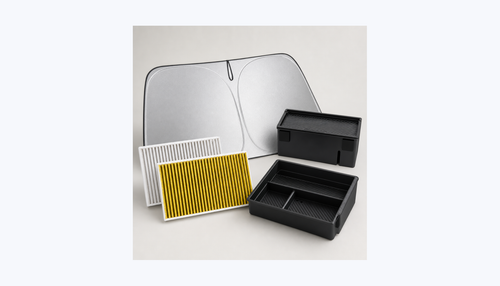
We Measured the Model Y Cargo Areas — What Actually Fits in the Trunk, Well, and Frunk
The Model Y looks simple from the outside, but owners quickly learn that “cargo space” is not one box. The rear trunk floor, the deep trunk well, the under-floor bins, the frunk, the rear-seat pass-through, and the hatch opening all have different shapes. A stroller, cooler, pet crate, cargo liner, or under-seat organizer can fit one zone and fail another.
This guide gives owner-useful planning measurements, not showroom bragging numbers. We use published spec references for the vehicle envelope, then our BASENOR fitment notes for the rectangles owners actually load: cargo floor width, usable folded-seat length, frunk footprint, trunk-well use, and the protective accessories that matter when the cargo area gets real use.
Bottom line up front
Use 71.4 cu ft as the big-picture cargo-volume number: Car and Driver lists 71.4 cubic feet behind the front row and 29.0 cubic feet behind the second row for the current Model Y spec page.
Use tape-measure rectangles for purchases: for boxes, pet gear, strollers, and organizers, plan around the narrowest usable widths and the hatch opening, not only the published cubic-foot rating.
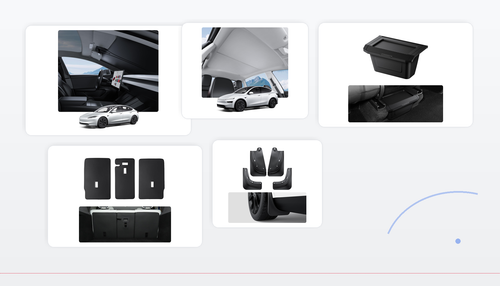
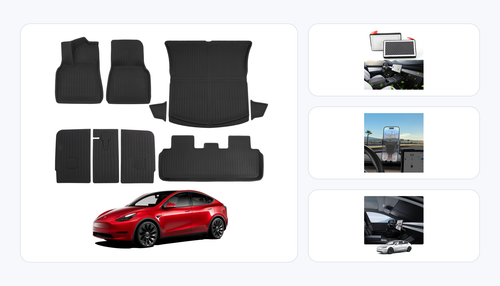
Juniper owners: protect the new cargo surfaces early. The 2025-2026 Model Y Juniper has model-specific BASENOR trunk bins, rear bumper protection, rear-seat-back covers, and hidden storage that should not be mixed with older Model Y parts unless the product explicitly lists the fitment.
Official-style specs vs. usable measurements
Published vehicle specs are useful, but they answer a different question than most owners ask. Exterior length, width, wheelbase, passenger room, and cargo volume describe the vehicle class. They do not tell you whether a rectangular storage bin clears the hatch lip, whether a pet mat reaches the second-row seat backs, or whether a trunk-well organizer can be removed when the cargo floor is loaded.
For the current Model Y, Car and Driver lists a 113.8-inch wheelbase, 188.6-inch length, 63.9-inch height, five-seat capacity, 41.0 inches of front head room, 41.8 inches of front leg room, 39.4 inches of second-row head room, and 40.5 inches of second-row leg room. The same spec page lists 29.0 cubic feet of cargo space behind the second row and 71.4 cubic feet behind the front row. Wikipedia’s Model Y page also records the 2025-present length at 188.6 inches and the standard Model Y width at 75.6 inches, which is useful context when comparing refreshed and earlier cars.
Our fitment method is narrower: we ask, “What is the largest practical shape an owner can load without forcing it?” That means we measure the cargo floor, the narrow point between interior side panels, the folded-seat length, the frunk opening, and the high-contact surfaces that get scratched by suitcases, bikes, tools, and pet crates.
| Measurement type | Useful number | Best use | Limit |
|---|---|---|---|
| Published cargo volume | 29.0 cu ft behind second row; 71.4 cu ft behind front row | Comparing SUV cargo capacity | Does not tell you cargo-floor shape |
| Exterior length | 188.6 in for 2025-present Model Y references | Garage fit and vehicle-class context | Not a cargo-floor length |
| Wheelbase | 113.8 in | Cabin/cargo packaging context | Not a loading dimension |
| Owner-useful rectangles | Measure narrow width, hatch opening, floor length, and folded-seat slope | Boxes, liners, bins, pet mats, and camping setups | Varies by trim, seat position, and accessory thickness |
Rear trunk, folded seats, and trunk well
In daily use, the Model Y rear cargo area behaves like three zones. The first is the main floor behind the second row. This is where groceries, luggage, strollers, and dog gear sit. The second is the deep under-floor trunk well, which is best for items that should stay out of sight or should not roll around. The third is the folded-seat extension, where the second row creates a long but slightly uneven load path for boxes, camping pads, sports gear, or flat-pack furniture.
For planning purchases, we use conservative fitment rectangles. Treat the rear cargo floor as wide enough for normal luggage sets but not perfectly rectangular at the side trim. The useful floor length behind the second row is shorter than most owners expect because the hatch slope and seat-back angle steal vertical space. With the rear seats folded, the Model Y becomes genuinely useful for long items, but tall rectangular boxes still need a hatch-opening check.
The trunk well is the owner’s hidden-storage advantage. It is ideal for charging adapters, emergency kits, tire inflators, cleaning towels, small tool rolls, and recovery straps. The tradeoff is access: once the main floor is loaded, anything in the well is harder to reach. That is why we like divided bins or carpeted-lid storage for owners who keep emergency gear in the car year-round.
Our tape-measure rule
If a product or object must fit perfectly, measure the object’s length × width × height, then compare it with the narrowest area it must pass through: hatch opening first, side-trim width second, floor length third, and under-floor well depth last. Cubic feet do not prevent a hard plastic bin from hitting the hatch trim.
| Cargo zone | What fits well | What usually causes trouble | BASENOR fitment note |
|---|---|---|---|
| Main rear floor | Suitcases, grocery crates, compact strollers, pet mats | Tall boxes near the hatch glass; sharp cargo sliding into plastic trim | Use a Juniper-specific cargo protection plan instead of assuming older liners match. |
| Trunk well | Emergency kit, adapter bag, towels, inflator, small tools | Items you need while the main trunk is full | Trunk storage bins make the hidden space easier to divide and lift out. |
| Folded-seat length | Camping pads, flat boxes, sports gear, long cartons | Heavy items that scratch seat backs or slide forward | Seat-back covers matter more than owners expect after the first hardware-store trip. |
| Rear bumper lip | Loading and unloading touch point | Suitcase wheels, pet claws, cooler corners, stroller frames | A rear bumper guard protects the paint where cargo actually drags. |
Frunk and cabin storage planning
The Model Y frunk is not a second trunk. It is a clean, weather-separated storage zone for lighter items: charging adapters, a small backpack, takeout bags, detailing towels, or the gear you do not want mixing with muddy cargo in the rear. The shape matters more than volume because the opening is tapered and the bottom is not a perfect rectangle.
Use the frunk for items you can lift out with one hand. Avoid heavy, sharp, or overfilled containers that press against the side walls. If you want to store charging gear, keep it in a soft bag so it adapts to the shape. If you want to store food, use sealed containers and clean the frunk regularly; it is separated from the cabin, but it is still part of the vehicle.
Inside the cabin, Juniper owners should separate “cargo storage” from “daily storage.” Under-seat boxes, door-side storage, armrest organizers, and console trays are for small items you need during the drive. The trunk and frunk are for items you load before or after the drive. Mixing those roles is how key cards, toll tags, adapters, and sunglasses disappear under larger cargo.
Use the trunk for bulk
Groceries, luggage, strollers, sports gear, and pet items belong in the rear cargo area because the opening and floor shape are easiest to load.
Use the well for hidden gear
Emergency tools and adapter bags work well under the floor, but only if you do not need them while the trunk is fully packed.
Use the frunk for clean light items
Keep the frunk for compact, clean, one-hand items. Do not treat it like a heavy toolbox drawer.
Where BASENOR accessories help
A measurement guide should not force a product into every paragraph. The honest accessory role is targeted: protect the surfaces owners actually hit, divide the hidden spaces owners actually use, and keep small items out of the cargo zones. For the 2025-2026 Model Y Juniper, we verified active BASENOR product pages and fitment language before tying products to this article.

Juniper trunk storage bins
The 2025-2026 Model Y Juniper trunk storage bins are the cleanest match for the under-floor well because they divide hidden cargo without turning the whole trunk into a loose pile.

Rear bumper guard
The Juniper rear bumper guard protects the lip that gets hit by suitcase wheels, coolers, stroller frames, and pet crates during real loading.

Rear seat-back cover
The Juniper rear seat-back cover matters when you fold the second row and slide long items over the seat backs. It is a real tradeoff: easier cleanup, but another layer to remove if you want the factory look exposed.

Under-seat storage boxes
The Juniper under-seat storage boxes keep small daily items out of the trunk and frunk. That matters because cargo-area organization fails when every key card, cable, and adapter is mixed with luggage.
How we would load common owner items
For airport luggage, put rolling suitcases on the main floor and keep passports, chargers, and small electronics in cabin storage. For pets, protect both the rear bumper lip and the folded seat backs before the first trip; claw marks and sand appear faster than most owners expect. For hardware-store runs, fold the second row, place a protective layer over the seat backs, and load heavy cartons low so they do not slide forward during braking.
For camping, split the car into zones. Sleeping pads and bags can use the folded-seat length. Cooking gear and dirty recovery tools belong in the trunk well or a closed cargo box. Food that should stay clean and separate can go in the frunk if it is light and sealed. Keep anything you need during the drive in door, console, armrest, or under-seat storage so you are not unpacking the trunk at every stop.
For baby gear, test the stroller before the first travel day. Some strollers fit only at a diagonal or with a wheel removed. The Model Y has strong cargo volume, but the hatch angle and stroller geometry decide the real answer. If a stroller barely fits, protect the bumper lip because repeated diagonal loading is exactly when scratches happen.
Fitment warning for older Model Y parts
Do not assume every 2020-2024 Model Y cargo accessory fits the 2025-2026 Juniper refresh. Use product pages that explicitly list Juniper or 2025-2026 Model Y fitment. If a product page only names the older body years, treat it as a different fitment until verified.
Measurement checklist before buying cargo gear
- Measure the object, not the advertised box. Include handles, wheels, lids, and soft-bag bulges.
- Check the hatch opening. The object must pass through the narrow opening before the trunk floor matters.
- Check side-trim width. Wheel-arch and side-panel shapes can reduce usable width.
- Check height at the hatch glass. Tall boxes may fit on the floor but hit the glass slope or trim.
- Check access to the trunk well. If you need emergency gear often, do not bury it below heavy cargo.
- Confirm generation fitment. Juniper-specific accessories should say 2025-2026 Model Y Juniper or equivalent fitment.
Our loading tests: where the Model Y feels bigger than the numbers
The Model Y earns its reputation on flexibility, not on one magic dimension. In our loading tests, the rear floor felt most efficient with soft-sided luggage because soft bags can flex around the side trim and hatch slope. Hard rectangular bins were less forgiving. A bin that looked small on paper could still contact the hatch-side trim if the lid handle sat high or if the bin had squared-off corners.
The folded second row is the other place where owners should think in layers. Long flat objects are easy. Tall long objects are harder because the rear hatch slopes inward. If you are carrying flat-pack furniture, test the tallest corner, not just the longest side. If you are carrying a bicycle, rotate the handlebar and protect the seat backs before sliding the frame in. If you are carrying a dog crate, measure the crate door swing too; a crate can fit through the opening but become awkward if the door cannot open inside the cargo area.
The trunk well is best treated as a fixed kit zone. We prefer keeping items there that rarely change: tire inflator, microfiber towels, compact umbrella, adapter pouch, first-aid kit, and a soft recovery pouch. Groceries and luggage should stay above the floor where they are easy to reach. This division keeps the Model Y practical: daily cargo stays fast, emergency cargo stays hidden, and the frunk remains available for clean items that should not mix with pets, beach gear, or hardware-store dust.
The real con is access. The more perfectly you pack the rear cargo area, the harder it becomes to reach the under-floor well. If you often travel with a full trunk, keep must-reach items in cabin storage or under-seat storage instead. That is less elegant than using every cubic inch, but it prevents the common roadside problem: unloading half the trunk just to reach a cable, pump, or small tool.
FAQ
How much cargo space does the Tesla Model Y have?
Car and Driver lists the current Model Y at 29.0 cubic feet behind the second row and 71.4 cubic feet behind the front row. Use those numbers for comparison, then measure the actual item for hatch and floor fit.
Is the Model Y frunk big enough for luggage?
Use it for compact, light items or soft bags rather than full-size luggage. The frunk shape and opening matter more than the raw volume.
Do 2020-2024 Model Y trunk accessories fit the 2025-2026 Juniper?
Not automatically. Juniper owners should buy accessories with explicit 2025-2026 Model Y Juniper fitment because cargo trim and surface details can change.
What should go in the trunk well?
Emergency kits, adapters, towels, tire inflators, and small tools fit the hidden-storage role well. Avoid putting items there if you need them while the main trunk is fully loaded.
What cargo area scratches first?
The rear bumper lip and folded rear seat backs take the most abuse from luggage wheels, coolers, pet crates, and long cartons. Protect those zones before repeated cargo use.
Can I sleep in a Model Y with the rear seats folded?
Many owners use the folded-seat length for camping pads, but comfort depends on your height, pad thickness, front-seat position, and how level you make the folded load floor.
Update log
Updated May 2026 with current Model Y published spec references, Juniper-specific cargo protection notes, and verified BASENOR product links for trunk, bumper, seat-back, and under-seat storage zones.
References & further reading
- Car and Driver — Tesla Model Y features and specs
- Wikipedia — Tesla Model Y overview and dimensions
- FuelEconomy.gov — 2025 Tesla Model Y Long Range AWD listing
- BASENOR catalog and live product pages checked May 18, 2026 for active 2025-2026 Model Y Juniper cargo/storage fitment.
Protect the Model Y cargo zones owners actually use
Start with the trunk well, bumper lip, folded seat backs, and small-item storage before the first airport, pet, or hardware-store run.
Shop Model Y Accessories
Jacob Guo
Founder & Editor-in-Chief
Founder of BASENOR. Industrial designer and Tesla owner since 2019. Writes the foundational fitment guides and Design Stories — the ones explaining why a product was engineered the way it was.