Model Y Lease Guide · 2026 Owner Notes
Leasing a Tesla Model Y? What We’d Check Before Signing
A Model Y lease can make sense if you want lower commitment, predictable warranty coverage, and the option to reassess EV technology in 24–36 months. It is less attractive if you drive high miles, want to modify the car, or expect to keep accessories permanently installed at return.
Bottom Line Up Front
Lease the Model Y if: you drive predictable annual mileage, want to stay inside the basic warranty window, and value switching into newer battery, software, or cabin updates instead of owning one car for eight years.
Think twice if: you routinely road-trip, have a long commute, carry pets or cargo often, or want permanent upgrades. Mileage overages and return-condition charges can erase the monthly-payment advantage.
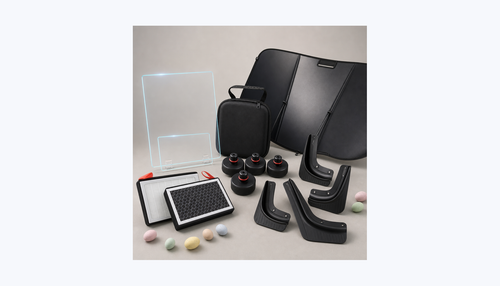
Our lease-safe accessory rule: choose removable protection first — sunshade, mud flaps, and cargo-sill protection — because they solve daily pain without drilling, wiring, adhesive residue, or lease-return arguments.
What a Model Y lease really changes
Leasing is not just a cheaper-looking payment. It changes what you are optimizing for. When you finance a Model Y, you are buying long-term ownership, resale exposure, and full control over modifications. When you lease, you are paying for a fixed use period with rules: mileage allowance, wear standards, insurance requirements, return timing, and limits on what you can change.
That tradeoff matters more on a Tesla than on many gas SUVs because the ownership experience keeps changing. Software features, battery chemistry, charging hardware, cabin controls, and driver-assistance packages can shift over one lease cycle. A lease lets you reassess sooner. The cost is that every mile, scratch, curb rash mark, and non-removable accessory becomes a return-condition question.
For 2025 Model Y shoppers, EPA listings show the Long Range RWD at 125 combined MPGe and 337 miles of range, while the Long Range AWD listing shows 117 combined MPGe and 311 miles of range. Those numbers make the Model Y efficient enough that the lease decision usually comes down to use pattern rather than energy cost alone.
Lease advantage
Lower commitment, usually less resale risk, and an easier path into a newer Tesla after the term.
Lease cost
Mileage caps, wear standards, and less freedom to make permanent changes.
Best fit
Predictable commute, home charging, careful parking habits, and a plan to keep the car mostly stock.
The numbers to check before you sign
We would not judge a Model Y lease by the advertised monthly payment alone. Tesla lease offers change, incentives change, and regional taxes can move the real payment. Instead, compare the total cost of the contract against your expected use.
| Line item | What to check | Why it matters | Our rule |
|---|---|---|---|
| Mileage allowance | Annual miles and overage rate | EV owners often drive more once charging is convenient. | Add 15–20% buffer above your current annual miles. |
| Due at signing | Taxes, fees, first payment, and any down payment | A low monthly number can hide a larger upfront cash cost. | Compare total lease cost, not monthly cost. |
| Incentives | How credits are applied by the lessor | Lease credits may be handled differently from purchase credits. | Get the applied amount in writing before signing. |
| Return fees | Disposition, excess wear, tire, wheel, and glass rules | Return charges can arrive after you stop driving the car. | Protect high-contact areas early, but keep upgrades removable. |
The Federal Trade Commission’s consumer guidance on car financing and leasing is useful because it frames the decision around total cost, contract terms, and end-of-lease obligations rather than the headline payment. For a Model Y, that is exactly how we would shop: total due, allowed miles, end-of-term risk, and whether you are comfortable returning the vehicle in stock condition.
Who should lease, finance, or wait
Lease if your driving is predictable
A lease fits a Model Y owner who has a stable commute, charges at home or work, parks in relatively safe spaces, and wants the car for the warranty-heavy years. It is also a good match if you expect to reevaluate Tesla hardware, cabin updates, or range improvements at the next cycle.
The strongest lease case we see is a household that uses the Model Y as a clean daily driver, not a construction hauler, pet shuttle, or 25,000-mile-per-year road-trip vehicle.
Finance if you want control
Financing fits owners who drive high miles, keep cars beyond five years, install more permanent upgrades, or want to capture any long-term resale upside. It also reduces the mental overhead of treating every scuff as a potential lease-return bill.
If you want ceramic tint, permanent wiring, heavy-duty cargo use, aftermarket wheels, or repeated camping setups, ownership gives you more room to make the car yours.
Waiting is also rational if your current car still works and your lease math depends on a temporary promotion. Tesla pricing and incentives can move quickly. If the monthly payment only works because one limited offer is active, do the math again with a less optimistic scenario.
Lease-return risk: wear, miles, tires, and accessories
Model Y lease risk is not theoretical. The vehicle is easy to use as the main family car, which means it collects the same wear as any crossover: cargo sill scratches, rear-seat mess, glass-roof heat complaints, muddy rocker panels, wheel curb marks, and cabin scuffs. The difference is that a lease return turns those details into inspection items.
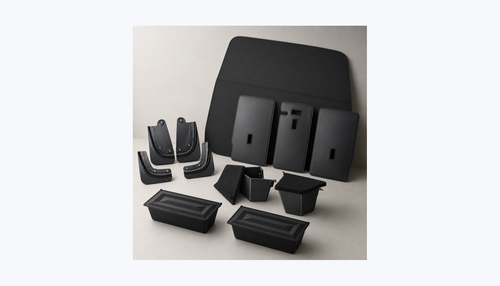
We separate protection into two buckets. The first bucket is lease-safe: removable mats, removable sunshades, clip-on or no-drill mud flaps, and cargo-area guards that leave no residue. The second bucket needs caution: adhesive trim, wiring taps, drilled accessories, non-OEM wheels, and anything that can leave marks when removed. For a leased Model Y, the first bucket should come before the second.
Tires deserve special attention. EV torque, curb weight, alignment, and driving style can wear tires faster than a new owner expects. If your lease term ends with tires below the required depth, you may be forced into a replacement right before return. That is why high-mile drivers should be more conservative with lease mileage math than the advertised annual allowance suggests.
Lease-safe BASENOR protection we’d install first
For a leased Model Y Juniper, we would prioritize protection that prevents common wear while staying reversible. These are not permanent customization items; they are practical damage-prevention pieces that make the car easier to return clean.
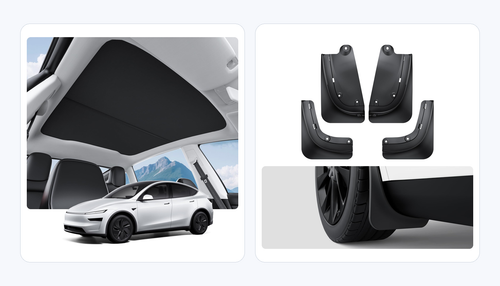
 Model Y Juniper Roof Sunshade
Best for glass-roof heat control without tint, adhesive, or wiring. The tradeoff: it must be removed and stored when you want the full open-glass look.
 No-Drill Model Y Juniper Mud Flaps
Best for rocker-panel and lower-door splash protection. The real tradeoff: you should inspect clips after winter or gravel-road use.
 Rear Bumper Guard
Best for cargo sill scratches from strollers, luggage, pet crates, and Costco runs. The tradeoff: check edge seating before return so it does not trap dirt lines.
Pre-signing checklist for a Model Y lease
- Calculate total lease cost. Add upfront cash, monthly payments, taxes, fees, expected charging setup costs, insurance changes, and likely return fees.
- Check your real mileage. Use the last 12 months of odometer history, then add a buffer for EV novelty and road trips.
- Confirm incentive handling. Ask how any clean-vehicle credit or lease support is reflected in the contract, not just in the advertisement.
- Read the return standard. Tires, wheels, glass, upholstery, paint, and accessories are the areas most likely to surprise first-time lessees.
- Plan removable protection before damage happens. Install reversible protection early, not after the first cargo scratch or muddy winter.
- Keep every original part. If you remove a clip, tray, mat, or small trim piece, bag it and label it for lease return.
If that checklist still looks comfortable, a Model Y lease can be a clean way to drive the car through its easiest ownership years. If two or three items feel uncertain, financing or waiting is safer. The right answer is less about Tesla hype and more about whether your real driving pattern fits a contract with mileage and return-condition rules.
Four real ownership scenarios we would model
A Model Y lease looks simple until you put it against real household use. We would model the decision with four owner scenarios rather than one generic payment comparison.
1. The predictable commuter
This is the cleanest lease match. The owner drives a known route, parks in the same places, and has home or workplace charging. Range anxiety is low because the route is repetitive, and the mileage allowance can be selected with confidence. For this owner, the lease is mostly a technology-refresh decision: use the Model Y while it is fresh, then reassess after the term.
2. The family hauler
This owner should be more careful. The Model Y is excellent at becoming the default family car, which means grocery carts, kids’ shoes, sports gear, dog crates, strollers, and airport luggage all hit the same surfaces. A lease still can work, but only if the owner protects high-contact areas early and accepts that interior wear is part of the math.
3. The road-trip owner
This is where the lease can become expensive. The Model Y’s efficiency makes long trips easy, and that convenience can push annual mileage higher than planned. If you take several multi-state trips per year, calculate miles from actual navigation history, not optimism. A lease with too little mileage is not a discount; it is a deferred bill.
4. The modifier
If you already know you want wheels, suspension changes, permanent wiring, aggressive tint, adhesive trim, or drilled accessories, financing is usually cleaner. You can still reverse some upgrades, but the labor, risk, and inspection uncertainty make the lease less comfortable. A leased Tesla should stay close to stock unless every change is easy to remove.
Do not forget charging and insurance
Lease shoppers sometimes compare only the car payment, but a Model Y changes the rest of the household budget too. Home charging is the biggest quality-of-life upgrade. If you already have a 240V outlet or wall connector, the lease experience is easier. If you need electrical work, add that cost to the lease comparison. It may still be worth it, but it belongs in the same spreadsheet as the monthly payment.
Insurance can also move the decision. The Model Y is efficient, quick, and tech-heavy, but body, glass, sensor, and wheel repairs can be expensive. Before signing, quote insurance for the exact trim and driver profile. A lease does not protect you from higher premiums, deductibles, or repair downtime.
We also recommend creating a small return reserve. Even careful owners can end a lease with one wheel mark, one windshield chip, worn tires, or a cargo scuff. A modest reserve makes the final inspection less stressful and prevents a surprise bill from changing how you feel about the entire lease.
A simple lease-return timeline
The easiest lease return starts on delivery day, not during the final week. We use a three-step timeline when advising Tesla owners who want to keep the car clean without over-modifying it.
Day 1–30
Photograph the car, save delivery documents, install reversible protection, and store any removed original pieces in a labeled bag.
Mid-lease
Check tire wear, alignment feel, mud-flap clips, cargo sill condition, and wheel rash before small issues become return problems.
Final 90 days
Remove nonessential accessories, clean edges where guards sat, inspect tires and glass, and decide what to repair before inspection.
This timeline is intentionally boring. Boring is good for a lease. The goal is not to turn the Model Y into a garage queen; it is to prevent avoidable charges while still using the car as a daily driver.
Model Y lease FAQ
One more practical check: ask how the lease handles end-of-term transportation, appointment timing, and inspections if you move states during the contract. Tesla owners are often comfortable with app-based service, but lease return logistics still need calendar planning. Put the return month on your calendar when you sign, then set reminders at six months and three months before maturity. That gives you time to correct tire wear, order missing original pieces, remove accessories, and document the car before any final inspection.
Is leasing better than buying a Model Y?
Leasing is better if your mileage is predictable, you want a short commitment, and you prefer moving into newer Tesla hardware or range updates after the term. Buying is better if you drive high miles, keep cars long term, or want more control over modifications.
Should I put a large down payment on a lease?
We prefer comparing total cost rather than chasing a lower monthly number. A large upfront payment may make the monthly lease look better, but it does not change the mileage rules, return standards, or insurance exposure.
Can I use accessories on a leased Model Y?
Yes, but prioritize accessories that are removable and leave no marks. Mats, sunshades, no-drill mud flaps, organizers, and cargo protection are lease-friendly. Drilling, wiring, strong adhesives, and permanent trim changes need more caution.
What is the biggest mistake first-time Tesla lessees make?
The biggest mistake is underestimating use. The Model Y is easy to drive, inexpensive to charge at home, and practical enough to become the main vehicle. That can mean more miles, more cargo wear, and more family use than the owner expected at signing.
Sources

Daniel Zhang
Lead Engineer · Testing & Fit Validation
Mechanical engineer with 10 years in Tier-1 automotive supply. Daniel runs the BASENOR test lab and signs off on every product before launch. Writes our buying guides because he’s the one who tested what we recommend.