Tesla just put the cost-of-ownership argument front and center. In a post shared Monday, the company pointed out that the Model 3's starting price sits below the average new car transaction price in the US — and that the Model Y RWD costs just $0.77 per mile to operate, undercutting rivals from Toyota, Hyundai, and BMW. The driver behind those numbers, Tesla says, is scale. Here's what each data point means for current and prospective owners.

1. Model 3 Starts Below the Average New Car Price
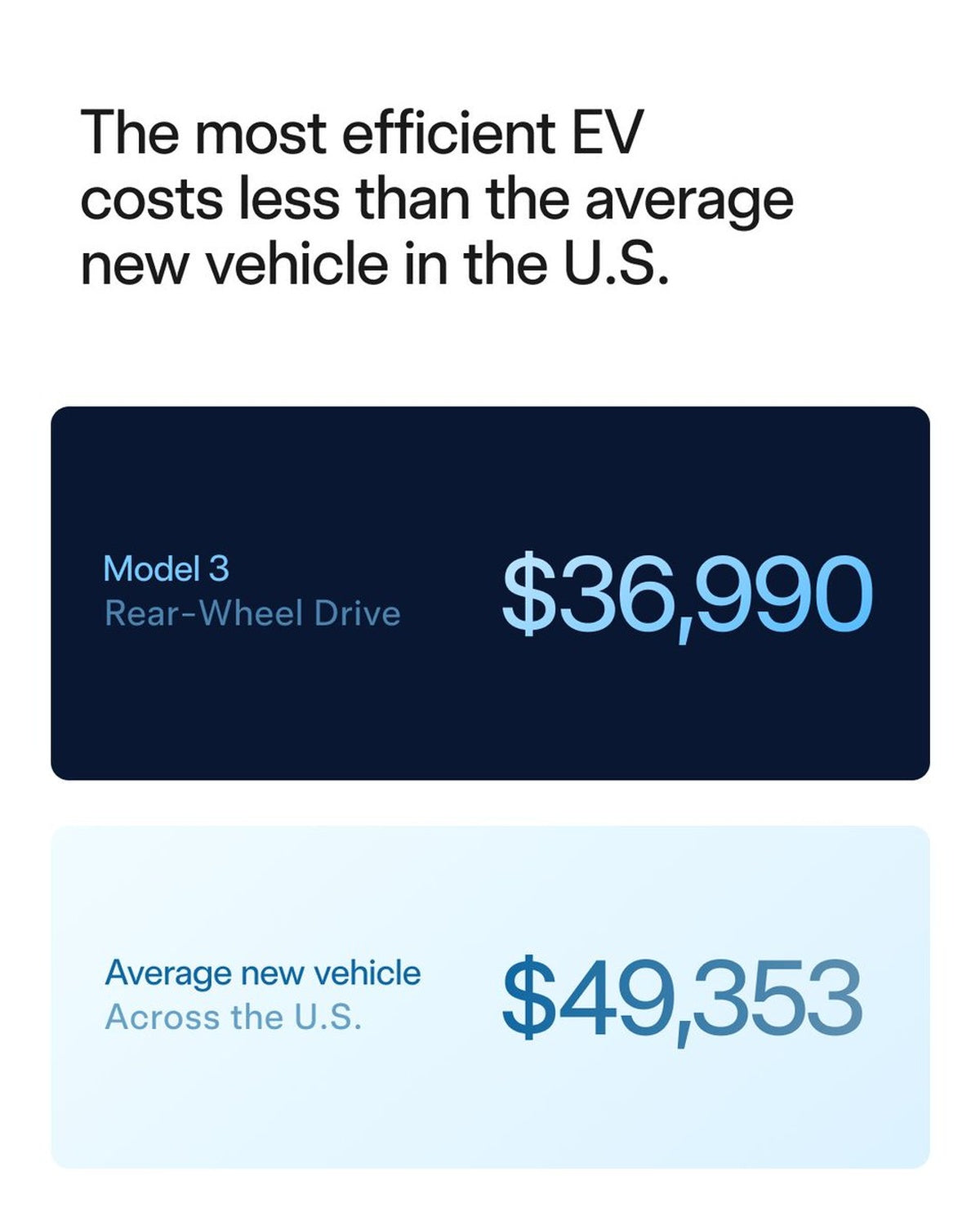
The 2026 Model 3 RWD carries an MSRP of $36,990 — roughly $12,000 below the average new vehicle transaction price in the US, which stood at $49,220 as of May 2026, according to Kelley Blue Book data. That gap is significant. Most buyers shopping in the $35,000–$40,000 range are comparing the Model 3 against mainstream sedans and compact crossovers, not luxury vehicles. Being priced below the national average reframes Tesla from a premium purchase into a value play — a positioning shift the company is clearly leaning into.
2. Model Y RWD Costs $0.77 Per Mile — Less Than a RAV4
At $0.77 per mile, the Model Y RWD comes in cheaper to operate than the Toyota RAV4 at $0.81 per mile. That might seem like a small delta, but over 15,000 miles a year it adds up to roughly $600 in annual savings versus the RAV4 alone. The RAV4 is the best-selling non-truck vehicle in the US, which makes this comparison deliberate. Tesla is directly targeting the buyer who considers a RAV4 the sensible, affordable choice — and arguing that the Model Y is now the more sensible one.
3. The Gap Widens Against the Hyundai IONIQ 5
The IONIQ 5 comes in at $0.85 per mile — a full 10% higher than the Model Y RWD. This one is notable because the IONIQ 5 is an EV, meaning the comparison isn't just gas vs. electric. It's a direct head-to-head between two electric crossovers, and Tesla is winning on total cost of ownership. The difference likely comes down to a combination of purchase price, depreciation curve, and charging efficiency, all areas where Tesla's scale and vertical integration provide structural advantages.
4. The BMW X3 Costs 49% More Per Mile
The starkest number in Tesla's post: the BMW X3 runs $1.15 per mile, compared to $0.77 for the Model Y RWD. That's a 49% premium per mile for a vehicle that competes in the same compact luxury crossover segment. Over five years and 75,000 miles, the difference amounts to roughly $28,500 in additional operating costs. For buyers cross-shopping a loaded Model Y against an entry-level X3, the cost-per-mile argument is hard to dismiss — especially as the Model Y's starting price has moved closer to the X3's entry point.
5. Scale Is the Engine Behind the Numbers
Tesla's post explicitly credits scaled production as the reason these numbers are achievable. That's not marketing language — it reflects a real structural dynamic. Manufacturing at high volume drives down per-unit costs on battery packs, motors, and assembly. Tesla's in-house production of key components, from cells to software, removes supplier markups that inflate costs at traditional automakers. The background research notes that electricity costs for the Model Y RWD run approximately 4.3 cents per mile based on national average rates — a figure that only gets more favorable as the grid gets cleaner. Scale also means more Supercharger infrastructure, lower service costs, and faster iteration on software that keeps older vehicles competitive longer.
The cost-per-mile framing is a smart move by Tesla at a time when affordability is the dominant concern for new car buyers. Whether these numbers hold up in a buyer's specific situation depends on local electricity rates, insurance costs, and financing terms — but as a benchmark comparison, the gap between the Model Y and its closest rivals is real and growing. The question for competitors is whether they can close it without Tesla's manufacturing scale.
Related Gear
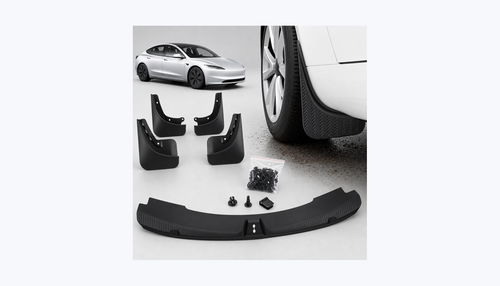
Gear up your Model 3 with tested, custom-fit BASENOR accessories — shop Model 3 accessories →
Sources & reporting notes
The links below identify the material source records used for this report.
- @Tesla on X (2026-07-07T17:11:10.000Z) — Direct source
Source links are preserved as published or accessed. See our editorial standards and corrections policy.
The BASENOR Editorial Desk covers Tesla, SpaceX, and related technology, curating reporting from primary sources — official accounts, regulatory filings, and software release data. Every article passes source-record and fact-checking review before publication. About the newsroom.
This report was curated by the BASENOR Editorial Desk from the sources listed above. Read our editorial standards or email editorial@basenor.com to report an error.