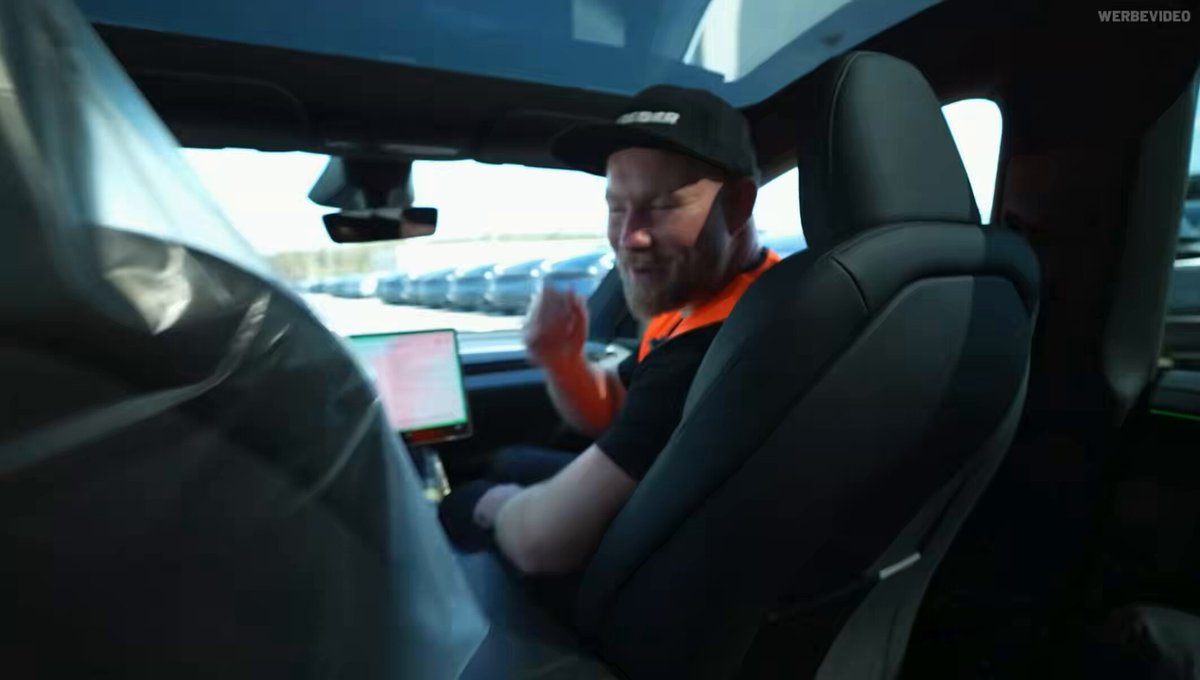
New footage captured at Tesla's Giga Berlin factory shows a Model Y navigating the facility entirely on its own using Unsupervised FSD — no driver, no hands on the wheel. But the most striking detail isn't the autonomous drive itself. At the end of the video, the FSD software visibly deletes itself from the vehicle after it reaches its destination, revealing a protocol that Tesla has never publicly documented.

5 Things to Know
1. This Is Real Factory Logistics — Not a Demo
The autonomous drives at Giga Berlin aren't a publicity stunt. According to plant manager André Thierig, who confirmed the program in September 2025: "Every Tesla we built has the ability to drive autonomously and we use this feature 100% for outbound operations, starting from the light tunnel until the car arrives at the outbound yard." Every single Model Y rolling off the Berlin production line is moved to the outbound yard without a human driver. This is live, operational deployment at industrial scale.
2. The Program Has Been Running Since May 2025
Tesla quietly launched Unsupervised FSD for internal logistics at Giga Berlin over a year ago. By May 2026, the fleet had collectively logged approximately 93,000 miles (150,000 km) of autonomous driving — all within the factory's private grounds. That mileage represents a significant real-world dataset, accumulated in a controlled environment that sidesteps public road regulations while still generating genuinely useful operational data.
3. The Self-Deletion Is the Undocumented Part
Tesla has never publicly described a protocol where Unsupervised FSD removes itself from a vehicle post-delivery drive. The footage shows exactly that happening at the end of the run. This is not a known consumer feature, and it doesn't appear in any official Tesla documentation. The most plausible interpretation: Tesla is provisioning FSD capabilities to freshly manufactured vehicles on a trip-specific basis, then revoking access once the vehicle reaches its handoff point — preventing the software from persisting on cars that haven't been sold with that feature enabled. It's a tight access-control mechanism, and it's the first time we've seen it on camera.
4. All of This Happens on Private Property — By Design
The Giga Berlin autonomous operations run entirely within the factory complex, on private land. That distinction matters enormously from a regulatory standpoint. Consumer-facing FSD (Supervised) still hasn't received approval for public roads in Germany — test drives in select German cities were still ongoing as of early July 2026, with approvals extending to at least July 15. Operating on private property lets Tesla accumulate real-world autonomous mileage and refine the system without waiting for the European regulatory process to conclude.
5. It Signals Where Unsupervised FSD Is Headed
The combination of routine factory deployment, 93,000+ autonomous miles logged, and a documented self-deletion protocol suggests Tesla is treating Giga Berlin as more than just a logistics solution — it's a proving ground. The infrastructure to provision, run, and remotely revoke Unsupervised FSD on a per-trip basis is exactly what a robotaxi or fleet operation would require. Every outbound Model Y drive is, in effect, a controlled test of the systems that would underpin a much larger autonomous network. The self-deletion behavior, undocumented as it is, looks less like a quirk and more like deliberate architecture.
What remains unclear is whether this self-deletion happens via an over-the-air command triggered by geofence arrival, a time-limited license key, or something else entirely. Tesla hasn't commented. But the footage exists, and the behavior is on the record — which makes it worth watching closely as Unsupervised FSD moves closer to a broader European rollout.
Related Gear
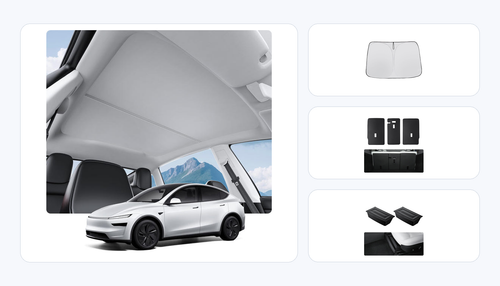
Gear up your Model Y with tested, custom-fit BASENOR accessories — shop Model Y accessories →
Sources & reporting notes
The links below identify the material source records used for this report.
- @TeslaNewswire on X (2026-07-08T20:00:37.000Z) — Direct source
Source links are preserved as published or accessed. See our editorial standards and corrections policy.
The BASENOR Editorial Desk covers Tesla, SpaceX, and related technology, curating reporting from primary sources — official accounts, regulatory filings, and software release data. Every article passes source-record and fact-checking review before publication. About the newsroom.
This report was curated by the BASENOR Editorial Desk from the sources listed above. Read our editorial standards or email editorial@basenor.com to report an error.