Tesla's Cybercab was originally designed around the next-generation AI5 chip — but that plan has shifted. According to Whole Mars Catalog, a well-sourced Tesla community account, the AI5 delay has forced the Cybercab to launch with AI4 hardware instead. Here's everything owners and watchers need to know about what that actually means.

Why is the Cybercab launching with AI4 instead of AI5?
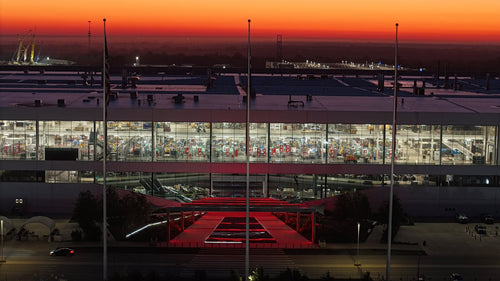
The short answer: AI5 isn't ready at scale. Elon Musk confirmed in November 2025 that the AI5 chip — previously referred to as Hardware 5 — won't be available in sufficient production volume to switch over Tesla's manufacturing lines until mid-2027. Since Cybercab production at Gigafactory Texas began ramping in early 2026, waiting for AI5 would have meant delaying the entire vehicle program. Tesla chose to move forward with AI4 rather than hold the line.
Is the AI4 in the Cybercab the same chip that's in current Model 3 and Model Y vehicles?
Not exactly. Production Cybercabs are reported to carry an enhanced AI4 configuration — sometimes referred to as "AI4+" — that goes beyond what's in standard consumer vehicles. The key difference is memory: this version reportedly includes more than 32GB of RAM, potentially up to 64GB, to support the larger, more capable self-driving models required for fully autonomous operation without a human backup driver. So while the silicon generation is the same, the implementation is meaningfully more capable.
Does launching with AI4 actually limit what the Cybercab can do?
Based on what's publicly known, no — not at launch. Tesla's unsupervised robotaxi service has already expanded beyond Austin using vehicles running AI4 hardware, with Model Y deployments reaching Miami as of July 3, 2026 (Dallas went live in April). The Cybercab is purpose-built for autonomy with no steering wheel, no pedals, and no traditional driver controls, so the software demands are high — but the enhanced AI4 configuration appears to be sufficient for the initial commercial rollout. AI5 would likely unlock faster inference and support for even more complex models down the road, but AI4 isn't a bottleneck today.
When will AI5 actually arrive in the Cybercab?
Tesla hasn't given a specific date for an AI5 transition in the Cybercab. The mid-2027 timeline Musk cited refers to when AI5 production volume becomes sufficient to switch over manufacturing lines broadly — not a Cybercab-specific upgrade date. It's reasonable to expect that once AI5 reaches scale, Tesla would introduce it into Cybercab production, similar to the HW3-to-HW4 upgrade path Tesla has announced but not yet begun. But no official retrofit or upgrade program has been announced.
What else should I know about the Cybercab's specs?
A few standout figures: Tesla VP of Vehicle Engineering Lars Moravy confirmed in May that the Cybercab carries an EPA-certified efficiency rating of 16.5 kWh per 100 miles (165 Wh/mile), making it the most efficient EV certified to date. Elon Musk has also stated a target price below $30,000 per unit. Production kicked off at Gigafactory Texas in February 2026 and has been ramping toward high-volume output through the spring. The vehicle is a two-passenger robotaxi designed entirely around unsupervised autonomous operation.
The AI4-to-AI5 pivot is less a setback and more a pragmatic call: get the Cybercab into service now with proven hardware, then upgrade the silicon when supply allows. Whether Tesla builds in a clear upgrade path for early fleet units is the question worth watching as AI5 production ramps toward 2027.
Related Gear
Gear up your Tesla with tested, custom-fit BASENOR accessories — shop Tesla accessories →
🚕 Following the Robotaxi rollout? See every operating city, launch date and announced market in our Tesla Robotaxi Tracker.
Sources & reporting notes
The links below identify the material source records used for this report.
- @wholemars on X (2026-07-08T08:05:43.000Z) — Direct source
Source links are preserved as published or accessed. See our editorial standards and corrections policy.
The BASENOR Editorial Desk covers Tesla, SpaceX, and related technology, curating reporting from primary sources — official accounts, regulatory filings, and software release data. Every article passes source-record and fact-checking review before publication. About the newsroom.
This report was curated by the BASENOR Editorial Desk from the sources listed above. Read our editorial standards or email editorial@basenor.com to report an error.