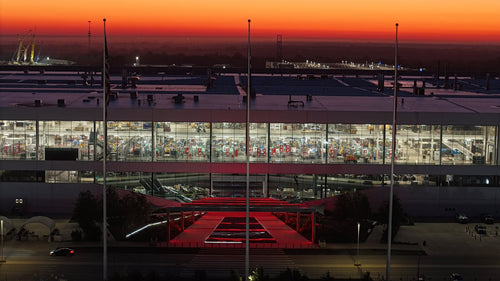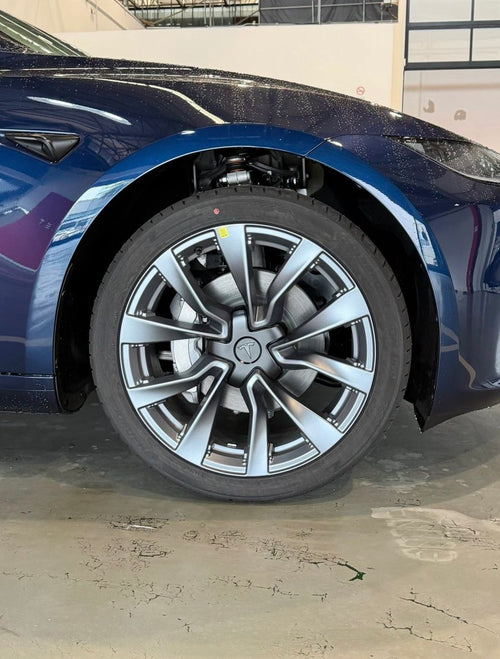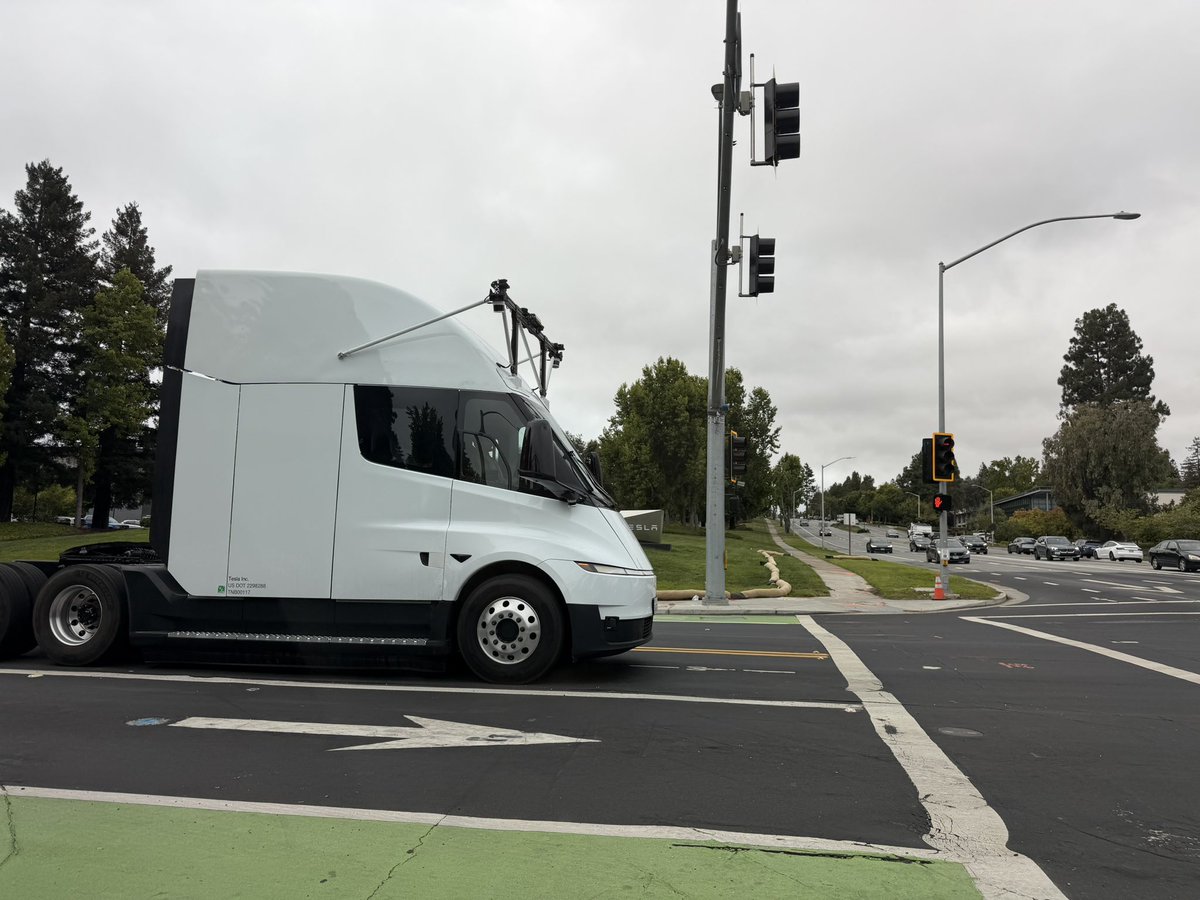
Tesla Semi trucks equipped with Full Self-Driving validation hardware have been spotted on California roads again — and the frequency of these sightings suggests the program is well past early exploration. Here's what the latest footage reveals and what it tells us about where autonomous trucking is headed.

1. These Sightings Are Becoming Routine — and That's Significant
The Tesla Semi spotted this week is far from an isolated case. According to multiple reports, validation-equipped Semis were observed on public roads in Sunnyvale, Palo Alto, and Fremont across at least four separate dates in June 2026 alone — June 20, 21, 24, and 27. When a test program reaches this kind of cadence on public roads, it typically signals a transition from early feasibility work to structured data collection. Tesla isn't just checking whether FSD can run on a Class 8 truck; it's actively building the dataset to make it work reliably.
2. The Hardware Configuration Points to Production Intent
The validation equipment visible on these Semis isn't prototype-only gear. The trucks are running a suite of 10 external cameras with camera washers — a configuration consistent with production-intent autonomous sensor hardware. Tesla is also using Hardware 4 (HW4) as the FSD compute platform on the Semi, the same generation Elon Musk described in April 2026 as sufficient for achieving "much better than human safety for FSD" in passenger vehicles. Samsung serves as the exclusive camera supplier for the Semi platform. The fact that these are production-spec components, not bolted-on research rigs, matters: Tesla is validating the system it actually plans to ship.
3. The FSD Model Is Being Rebuilt From Scratch for Trucking
Tesla isn't simply porting its passenger-car FSD stack onto the Semi and calling it done. According to background research, Tesla is remodeling its FSD AI specifically for the Class 8 operating environment — accounting for the vehicle's substantially different size, geometry, turning radius, and the unique demands of freight logistics. A truck behaves nothing like a Model Y at an intersection, and the neural network needs to reflect that. This ground-up adaptation is part of why validation testing requires so many real-world miles: the system needs exposure to scenarios that simply don't exist in passenger-car training data.
4. Port Drayage Is the First Target — Not Highway Autopilot
When Tesla does deploy FSD on the Semi, the initial rollout is expected to be geofenced and supervised, with port drayage operations identified as the primary use case. Port environments offer a compelling starting point: they're relatively controlled, the routes are repetitive, and the economic case for autonomous operation is immediately strong. This is a deliberate, staged strategy — not unlike how Tesla introduced FSD Supervised on passenger cars before expanding its operational design domain. Fleet operators watching this program should be paying close attention to port logistics partnerships as an early signal of commercial deployment timing.
5. The Semi Fleet Already Has 13.5 Million Real-World Miles Behind It
Before a single FSD mile is logged commercially, the Semi fleet has already accumulated approximately 13.5 million miles of real-world operation, with a reported uptime of around 95%. That operational history gives Tesla's AI team a substantial foundation of driving data from actual freight routes — something no startup autonomous trucking program can replicate quickly. Elon Musk stated in November 2025 that the refreshed 2026 Semi was "designed for autonomy" and "FSD ready," suggesting this mileage base was always part of the long-term plan. No official timeline for FSD deployment on the Semi has been announced, but the validation pace in mid-2026 indicates the program is moving with purpose.
Tesla has not confirmed a public release date for Semi FSD, and the current testing remains in the supervised validation phase. But the combination of production-spec hardware, a rebuilt AI model, a clear initial use case, and an accelerating test schedule paints a picture of a program that's much further along than the lack of official announcements might suggest. The next milestone worth watching: whether Tesla begins disclosing Semi-specific FSD miles in its quarterly safety reports.
Related Gear
Gear up your Tesla with tested, custom-fit BASENOR accessories — shop Tesla accessories →
Sources & reporting notes
The links below identify the material source records used for this report.
- @TeslaNewswire on X (2026-07-08T04:08:20.000Z) — Direct source
Source links are preserved as published or accessed. See our editorial standards and corrections policy.
The BASENOR Editorial Desk covers Tesla, SpaceX, and related technology, curating reporting from primary sources — official accounts, regulatory filings, and software release data. Every article passes source-record and fact-checking review before publication. About the newsroom.
This report was curated by the BASENOR Editorial Desk from the sources listed above. Read our editorial standards or email editorial@basenor.com to report an error.