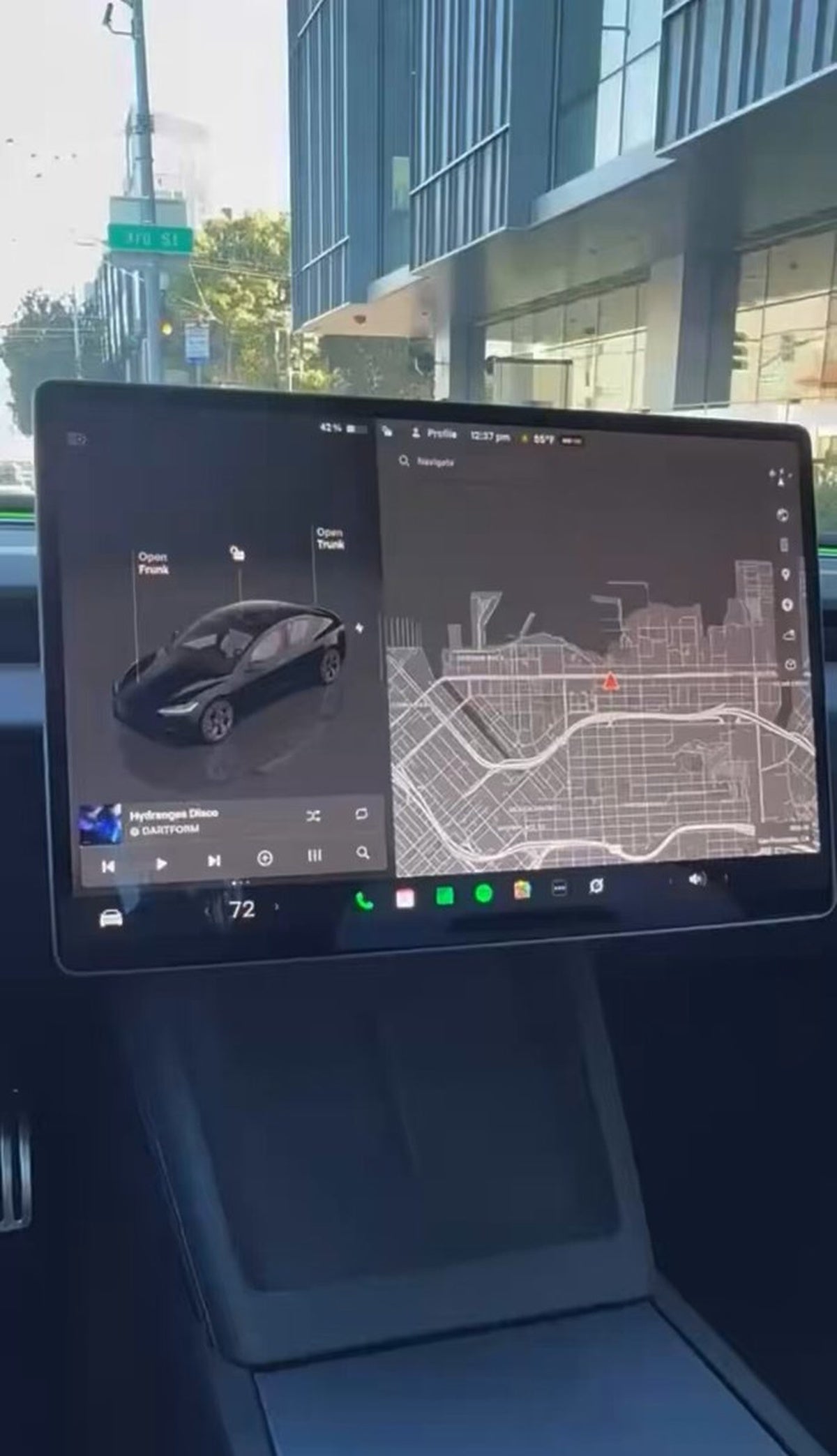
Tesla is about to close one of the most-requested gaps in Full Self-Driving (Supervised): the ability to just tell the car what to do. Tesla's VP of AI has confirmed that FSD (Supervised) will soon accept direct driving instructions through Grok, the in-car AI assistant. The pitch is straightforward — pull up to a destination, say where you want to be dropped off or how you want to park, and the car does it.

What Tesla Is Actually Building
The confirmation from Tesla's VP of AI aligns with a timeline Elon Musk floated in mid-June 2026, when he suggested the feature was roughly three months out — putting the anticipated rollout around September 2026, according to reporting from Electrek and Evannex.
What separates this from the current Grok integration is control authority. Since Grok launched inside Tesla vehicles in July 2025 for North America and February 2026 for Europe, it has functioned as a conversational assistant — handling navigation edits, Supercharger lookups, cabin queries, and general Q&A. It has not been permitted to influence how FSD actually drives. That's the wall coming down.
According to prior reporting corroborated by teslahubs.com and eletric-vehicles.com, the intended command set includes natural-language phrases like:
- “Turn right here.”
- “Drop us off right here.”
- “Drop at the entrance first, then park far away.”
- “Back into the parking spot in front of the store.”
- “Pull forward into the driveway.”
In other words, Grok becomes a supervisor layer that translates spoken intent into FSD driving decisions — particularly in the messy last 50 meters of a trip, which has historically been where FSD feels least polished.
Why the Last 50 Meters Matter
FSD (Supervised) has made steady gains on highway merges, unprotected turns, and dense urban traffic through the v12 and v13 architectures. But arrival behavior — choosing which side of the lot to park on, whether to drop off before parking, whether to nose in or reverse in — has remained rigid. Owners either take over manually or accept whatever spot the car picks.
Voice-directed arrival changes that dynamic. It also changes what “supervised” means in practice: instead of the driver silently monitoring, the driver becomes a verbal co-pilot issuing high-level intent. That's a meaningfully different interaction model, and it's the first time voice input will directly influence FSD's driving and parking behaviors, per Electrek's coverage of Musk's June comments.
Key Figures
| Item | Detail |
|---|---|
| Feature | Grok-directed FSD (Supervised) commands |
| Source of confirmation | Tesla VP of AI (July 2026) |
| Earlier timeline reference | Musk, June 2026 — “about 3 months or so” |
| Anticipated rollout | Around September 2026 |
| Grok in-car launch (NA) | July 2025 |
| Grok in-car launch (Europe) | February 2026 |
How We Got Here
Grok's role inside Tesla has expanded in deliberate steps. It launched last year as a chat layer — helpful but siloed from vehicle control. Over subsequent updates it gained the ability to add and edit navigation destinations and surface Supercharger information, per Evannex and news18a.com. Each step brought Grok closer to the vehicle's operational layer without ever crossing into driving decisions.
The upcoming update is that crossing. It's also consistent with how Tesla has approached voice control historically: cabin controls first, then navigation, then — cautiously — the driving stack itself. Handing Grok influence over FSD is the logical endpoint of that progression, and it lines up with xAI's broader push to make Grok a real-time agent rather than just a Q&A tool.
What Owners Should Watch For
A few open questions matter more than the marketing framing:
- Command scope. Will early rollouts limit Grok to parking and drop-off, or accept mid-route instructions like lane changes and turn selection? The tweet from Tesla's VP of AI emphasizes destination behavior, suggesting arrival scenarios come first.
- Confirmation flow. Does the car execute immediately or ask for confirmation on ambiguous commands? Safety framing will almost certainly require the latter, at least initially.
- Hardware requirement. Grok already runs on HW4 vehicles. Whether HW3 owners get this specific integration remains unclear from current sources.
- Regional availability. Grok reached Europe five months ago; whether FSD voice control launches there simultaneously or lags behind North America has not been stated.
Editor's View
The interesting part isn't the parking command — it's the precedent. Once voice can direct FSD's decisions at the end of a trip, the argument for keeping it out of mid-trip decisions weakens. If “back into that spot” works safely, “take the next exit” is a much smaller leap. Tesla is quietly setting up a new interaction paradigm for supervised autonomy, and September is the checkpoint to watch.
Related Gear
Gear up your Tesla with tested, custom-fit BASENOR accessories — shop Tesla accessories →
📋 Tracking Tesla software? See every firmware, FSD and app version in one place in our Tesla Software Update Tracker.
Sources & reporting notes
The links below identify the material source records used for this report.
- @TeslaNewswire on X (2026-07-08T04:14:09.000Z) — Direct source
Source links are preserved as published or accessed. See our editorial standards and corrections policy.
The BASENOR Editorial Desk covers Tesla, SpaceX, and related technology, curating reporting from primary sources — official accounts, regulatory filings, and software release data. Every article passes source-record and fact-checking review before publication. About the newsroom.
This report was curated by the BASENOR Editorial Desk from the sources listed above. Read our editorial standards or email editorial@basenor.com to report an error.