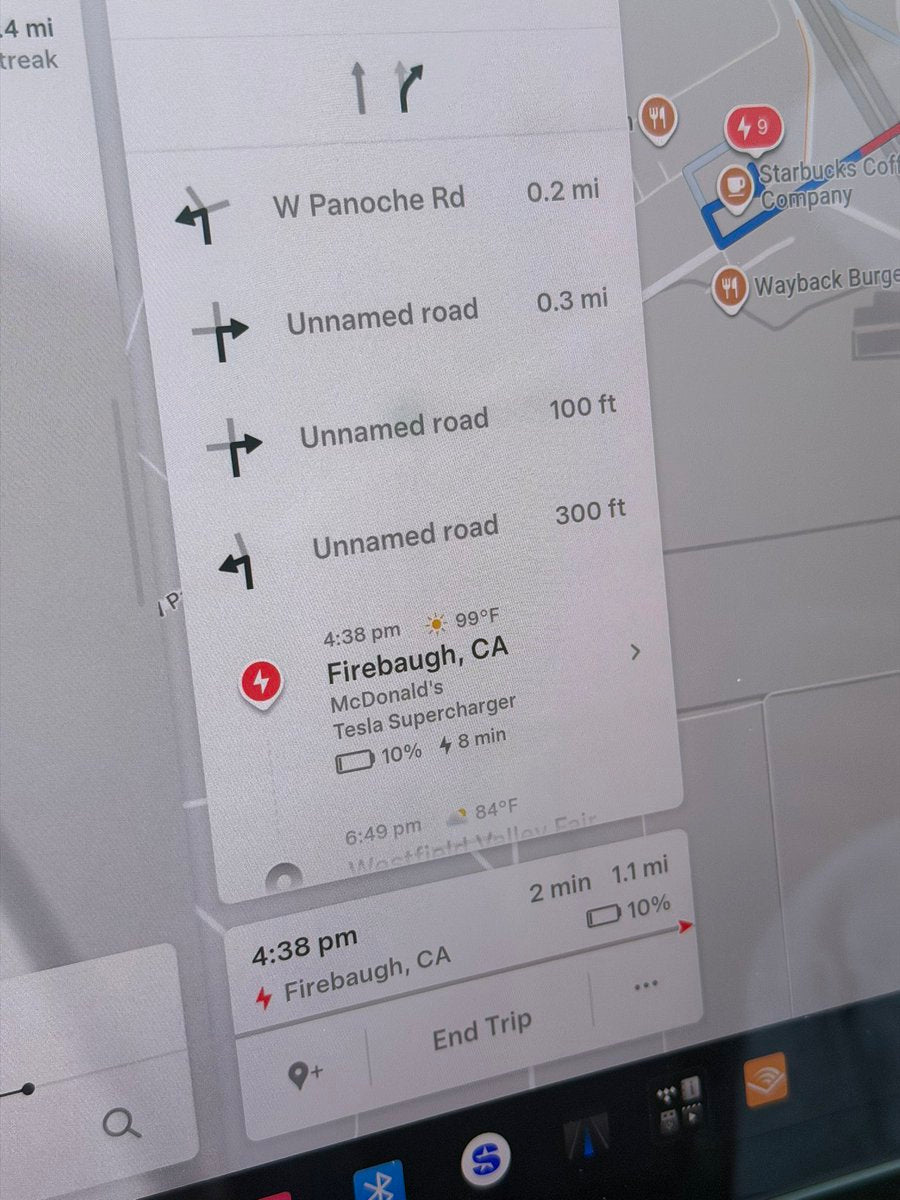
Tesla owner and longtime EV advocate @wholemars shared something this week that would have sounded implausible a few years ago: a complete Los Angeles to Silicon Valley road trip with a single 8-minute Supercharger stop. That's a roughly 380-mile corridor — and a charging pause shorter than most gas station fill-ups. Here's what's behind that number, and what it means for your next long drive.

Why can Tesla charge so fast now compared to a few years ago?
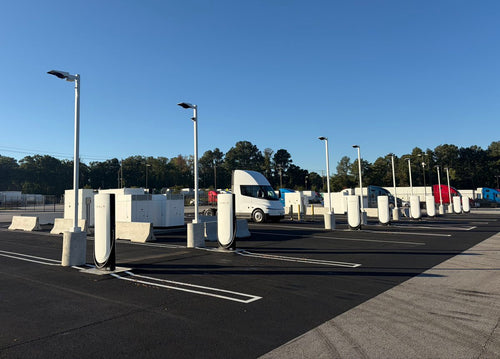
The biggest factor is the V4 Supercharger rollout. V4 hardware, which began entering service at scale in early 2026, delivers up to 500 kW of peak power to compatible vehicles — a significant jump over the V3 generation. At that rate, the first few minutes of a charge session add range extremely quickly. According to Tesla's own data, V4 Superchargers can add approximately 75 miles of range in five minutes, or up to 200 miles in 15 minutes for compatible vehicles. An 8-minute stop in the right conditions can realistically add 100–130 miles — enough to bridge a gap mid-route without lingering.
Does every Tesla owner get these speeds, or just certain models?
Peak V4 speeds depend on your vehicle's onboard charging architecture and battery state. Newer Model 3 and Model Y variants are optimized to take advantage of higher charge rates, but the gains aren't exclusive to one model — any Tesla navigating to a V4 Supercharger will benefit from faster hardware compared to older V2 or V3 stalls. The critical variable is arriving with a low state of charge (ideally under 20%), since charge rates are fastest in that lower range and taper significantly above 80%. The car's built-in trip planner is designed to route you to stops at the right battery level to maximize this window.
What role does battery preconditioning play?
A lot, actually. When you set a Supercharger as a navigation destination, Tesla vehicles automatically begin warming or cooling the battery pack to its optimal charging temperature before you arrive. This means the moment you plug in, the battery is ready to accept maximum current — no waiting for the pack to come up to temperature. Skipping navigation and just pulling into a Supercharger without preconditioning can meaningfully reduce your peak charge rate, especially in cold weather. For fast stops like the one @wholemars described, preconditioning is likely doing real work behind the scenes.
How does an 8-minute stop compare to what was typical before?
@wholemars put it plainly: the same drive used to require 30 minutes to an hour of charging. That gap reflects a combination of slower hardware (V2 Superchargers peaked at 150 kW), less efficient battery management, and vehicles that weren't optimized to accept high charge rates. A comparable data point from June 2026 showed a Las Vegas to Los Angeles trip — roughly 270 miles — completed with a single 9-minute Supercharger stop. These aren't outliers anymore; they're becoming the baseline experience on well-covered corridors with V4 infrastructure.
Is the Supercharger network reliable enough to plan around short stops?
Network uptime has become a genuine strength. According to available data, the Supercharger network currently operates at above 99.9% uptime across its U.S. footprint of more than 3,000 stations and over 37,000 individual ports — accounting for roughly 52% of all DC fast charging infrastructure in the country. That scale and reliability is what makes the short-stop strategy viable. If you're routing through a major corridor and the in-car navigation is directing you to a specific station, there's a very high probability the stalls you need will be available and functional.
What's the practical takeaway for planning a long-distance Tesla trip today?
Use the in-car navigation — always. Let it route the charge stops rather than planning them manually. Aim to arrive at each Supercharger below 20% if range allows, charge to around 70–80%, and move on. On V4-equipped corridors, those stops are now measured in single-digit minutes for many drivers. The LA-to-Silicon Valley run that once demanded a lunch break at a charger is now closer to a restroom stop. That shift in the travel experience is exactly what Tesla's infrastructure investment has been building toward.
Related Gear
Gear up your Tesla with tested, custom-fit BASENOR accessories — shop Tesla accessories →
Sources & reporting notes
The links below identify the material source records used for this report.
- @wholemars on X (2026-08-24T06:29:28.000Z) — Direct source
Source links are preserved as published or accessed. See our editorial standards and corrections policy.
The BASENOR Editorial Desk covers Tesla, SpaceX, and related technology, curating reporting from primary sources — official accounts, regulatory filings, and software release data. Every article passes source-record and fact-checking review before publication. About the newsroom.
This report was curated by the BASENOR Editorial Desk from the sources listed above. Read our editorial standards or email editorial@basenor.com to report an error.