📌 UPDATE — July 15, 2026
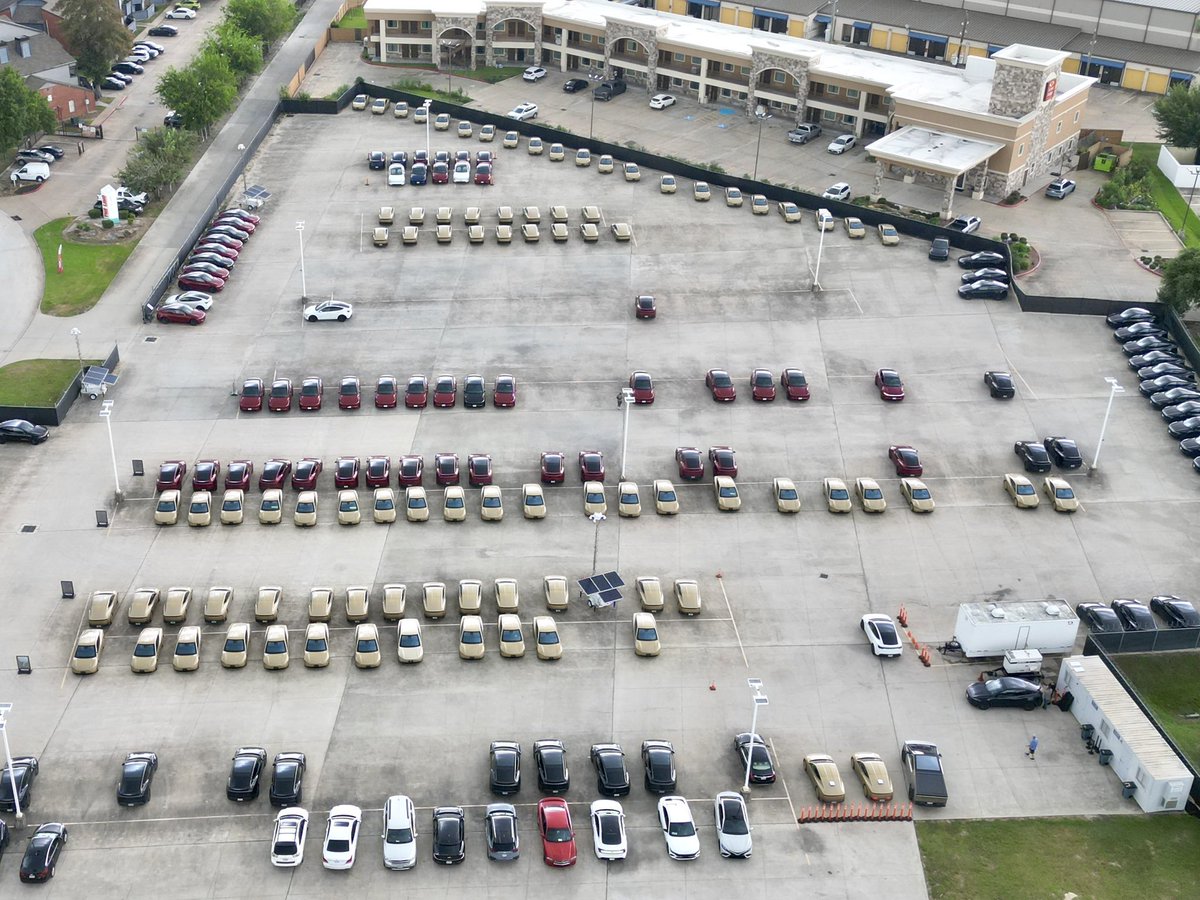
The Houston Cybercab fleet count has grown beyond the ~90 units originally reported. According to @wholemars, 117 driverless Tesla Robotaxis are now operating in Texas — a roughly 30% increase over the figure that anchored our original coverage. This jump suggests Tesla is actively scaling its autonomous fleet in the state at a faster pace than initial deployment photos indicated, potentially signaling an accelerated path toward commercial service expansion.

Roughly 90 Tesla Cybercabs have been spotted at a dedicated Robotaxi hub in Houston — the largest single concentration of the autonomous vehicle publicly documented to date. The images and video, captured on July 10, point to an operational readiness phase that goes well beyond early testing and suggests Tesla is actively staging for a significant expansion of its ride-hailing service in the city.

From Model Y Pilots to Purpose-Built Hardware
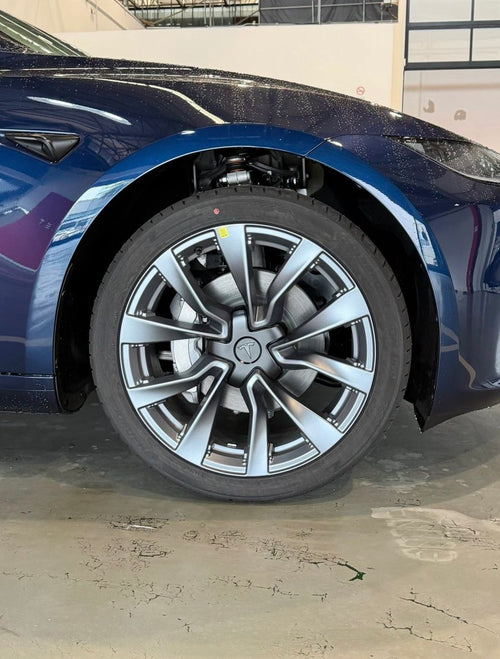
Context matters here. When Tesla launched its unsupervised Robotaxi service in Houston and Dallas on April 18, 2026, the fleet consisted of retrofitted Model Y vehicles — existing production hardware running Tesla's autonomous stack. The Cybercab is a different proposition entirely: a purpose-built, two-seat vehicle with no steering wheel or pedals, designed from the ground up for driverless commercial operation.
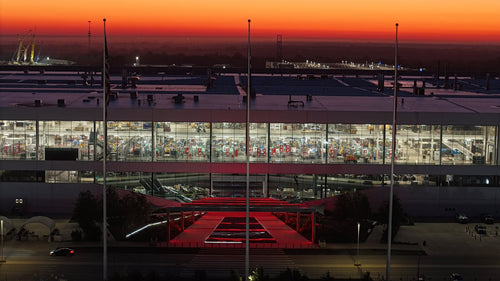
Seeing roughly 90 Cybercabs staged at a single hub in Houston — not a factory lot, not a delivery center, but a designated Robotaxi operations facility — is a meaningful operational signal. Fleet vehicles don't accumulate at a hub unless the infrastructure to deploy, charge, clean, and dispatch them is already in place or nearly so.
What a Hub Concentration of This Scale Implies
Logistics for an autonomous ride-hailing fleet are more complex than simply parking cars. A hub of this nature requires coordinated charging infrastructure, remote monitoring capabilities, a dispatch system, and maintenance workflows — none of which are trivial at 90-vehicle scale. The fact that Tesla has assembled this many Cybercabs at a single Houston location suggests several things are already resolved behind the scenes: vehicle production has ramped sufficiently to supply a meaningful commercial fleet, the hub's physical and software infrastructure is operational, and Tesla has cleared whatever internal validation thresholds precede a public rollout expansion.
For comparison, the initial Model Y Robotaxi launch in April was a controlled, invitation-based service. A 90-unit Cybercab deployment would represent a step-change in capacity and public visibility — the kind of scale that starts to look like a real commercial product rather than an extended pilot.
Houston as the Proving Ground
Tesla's choice to concentrate early Robotaxi activity in Houston is deliberate. The city's relatively flat terrain, wide roads, and favorable regulatory environment have made it a natural first market. The April Model Y launch gave Tesla months of real-world unsupervised operational data in Houston traffic before introducing the Cybercab's distinct hardware profile into the mix. That sequencing — prove the software in familiar hardware, then transition to purpose-built vehicles — is a logical de-risking strategy.
What remains publicly unconfirmed is the precise timeline for when these staged Cybercabs will enter active passenger service, and whether the Houston expansion will coincide with or precede a similar buildup in Dallas or other announced markets. But 90 vehicles at a hub is not a test — it's a pre-launch inventory position.
🚕 Following the Robotaxi rollout? See every operating city, launch date and announced market in our Tesla Robotaxi Tracker.
Related Gear
Gear up your Tesla with tested, custom-fit BASENOR accessories — shop Tesla accessories →
Sources & reporting notes
The links below identify the material source records used for this report.
- @TeslaNewswire on X (2026-07-10T20:05:42.000Z) — Direct source
- @wholemars on X (2026-07-14T23:44:44.000Z) — Direct source
Source links are preserved as published or accessed. See our editorial standards and corrections policy.
The BASENOR Editorial Desk covers Tesla, SpaceX, and related technology, curating reporting from primary sources — official accounts, regulatory filings, and software release data. Every article passes source-record and fact-checking review before publication. About the newsroom.
This report was curated by the BASENOR Editorial Desk from the sources listed above. Read our editorial standards or email editorial@basenor.com to report an error.