30-Second Brief
The News: The Artemis II stack's rollout to Launch Complex 39B at Kennedy Space Center remains locked on a March 19 target — confirmed official with zero schedule slips.
Why It Matters: A clean rollout keeps NASA's first crewed Artemis mission on track for a NET April 1, 2026 launch — a milestone for human deep-space exploration and a bellwether for SpaceX's own ambitions.
Source: @NASASpaceflight on X
Artemis II Rollout Holds Firm — No Slips in Sight
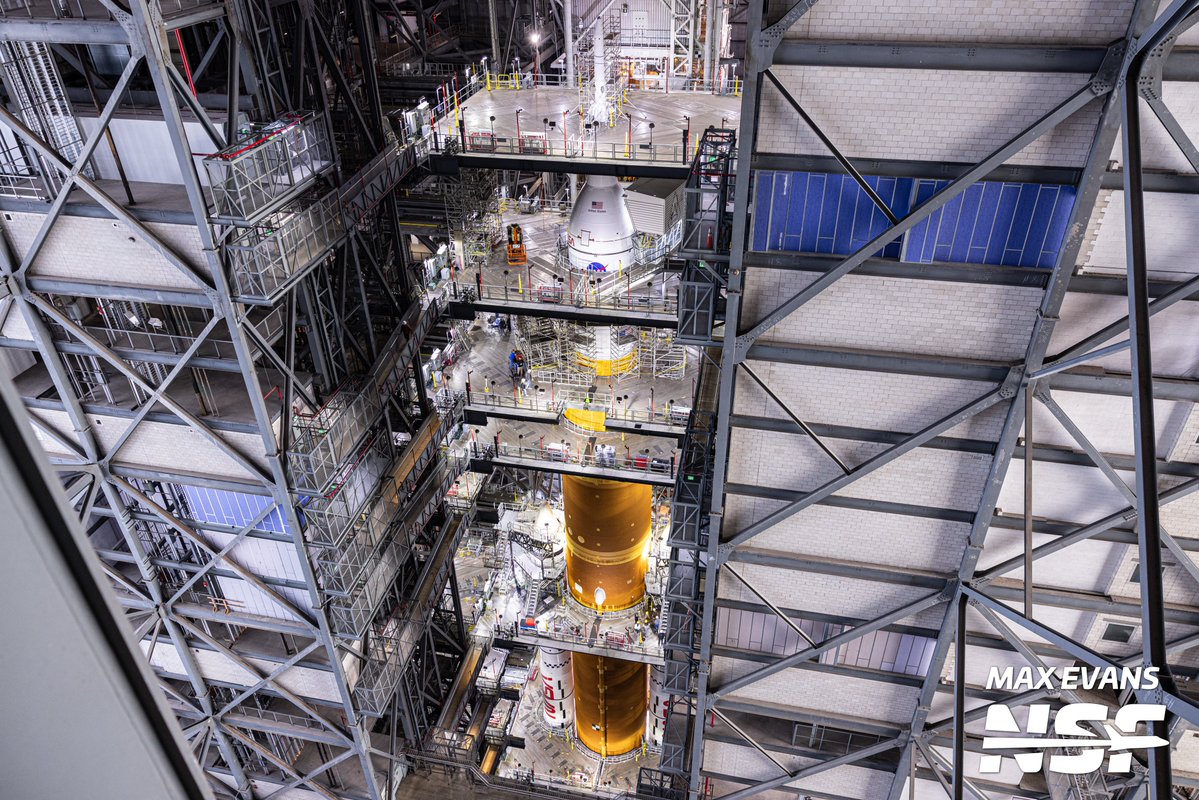
NASA's Artemis II mission is hitting its marks. According to NASASpaceflight.com, the March 19 rollout target for the Artemis II stack's return to Launch Complex 39B (LC-39B) at Kennedy Space Center has officially held — a target that was first reported roughly ten days ago and has not budged since.
That kind of schedule stability is genuinely rare in human spaceflight. Rolling out a fully stacked SLS rocket and Orion spacecraft is an enormously complex operation, and the fact that teams have encountered nothing significant enough to push the date is a strong signal that the hardware is in good shape after being returned to the Vehicle Assembly Building (VAB) for repairs.

📊 Key Figures
| Metric | Value | Context |
|---|---|---|
| Rollout Target | March 19, 2026 | Confirmed official — no slips |
| Launch Target (NET) | April 1, 2026 | First crewed Artemis flight |
| Days Since Target Announced | ~10 days | Zero schedule movement |
| Launch Complex | LC-39B, KSC | Kennedy Space Center, Florida |
Why the Stack Was Rolled Back in the First Place
Context matters here. The Artemis II stack was previously rolled out to LC-39B, then returned to the VAB after engineers identified a helium flow issue in the SLS rocket's upper stage. That kind of anomaly — caught before launch, fixed methodically, and now cleared for rollout — is exactly how a mature program is supposed to operate. The fact that the repair timeline held without further complications is the real story.
Artemis II will carry four astronauts on a lunar flyby trajectory — the first time humans have traveled beyond low Earth orbit since Apollo 17 in 1972. The mission uses NASA's Space Launch System (SLS) rocket paired with the Orion spacecraft. LC-39B, the pad being used, has a storied history: it hosted Space Shuttle missions and was the launch site for Artemis I in November 2022.
🔭 The BASENOR Take
Timeline: Rollout March 19 → Launch NET April 1, 2026
Impact Level: 🟡 Medium — Milestone confirmation, not a launch date
Confidence: High — Officially confirmed by NASASpaceflight, corroborated by NASA sources
Analysis: Schedule discipline at this stage of a crewed mission is genuinely meaningful. Every day a complex stack sits on the pad without issues is a day closer to a clean launch window. If the March 19 rollout executes as planned, NASA will have roughly 13 days to complete final pad operations and countdown rehearsals before the NET April 1 launch date. That's a workable — if tight — margin. The absence of any new technical findings during the VAB repair period is the most encouraging signal yet that Artemis II is on a credible path to flight.
📰 Deep Dive
What makes this confirmation notable isn't just the date — it's the pattern. In human spaceflight, schedule targets announced 10 days out and then confirmed without modification are the exception, not the rule. The Artemis program has faced its share of delays over the years, which makes this moment of schedule stability worth acknowledging on its own terms.
The March 19 rollout is a procedural step, not the launch itself — but it's a critical one. Once the SLS and Orion stack are at the pad, teams will conduct final systems checks, tanking tests, and the terminal countdown demonstration before committing to a launch attempt. The NET April 1 date gives NASA a buffer, but any anomaly discovered at the pad could still push the window. For now, though, the trajectory looks clean.
For those following the broader arc of human space exploration — and for the SpaceX community watching NASA's progress with interest — Artemis II represents a genuine inflection point. A successful crewed lunar flyby would validate the SLS/Orion architecture and set the stage for Artemis III, which aims to return humans to the lunar surface. That mission has direct implications for the broader commercial space ecosystem, including SpaceX's role as the Human Landing System provider via Starship. You can follow our SpaceX coverage for ongoing updates as the launch window approaches.
Sources & reporting notes
The links below identify the material source records used for this report.
- @NASASpaceflight on X (2026-03-12T19:09:09.000Z) — Direct source
Source links are preserved as published or accessed. See our editorial standards and corrections policy.
The BASENOR Editorial Desk covers Tesla, SpaceX, and related technology, curating reporting from primary sources — official accounts, regulatory filings, and software release data. Every article passes source-record and fact-checking review before publication. About the newsroom.
This report was curated by the BASENOR Editorial Desk from the sources listed above. Read our editorial standards or email editorial@basenor.com to report an error.