30-Second Brief
The News: The official Cybertruck account is spotlighting the truck's Powershare system — five onboard AC outlets (120V and 240V) plus a bi-directional charge port — making it the most capable mobile power source in Tesla's lineup.
Why It Matters: If you own or are considering a Cybertruck, this is a legitimate off-grid power station on wheels — capable of running job-site tools, backing up your home during an outage, or even charging another EV from the bed.
Source: @cybertruck on X

What the Cybertruck's Powershare System Actually Includes
Tesla's Powershare system is exclusive to the Cybertruck, and it's more layered than most owners realize. The tweet from the official @cybertruck account cuts straight to the point — 120V and 240V bed outlets, plus a bi-directional charge port. But let's break down exactly what that means in practice.
📊 Outlet Breakdown by Variant
| Outlet / Feature | Spec | Location | AWD / Cyberbeast | RWD |
|---|---|---|---|---|
| 120V Cabin Outlets | 20A NEMA 5-20 | Interior cabin | 2 outlets ✅ | ❌ |
| 120V Bed Outlets | 20A NEMA 5-20 | Cargo bed | 2 outlets ✅ | ❌ |
| 240V Bed Outlet | 40A NEMA 14-50 | Cargo bed | 1 outlet ✅ | ❌ |
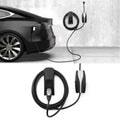
| Bi-directional Charge Port (V2L via adapter) | 120V / 20A, up to 2.4 kW | Charge port | ✅ (included) | ✅ (requires $80 Powershare Outlet Adapter + Mobile Connector) |
| Total Continuous V2L Output | Up to 9.6 kW | Combined (all outlets) | ✅ | Up to 2.4 kW |
Beyond the Outlets: V2H and V2G
The bi-directional charge port isn't just for plugging in tools — it's the foundation of the entire Powershare ecosystem. Here's what that unlocks beyond vehicle-to-load (V2L):
⚡ Powershare Capability Overview
| Vehicle-to-Load (V2L) | Power tools, appliances, charge other EVs from the bed. Up to 9.6 kW continuous (AWD/Cyberbeast). |
| Vehicle-to-Home (V2H) | Up to 11.5 kW continuous to your home. A full charge can power a typical home for 3+ days. Requires Universal Wall Connector + Powershare Gateway. |
| Vehicle-to-Vehicle (V2V) | Use the 240V NEMA 14-50 bed outlet to charge another electric vehicle directly. |
| Vehicle-to-Grid (V2G) | Tesla's invitation-only "Powershare Grid Support" program is live in select markets. Powerwall + Powershare full integration expected mid-2026. |
🚦 Owner's Action Plan
VERDICT: ESSENTIAL — Know your variant's capabilities before you need them
AWD or Cyberbeast owners:
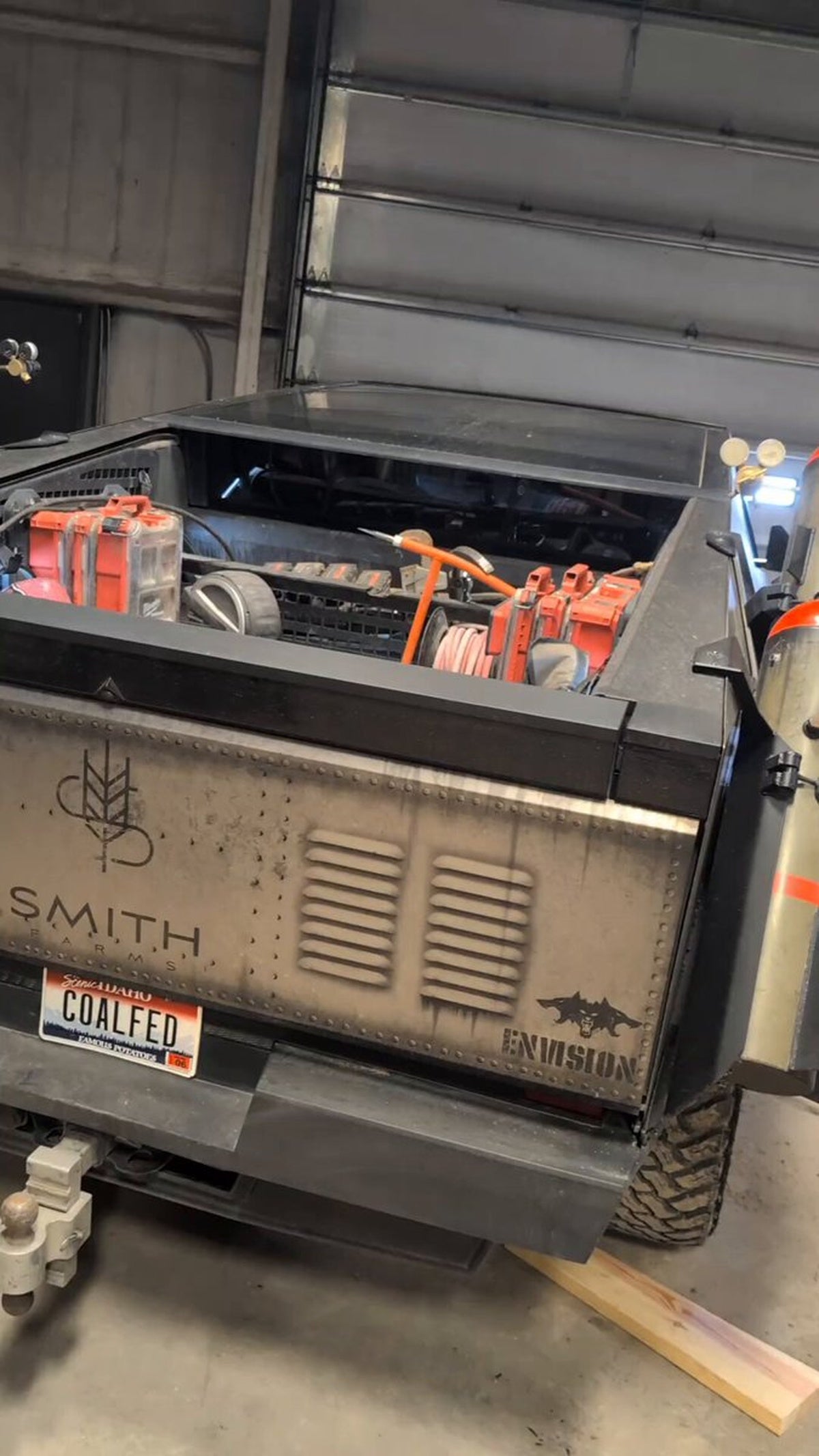
- Identify your outlets. You have five: two 120V in the cabin, two 120V in the bed, one 240V in the bed. No adapter needed for any of them.
- Enable Powershare in the app. Go to Controls → Powershare in the Tesla app or touchscreen. Set your minimum battery reserve (Tesla recommends 20% minimum).
- For home backup (V2H): You'll need a Universal Wall Connector and a Powershare Gateway installed by a licensed electrician. If you already have a Powerwall, check with Tesla — you may not need additional hardware.
- For V2V charging: Use the 240V NEMA 14-50 bed outlet with the appropriate adapter for the vehicle you're charging. This works for most Level 2 EV charging scenarios.
- Watch for mid-2026 Powerwall integration. Full Powershare + Powerwall integration is expected to extend home backup duration significantly — no action needed now, but keep your software updated.
RWD Cybertruck owners:
- You don't have onboard outlets — but you're not locked out of Powershare entirely.
- Pick up the Powershare Outlet Adapter ($80 from Tesla). Combined with your Mobile Connector, this plugs into your charge port and gives you a 120V / 20A outlet with up to 2.4 kW of continuous power.
- Enable Powershare the same way as above via the app or touchscreen.
📰 Deep Dive
The timing of this post from @cybertruck is worth noting. Tesla is actively reinforcing the Cybertruck's value proposition beyond its role as a truck — it's positioning Powershare as a genuine utility that justifies the vehicle's premium. With grid reliability becoming a concern in many parts of the country, the ability to deliver 11.5 kW continuously to a home is a compelling real-world differentiator.
The gap between AWD/Cyberbeast and RWD variants is significant here. The jump from 2.4 kW (RWD, via adapter) to 9.6 kW (AWD/Cyberbeast, built-in) is not a minor spec difference — it's the difference between running a few appliances and powering a full job site or home circuit. Owners considering a trim upgrade should factor this into the decision.
The V2G angle is still early-stage, but it's the most financially interesting piece of the puzzle. If Tesla's invitation-only Powershare Grid Support program expands, Cybertruck owners could eventually earn credits for selling power back to the grid during peak demand — turning their truck into a revenue-generating asset when parked. The mid-2026 Powerwall integration milestone will be a key indicator of how seriously Tesla is pushing this direction. Keep an eye on your software updates for any Powershare-related changes.
Related Gear
Gear up your Cybertruck with tested, custom-fit BASENOR accessories — shop Cybertruck accessories →
Sources & reporting notes
The links below identify the material source records used for this report.
- @cybertruck on X (2026-04-19T21:09:36.000Z) — Direct source
Source links are preserved as published or accessed. See our editorial standards and corrections policy.
The BASENOR Editorial Desk covers Tesla, SpaceX, and related technology, curating reporting from primary sources — official accounts, regulatory filings, and software release data. Every article passes source-record and fact-checking review before publication. About the newsroom.
This report was curated by the BASENOR Editorial Desk from the sources listed above. Read our editorial standards or email editorial@basenor.com to report an error.