📌 UPDATE — March 18, 2026
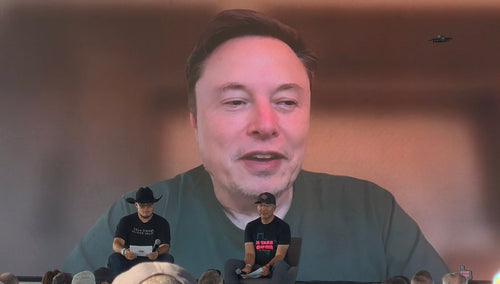
Elon Musk has officially confirmed that the Cybertruck involved in the $1-million Houston lawsuit was being driven manually at the time of the crash. According to Musk, Autopilot had been disengaged by the driver four seconds before impact — corroborating the vehicle data cited in the original reporting. The clarification came in response to widespread coverage of the lawsuit, which alleged Tesla's autonomous systems were responsible for the incident that nearly sent a woman and her infant off a bridge.
However, some analysts are pushing back on the "4-second disengagement" framing. Electrek's Fred Lambert argues the driver may have disengaged Autopilot because FSD was already behaving dangerously — approaching a sharp turn at excessive speed — meaning the system's role in the sequence of events may not be fully absolved by the technical timeline alone.


📌 UPDATE — March 18, 2026
Elon Musk has officially confirmed that the Cybertruck driver disengaged Autopilot four seconds before the collision — meaning the driver was in full manual control during the entire clip circulated by Fox News. Musk directly addressed the footage, stating: "As anyone knows who uses it, that video is not how Autopilot drives." This confirmation further undermines the lawsuit's central claim that Autopilot was responsible for the crash, adding an official timestamp to what the data logs already showed.
@SawyerMerritt · Mar 18, 2026
"UPDATE: Elon Musk says the driver of this Cybertruck disengaged Autopilot four seconds before crashing, which means the driver was manually driving during this entire clip that Fox shared."

View on X →
The News: Media reports of a Cybertruck crash on a Texas highway are circulating alongside a $1 million lawsuit — but the incident occurred while the human driver was in control, not Autopilot.
Why It Matters: The case highlights the ongoing tension between plaintiff allegations and actual vehicle data in Tesla Autopilot litigation — and how early media framing can shape public perception before the facts are established.
Source: @wholemars on X
The Story Behind the Headlines
On March 18, 2026, media outlets began running stories about a Cybertruck crash on a Texas highway, framed in ways that implied Tesla's driver-assistance technology may have been responsible. The reality, according to reporting from @wholemars, is more complicated — and significantly different from the initial framing.

The crash in question occurred on August 18, 2025, on the Eastex Freeway (I-69) in Houston. The plaintiff, Justine Saint Amour, filed a lawsuit in Harris County against Tesla, seeking over $1 million in damages. Her legal team, Hilliard Law, alleges that the Cybertruck's Autopilot or Full Self-Driving system attempted to drive straight into a concrete barrier on a Y-shaped overpass rather than follow the curve of the road.
However, the key detail buried in the coverage: the crash happened while the human driver was in control. @wholemars was direct about this in an earlier post:

📊 Key Figures
| Detail | Value |
|---|---|
| Incident Date | August 18, 2025 |
| Location | Eastex Freeway (I-69), Houston, TX |
| Damages Sought | Over $1 million |
| Plaintiff | Justine Saint Amour |
| Law Firm | Hilliard Law |
| Filed In | Harris County, Texas |
| Alleged Injuries | Shoulder, neck, back injuries; herniated discs; nerve damage |
| Driver in Control at Impact | Human driver (not Autopilot) |
What the Lawsuit Actually Claims
The plaintiff's account is that her Cybertruck was operating in Autopilot or FSD mode when it failed to navigate a Y-shaped overpass, instead heading toward a concrete barrier. Saint Amour alleges she attempted to disengage the system and retake control, but was unable to avoid the collision in time. Her one-year-old child was also in the vehicle; the child was reportedly unharmed.
The lawsuit further alleges that Tesla misrepresented the safety and capabilities of its driver-assistance technology and that the vehicle's system malfunctioned. Tesla has not publicly commented on this specific case.
The critical discrepancy: despite the plaintiff's claim that Autopilot was engaged at the time of the crash, reporting indicates the vehicle data shows the human driver was in control at the moment of impact. This is a distinction that matters enormously — both legally and in terms of public understanding of what happened.
🔭 The BASENOR Take
Timeline: Crash occurred August 18, 2025 → Lawsuit filed in Harris County → Media coverage begins March 18, 2026 → @wholemars clarifies driver-control status same day
Impact Level: Medium — relevant to Cybertruck owners and anyone following Tesla Autopilot litigation
Confidence: High that driver was in control at impact (per @wholemars reporting); lawsuit allegations remain unproven in court
This case follows a well-worn pattern in Tesla crash litigation. A lawsuit is filed, media picks up the Autopilot angle, and the nuance — whether the system was actually engaged at the moment of impact — gets lost in the headline rush. Tesla's vehicles log detailed data on driver-assistance system status, and that data has repeatedly been the deciding factor in court.
That doesn't mean the lawsuit is without merit on other grounds. Allegations about how Tesla markets its driver-assistance technology — and whether those representations are accurate — are a separate question from whether Autopilot caused this specific crash. Courts have allowed cases to proceed on misrepresentation theories even when vehicle data contradicted the core collision narrative.
For Cybertruck owners, the practical takeaway is straightforward: driver-assistance systems, regardless of how capable they become, require your attention and readiness to intervene. The legal and media environment around Tesla crashes means that any incident will attract scrutiny — and the vehicle's own data log will be the most important piece of evidence in any dispute.
What's worth watching: whether Tesla releases any official statement on this case, and how the vehicle data is presented once discovery begins. In past high-profile cases, Tesla's event data recorders have provided granular detail on system engagement status in the seconds before impact. That data will likely be central to how this case unfolds — and whether the Autopilot narrative survives contact with the actual record. For more context on how Tesla's driver-assistance systems work and the ongoing legal landscape around them, see our FSD coverage.
Related Gear
Gear up your Cybertruck with tested, custom-fit BASENOR accessories — shop Cybertruck accessories →
Sources & reporting notes
The links below identify the material source records used for this report.
- @wholemars on X (2026-03-18T02:15:29.000Z) — Direct source
- @wholemars on X (2026-03-18T00:49:36.000Z) — Direct source
- @SawyerMerritt on X (2026-03-18T14:44:05.000Z) — Direct source
- @FredLambert on X (2026-03-18T17:23:05.000Z) — Direct source
- @TeslaNewswire on X (2026-03-18T17:29:22.000Z) — Direct source
Source links are preserved as published or accessed. See our editorial standards and corrections policy.
The BASENOR Editorial Desk covers Tesla, SpaceX, and related technology, curating reporting from primary sources — official accounts, regulatory filings, and software release data. Every article passes source-record and fact-checking review before publication. About the newsroom.
This report was curated by the BASENOR Editorial Desk from the sources listed above. Read our editorial standards or email editorial@basenor.com to report an error.