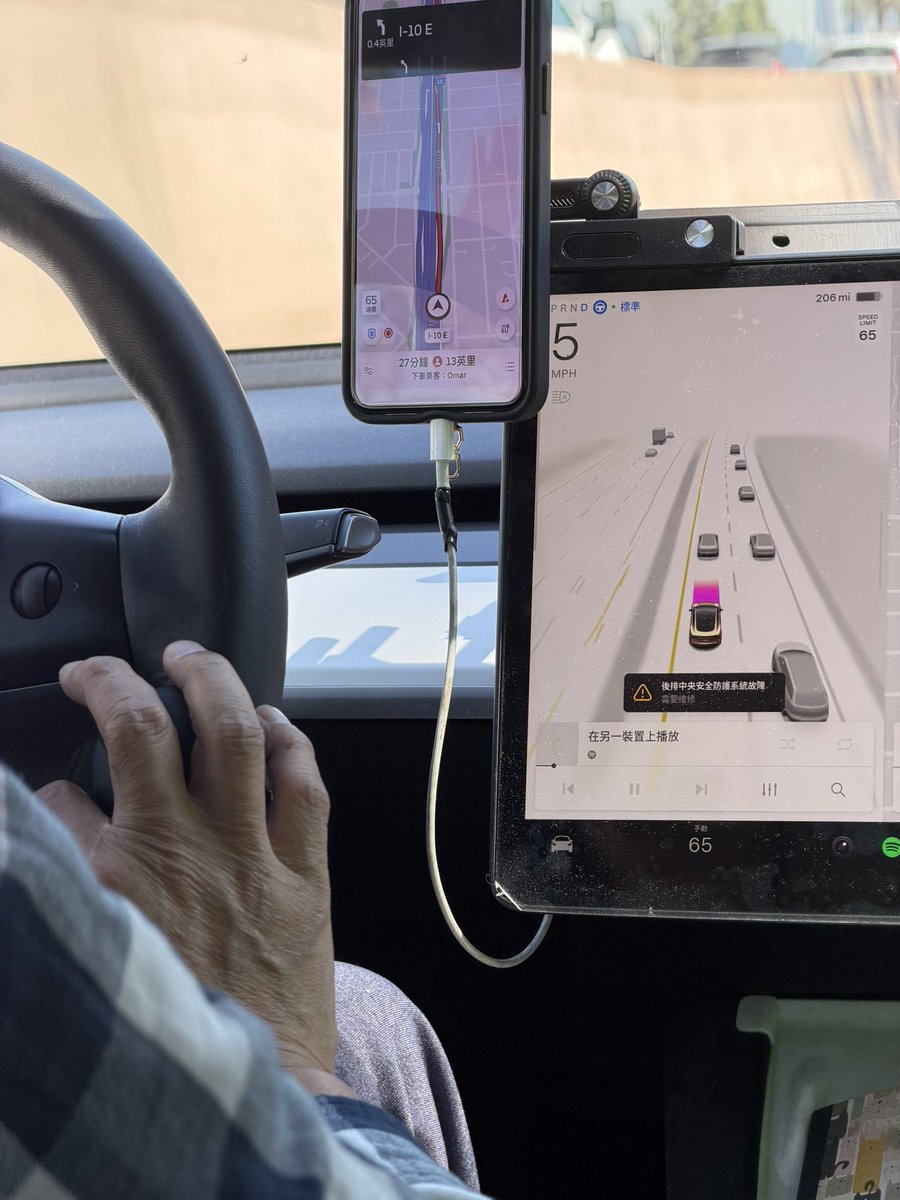
The News: A well-known Tesla community voice rode in an Uber driven by FSD 12 and called it a better experience than most human drivers.
Why It Matters: Unsolicited, real-world passenger endorsements of FSD in commercial ride-hail settings are rare — and this one lands as Tesla's robotaxi ambitions are heating up.
Source: @wholemars on X
FSD 12 Gets a Spontaneous Real-World Review — From the Back Seat
Most FSD feedback comes from drivers: the person with their hands near the wheel, attention primed, ready to intervene. What we rarely hear is the passenger perspective — someone with no stake in the system, just experiencing the ride. That's exactly what Whole Mars Catalog delivered on March 18, 2026.

The verdict was blunt and unambiguous: FSD 12 delivered a smoother, more reliable ride than the majority of human Uber drivers. That's not a controlled lab result or a Tesla press release — it's an organic, in-the-moment reaction from a passenger who wasn't looking to file a report. That context matters.
📊 Key Figures
| Metric | Value | Context |
|---|---|---|
| FSD Collision Rate Improvement | 7× fewer | Major/minor collisions vs. unassisted driving (Tesla data) |
| FSD v12 Architecture Shift | 300,000+ lines | Legacy rules-based code eliminated in v12 transition |
| Tesla Employee Ride-Hail Pilot | ~1 year | Internal Bay Area FSD network confirmed as of Oct 2024 |
| Planned Austin Robotaxi Launch | June 22, 2025 | Small geo-fenced fleet of 10–20 Model Ys with safety monitor |
What's Actually Happening Here
A few important things to unpack before reading too much into this. FSD (Supervised) remains a Level 2 ADAS system — the Uber driver was legally and technically responsible for the vehicle at all times. Tesla's system requires continuous driver supervision, and the car's vision-based attention monitoring enforces that. This was not an autonomous ride in the regulatory sense.
There's also a policy dimension worth noting. Tesla has historically restricted the use of FSD for commercial revenue-generating purposes on third-party platforms like Uber, reserving that commercial application for its own planned Tesla Network. Whether this particular driver was operating within or outside those terms of service is unknown — but it raises a question that will only grow louder as FSD capability improves.
What makes the observation genuinely significant is the source and the framing. Whole Mars Catalog is not a casual observer — this is someone deeply embedded in the Tesla community who has logged considerable time with FSD across multiple versions. When that person rides passively in the back seat and comes away impressed enough to post about it, that's a meaningful data point.
🔭 The BASENOR Take
Timeline: FSD v12 end-to-end neural architecture → Employee Bay Area pilot (Oct 2024) → Planned Austin public launch (June 2025) → Organic commercial ride-hail sightings (now)
Impact Level: 🟡 Moderate — One data point, but directionally important
Confidence: High that FSD v12 ride quality has meaningfully improved. Low that this reflects any formal Uber/Tesla arrangement.
The passenger experience is the metric that will ultimately define whether autonomous vehicles succeed commercially. Safety statistics matter to regulators and insurers. But what convinces the average person to choose a robotaxi over a human driver is whether the ride felt normal — smooth acceleration, confident lane positioning, no white-knuckle moments at intersections.
FSD v12's architectural overhaul — moving from a rules-based system to an end-to-end neural network that eliminated over 300,000 lines of legacy code — was specifically designed to produce more human-like, fluid driving behavior. Early driver reports after the v12 rollout consistently noted smoother, less jerky motion compared to prior versions. A passenger independently confirming that impression, without any prompting, suggests the architectural bet is paying off in ways that translate beyond the driver's seat.
For Tesla owners who have FSD and are still on the fence about using it regularly, this is worth noting. The gap between FSD's capability and the average human driver's performance in routine urban driving appears to be narrowing — and in some conditions, may already be favorable. For those following our FSD coverage, this fits a consistent pattern of incremental but compounding improvement across real-world use cases.
The bigger picture: Tesla's planned Austin robotaxi launch — expected to involve a small fleet of modified Model Ys with a human safety monitor — will be the first large-scale public test of whether this passenger-experience advantage holds up at volume. Moments like today's tweet are the informal preview of what that launch will need to deliver consistently to succeed.
📋 Tracking Tesla software? See every firmware, FSD and app version in one place in our Tesla Software Update Tracker.
🚕 Following the Robotaxi rollout? See every operating city, launch date and announced market in our Tesla Robotaxi Tracker.
Related Gear
Gear up your Tesla with tested, custom-fit BASENOR accessories — shop Tesla accessories →
Sources & reporting notes
The links below identify the material source records used for this report.
- @wholemars on X (2026-03-18T20:22:40.000Z) — Direct source
Source links are preserved as published or accessed. See our editorial standards and corrections policy.
The BASENOR Editorial Desk covers Tesla, SpaceX, and related technology, curating reporting from primary sources — official accounts, regulatory filings, and software release data. Every article passes source-record and fact-checking review before publication. About the newsroom.
This report was curated by the BASENOR Editorial Desk from the sources listed above. Read our editorial standards or email editorial@basenor.com to report an error.