📌 UPDATE — August 4, 2026
FSD V14.3.7 is now confirmed to be included in the 2026.21.5 OTA update, per @NowRollingOut. Early adopters are reporting substantial real-world improvements: hesitations and steering wheel twitching appear to be completely eliminated, with the system behaving far more confidently at stop signs, yields, merges, and on-ramps. Notably, users are praising proactive lane selection — no unnecessary left-lane camping — marking a meaningful step up from prior versions.

📌 UPDATE — August 4, 2026
FSD (Supervised) V14.3.7 has moved beyond test units and is now rolling out broadly to users — @DirtyTesLa confirmed a download on August 1. Real-world demos are already impressive: Sawyer Merritt completed a 40-minute Santa Monica to West Hollywood run on his Model Y L with zero interventions, navigating an active construction zone, an unexpected U-turn, and complex urban traffic. Most notably, V14.3.7 demonstrates the ability to react to construction worker hand signals — a meaningful leap in contextual awareness for FSD.
🎥 Sawyer Merritt — Model Y L on FSD V14.3.7 (Santa Monica → West Hollywood)

🎥 Construction worker hand signal response — FSD V14.3.7

Via @SawyerMerritt · August 3, 2026
📌 UPDATE — August 1, 2026
FSD (Supervised) V14.3.7 has moved beyond test units and is now officially rolling out to AI4-equipped vehicles, per Teslascope. The broader rollout confirms the three key features spotted earlier: FSD (Supervised) V14.3.7 core capabilities, the new Camera Preview feature, and a significantly updated Actually Smart Summon. This marks the first time V14.3.7 has been pushed to the AI4 hardware generation.

📌 UPDATE — July 30, 2026 🔍
FSD V14.3.7 has moved beyond a single test unit — Teslascope confirms that Model Y L vehicles currently being tested in North America now have immediate access to the build. Crucially, the release notes for V14.3.7 are identical to V14.3.6, strongly suggesting undocumented changes or silent bug fixes are bundled in this version. This is consistent with Tesla's occasional practice of pushing under-the-hood improvements without updating official changelogs. Owners with Model Y L test vehicles should check their Software tab for the update; a broader rollout timeline has not been announced.
@teslascope · July 30, 2026
"Model Y L in North America currently being tested have immediate access to Full Self-Driving V14.3.7. The release notes remain the same as V14.3.6."

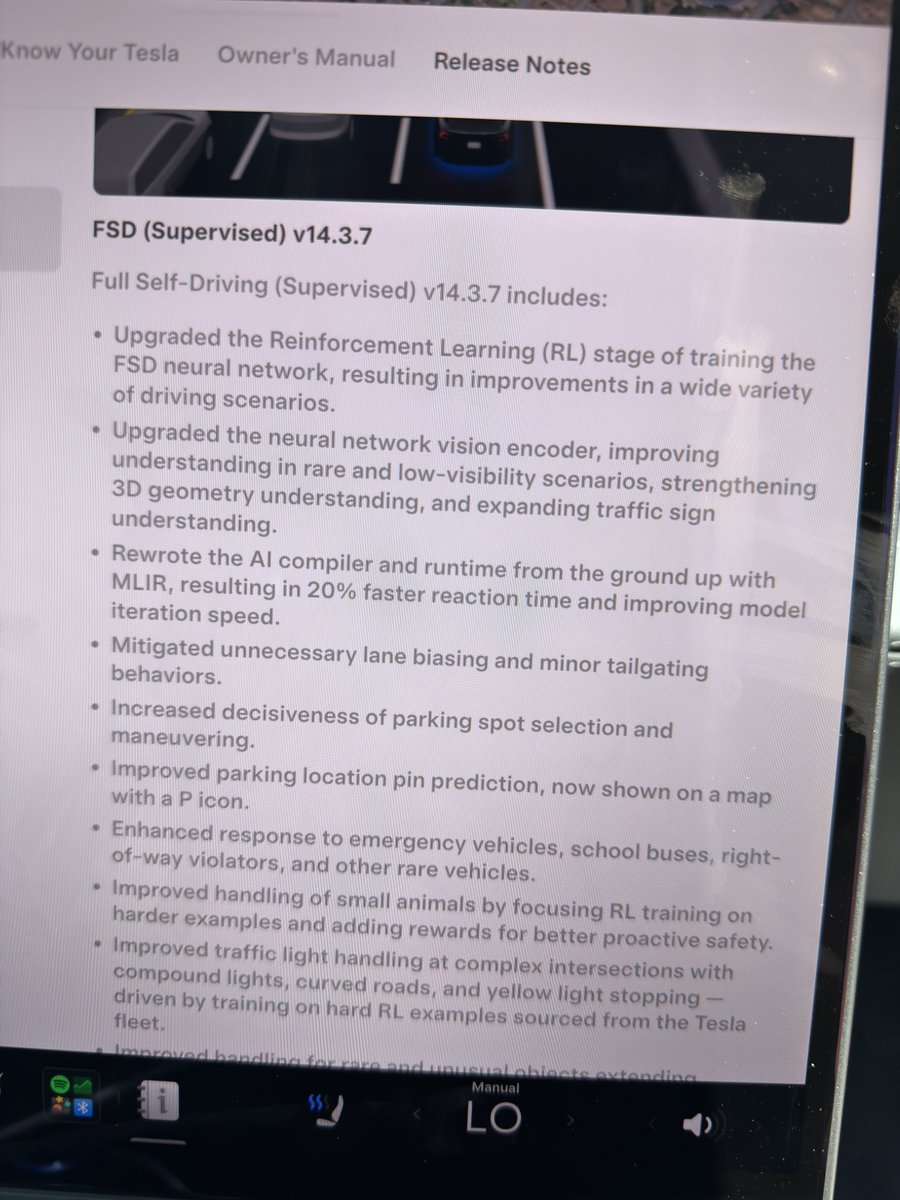
Tesla's FSD development pipeline just surfaced a step ahead of schedule. Sawyer Merritt, whose Model Y L serves as a regular test bed for pre-release software, is running FSD V14.3.7 — a version that hasn't been pushed to the public fleet. He shared the release notes, giving owners the clearest early look yet at what's coming after V14.3.6.

What exactly was spotted?
Sawyer Merritt's Model Y L test unit is running FSD V14.3.7, an unreleased build that hasn't entered public rollout. Merritt shared the accompanying release notes, which is notable — pre-release sightings often surface without any documentation. The fact that release notes exist and are readable suggests this build is reasonably mature, not a rough internal experiment.
Where does V14.3.7 sit in the release sequence?
The current public-facing release for Hardware 4 vehicles is FSD V14.3.6, which began a wider rollout around July 28, 2026, running on firmware 2026.20.6.11. That version has drawn criticism from some owners for brake-stuttering, shadow braking, and issues with highway exits and left-lane positioning. V14.3.7 would be the immediate next point release — the kind of build Tesla typically uses to address regressions identified shortly after a broader rollout.
Does this sighting apply to HW3 owners too?
That's less clear. FSD V14 "Lite" for Hardware 3 vehicles unified onto firmware 2026.20.6.11 alongside the HW4 branch, but point releases like V14.3.7 have historically targeted HW4 first. HW3 owners should watch for a separate Lite-branch update rather than assuming V14.3.7 will arrive simultaneously on their cars.
What do the release notes actually say?
Merritt shared photos of the release notes alongside the tweet, but the specific line items haven't been independently verified beyond his post. Given that V14.3.6 shipped with reported regressions, the most logical focus for V14.3.7 would be addressing those — brake behavior, shadow braking, and highway exit handling are the candidates most owners would want fixed. That said, until Tesla pushes this build publicly, the notes should be treated as a preview, not a confirmed changelog.
When might V14.3.7 reach the public fleet?
There's no official timeline. Tesla typically moves from a test-unit sighting to early-access rollout within days to a couple of weeks, depending on how the internal validation goes. The fact that V14.3.6 has already drawn regression reports gives Tesla additional motivation to move quickly. Owners enrolled in early access should keep an eye on their Software tab — that's usually where the build appears first, before broader fleet deployment. For all software updates, we'll publish as soon as a rollout begins.
Should owners on V14.3.6 be concerned in the meantime?
The reported issues with V14.3.6 — brake-stuttering, shadow braking, parking problems — are worth knowing about, but they haven't triggered any safety action. If you're experiencing these behaviors, the standard advice applies: stay attentive, use the thumbs-down feedback button immediately after any unexpected intervention, and check that your FSD profile settings haven't shifted after the update. Tesla's team monitors fleet feedback closely, and that data directly informs what gets fixed in the next point release.
Related Gear
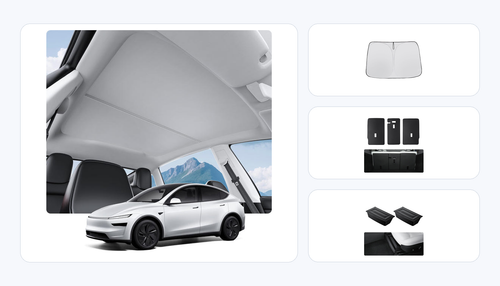
Gear up your Model Y with tested, custom-fit BASENOR accessories — shop Model Y accessories →
Sources & reporting notes
The links below identify the material source records used for this report.
- @SawyerMerritt on X (2026-07-30T20:15:27.000Z) — Direct source
Source links are preserved as published or accessed. See our editorial standards and corrections policy.
The BASENOR Editorial Desk covers Tesla, SpaceX, and related technology, curating reporting from primary sources — official accounts, regulatory filings, and software release data. Every article passes source-record and fact-checking review before publication. About the newsroom.
This report was curated by the BASENOR Editorial Desk from the sources listed above. Read our editorial standards or email editorial@basenor.com to report an error.