Starlink is quietly becoming one of the most consequential infrastructure upgrades in modern agriculture. SpaceX's satellite internet service is now actively partnering with major farm equipment manufacturers to bring reliable, high-speed connectivity to fields that have gone without it for decades — and the scale of what's being built is larger than most people realize.

The Problem Starlink Is Solving
Agriculture is a $133 billion contributor to U.S. GDP, yet approximately 60% of farmers and ranchers in the country report inadequate internet connectivity for their businesses, according to industry surveys. That gap has real consequences: modern precision farming depends on real-time data sharing, remote diagnostics, autonomous equipment operation, and AI-driven field analysis — none of which work reliably on a spotty 4G signal or a legacy geostationary satellite link with 600ms latency.
Starlink's low-Earth orbit constellation orbits at just 340–570 kilometers altitude, delivering round-trip latency of 20–60 milliseconds — competitive with cable internet — and median global download speeds that exceeded 200 Mbps in 2025, with off-peak bursts routinely above 400 Mbps. That's a fundamentally different product than what rural areas have historically had access to.
Three Major Equipment Partnerships
Starlink hasn't just pointed a dish at a barn. It has embedded itself into the precision agriculture ecosystem through direct partnerships with the industry's biggest hardware names.
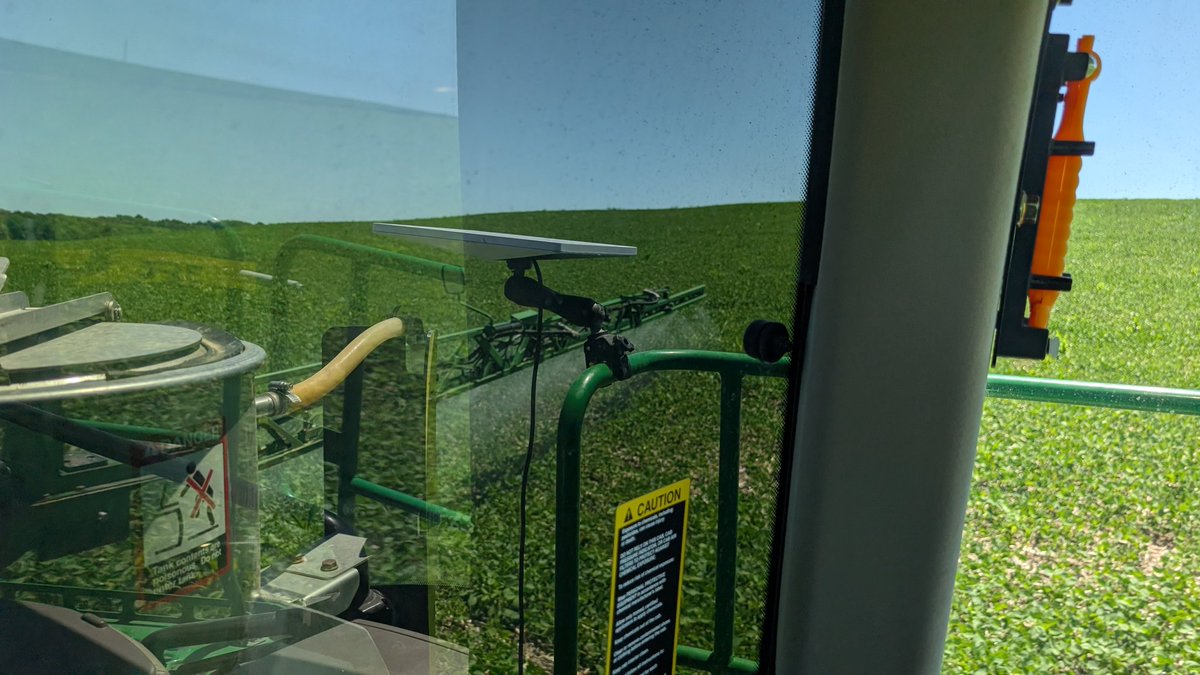
John Deere was the first major move. The two companies integrated Starlink's LEO network with John Deere's precision agriculture platform under the branding JDLink™ Boost. The integration connects farm equipment directly to the John Deere Operations Center, enabling real-time data sharing, remote diagnostics, and support for autonomous operations — all from the cab or from a farm office miles away.
CNH Industrial — the parent company of Case IH, New Holland, and Steyr — followed in June 2025, replacing a previous satellite arrangement with Intelsat. The Starlink integration powers CNH's FieldXplorer platform, which uses AI to distinguish weeds from crops in drone imagery and exports that data near-instantaneously to generate prescription spraying maps. The speed improvement over legacy satellite is what makes that workflow viable in the field.
Stara, a Brazilian agricultural machinery manufacturer, announced its Starlink partnership in August 2025. Stara's self-propelled vehicles are expected to ship from the factory with Starlink kits starting in the first half of 2026, with connectivity enhancing its Conecta, Telemetria, Syncro, and Machine Monitoring services.
Network Scale Behind the Partnerships
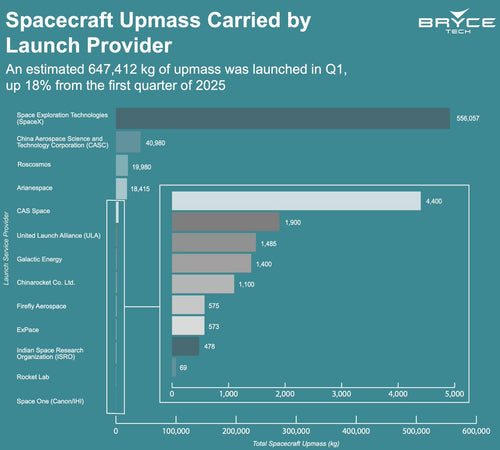
These partnerships are backed by a constellation that has grown substantially. By the end of 2025, Starlink was serving over 9 million customers globally across land, air, and sea, with service available in more than 155 countries. SpaceX launched over 120 Falcon 9 missions in 2025 deploying Starlink V2 Mini satellites, bringing the active constellation to nearly 10,000 satellites. That density is what allows the network to maintain low latency even in remote agricultural regions far from any terrestrial infrastructure.
Performance data from U.S. states with heavy agricultural use reflects the improvement. According to FCC broadband speed data, over 50% of Starlink customers in Nebraska, South Dakota, Wyoming, Colorado, and Nevada were hitting the FCC's minimum broadband threshold of 100/20 Mbps in the second half of 2025. Nebraska led with 58.31% of users achieving those speeds.
What It Costs to Connect a Farm
For individual farmers evaluating Starlink independent of an equipment partnership, the current pricing structure as of early 2026 breaks down as follows: residential plans start at $50 per month for 100 Mbps download speeds, with the standard dish kit at $349. The portable Starlink Mini costs $199 with speeds up to 100 Mbps on the Roam plan. Business plans — more relevant for commercial farm operations — start at $250 per month, with the High-Performance dish hardware at $1,999.
For operations already purchasing John Deere or CNH equipment, the connectivity layer is increasingly bundled into the machine itself, which changes the calculus considerably.
The broader trend here is straightforward: as autonomous and AI-driven farming equipment becomes standard, connectivity stops being a convenience and becomes load-bearing infrastructure. Starlink is positioning itself as that infrastructure — and the equipment manufacturers are building around it. Whether the remaining 40% of well-connected farms stay on terrestrial options or eventually migrate to LEO satellite will be one of the more interesting rural technology stories to watch over the next few years. For our SpaceX coverage, follow along as the constellation continues to expand.

Sarah focuses on Tesla Energy, SpaceX missions, and the broader Musk AI portfolio. Former data analyst in clean energy. Based in San Francisco.
Sources verified at publish time. Spotted an inaccuracy? Email editorial@basenor.com.