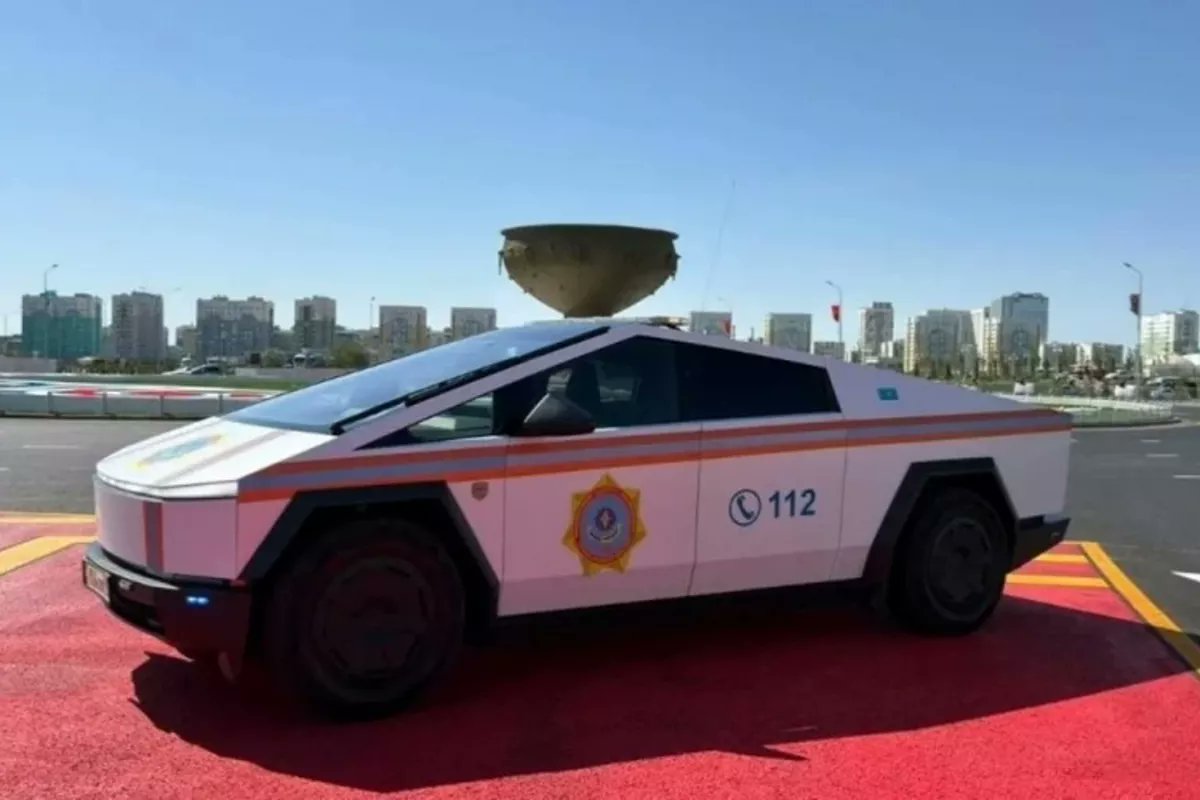
Kazakhstan is doubling down on the Tesla Cybertruck for emergency response. The country's Ministry of Emergency Situations has confirmed plans to purchase additional Cybertrucks following a successful initial deployment in Almaty — with officials citing the vehicle's performance in real-world emergencies, including operations in challenging mountainous terrain.

What Officials Said
Vice Minister for Emergency Situations Yerbolat Sadyrbayev was direct in his assessment. According to reporting from Kazakhstani outlets, he stated that the first Cybertruck — acquired by the Emergency Situations Department of Almaty — has demonstrated "high efficiency in responding to various emergency situations" and "proven its effectiveness in operational use."
His core argument: in emergency response, every minute matters, and the ministry is focused on equipment that demonstrably improves rescue capabilities and cuts response times. The Cybertruck cleared that bar.
Officials specifically highlighted several operational advantages that made the vehicle stand out in field use:
- High mobility across difficult terrain, including the mountainous areas surrounding Almaty
- Strong electric power output capable of running communications and rescue systems in the field
- Quiet operation, which enables more discreet deployment when needed
- Extended power delivery to external technologies — a critical capability for prolonged rescue operations
Broader Government Adoption
The emergency services expansion isn't the only sign of Cybertruck uptake in Kazakhstan. The country's elite State Guard Service deployed Cybertrucks as mobile command-and-control vehicles during the Informal Summit of the Organization of Turkic States on May 15, 2026, in Turkistan — a high-profile security operation where reliability and capability are non-negotiable.
In that deployment, one Cybertruck was assigned to the State Guard Service for command and coordination duties, while a second was added to the rapid response reserve of the Ministry of Emergency Situations. That second vehicle was reportedly a donation from a Kazakhstani entrepreneur.
The pattern here is notable: two separate government agencies, two distinct use cases, and consistent positive feedback from both.
Why This Matters Beyond Kazakhstan
Government fleet adoption tends to be a leading indicator. Emergency services and security agencies have strict procurement standards — vehicles need to perform under pressure, not just on paper. When a ministry publicly commits to expanding a fleet based on operational results, it carries weight that consumer reviews simply don't.
Kazakhstan's endorsement adds to a growing body of real-world evidence that the Cybertruck's combination of payload capacity, power export capability, and go-anywhere mobility translates into genuine utility for professional fleets. The vehicle's 110V and 240V power outlets — capable of running equipment directly from the truck — are particularly well-suited to emergency scenarios where grid power isn't available.
Whether other governments in Central Asia or beyond take notice remains to be seen, but Kazakhstan is making a clear statement: the Cybertruck isn't just a consumer novelty. It's earning its keep in the field.

Marcus covers Tesla's software releases, FSD rollouts, and OTA changes. Background in automotive engineering. Based in Austin.
Sources verified at publish time. Spotted an inaccuracy? Email editorial@basenor.com.