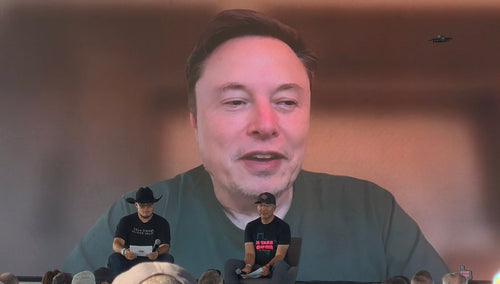
Elon Musk made a sweeping prediction early Monday: the combination of artificial intelligence and Tesla's Optimus humanoid robot will make universally excellent healthcare a reality — one that surpasses the standard of care available to even the wealthiest patients today. It's a bold claim, but it's backed by a development roadmap that's moving faster than most people realize.

What Musk Is Actually Predicting
This isn't the first time Musk has pointed Optimus toward medicine — but the framing here is notably ambitious. The claim isn't that robots will assist surgeons or handle administrative tasks. It's that the AI-plus-Optimus combination will raise the floor of global healthcare to a level that doesn't currently exist for anyone.
In January 2026, Musk stated that Tesla's Optimus robots would outperform the best human surgeons within three years — putting that milestone around 2029. He's also proposed integrating xAI's Grok large language model as a diagnostic layer: analyzing symptoms, medical history, and real-time physiological data to function as what he's called a "super doctor." By his own projection, there will eventually be more Optimus units performing surgical procedures than there are human surgeons on Earth.
The underlying logic is about scale and consistency. Human specialists are scarce, expensive, and unevenly distributed. A robot that can perform 3,000 distinct medical tasks with superhuman precision — and can be manufactured by the millions — changes that equation entirely.
Where Optimus Actually Stands Right Now
The vision is long-range, but the hardware is already moving. Tesla began mass production of Optimus Gen 3 at its Fremont factory in January 2026. According to available specifications, Gen 3 features 22 degrees of freedom per hand and 50 actuators across both hands — the kind of dexterity that surgical applications would require. It runs on Tesla's AI5 chip, which reportedly delivers a 5x bandwidth improvement over the previous generation, and integrates Grok for voice AI.
Gen 3 is also specifically designed with healthcare tasks in mind. The platform is reportedly capable of performing over 3,000 distinct medical tasks — a six-fold increase from its predecessor — including sterile technique compliance, patient mobility assistance, and medication dispensing. Tesla has broken ground on a dedicated Optimus factory with a stated capacity target of up to ten million units per year.
On cost: Musk's long-term manufacturing target is below $20,000 per unit at full scale, with initial commercial pricing estimated around $30,000. That's still expensive relative to most medical equipment budgets today, but at volume, the economics shift considerably.
The Gap Between Vision and Reality
It's worth being clear about where the hard challenges remain. Surgical robotics is a heavily regulated field — FDA clearance for autonomous robotic procedures would represent an entirely new category of approval, one that doesn't yet exist. Training AI systems on the full complexity of human anatomy, rare conditions, and emergency scenarios requires data at a scale that hasn't been assembled. And the liability frameworks for autonomous medical procedures are essentially unwritten.
None of that makes the vision impossible. It makes the timeline the real question. Musk has set 2029 as his benchmark for Optimus surpassing human surgeons — which is aggressive by any measure. What's less debatable is the direction: robotics and AI are already entering operating rooms, diagnostic workflows, and patient monitoring. The question is how far and how fast that arc bends.
For Tesla owners watching the Optimus program, this latest statement is a reminder that the robot being built inside Tesla's factories isn't just an industrial workhorse. The healthcare application is, by Musk's own framing, one of the primary reasons it exists.
Related Gear
Gear up your Tesla with tested, custom-fit BASENOR accessories — shop Tesla accessories →
🤖 Tracking Tesla's humanoid robot? See every Optimus production milestone and appearance in our Tesla Optimus Tracker.
Sources & reporting notes
The links below identify the material source records used for this report.
- @elonmusk on X (2026-07-07T03:46:47.000Z) — Direct source
Source links are preserved as published or accessed. See our editorial standards and corrections policy.
The BASENOR Editorial Desk covers Tesla, SpaceX, and related technology, curating reporting from primary sources — official accounts, regulatory filings, and software release data. Every article passes source-record and fact-checking review before publication. About the newsroom.
This report was curated by the BASENOR Editorial Desk from the sources listed above. Read our editorial standards or email editorial@basenor.com to report an error.