30-Second Brief
The News: NASA's Artemis II moon rocket is now targeting as early as March 6 for launch after engineers successfully replaced the four and eight-inch liquid hydrogen seals on the Tail Service Mast Umbilical (TSMU), resolving the leak that scrubbed an earlier March 3 window.
Why It Matters: Artemis II is the first crewed mission to loop around the Moon since Apollo 17 in 1972 — any launch date solidification is a significant moment for human deep-space exploration.
Sources: @NASASpaceflight via X — Feb 20, 2026
NASA Artemis II Eyes March 6 Launch Window After Engineers Crack the LH2 Leak Problem
NASA's Artemis II crewed moon mission has a new target on the calendar: March 6, 2026 — and this time, the engineering team has real confidence to back it up. According to real-time reporting from NASASpaceflight.com out of the Flight Readiness Review (FRR) briefings, the leak that derailed an even earlier March 3 opportunity has been isolated, repaired, and verified. The fix: replacing the four and eight-inch liquid hydrogen (LH2) seals on the Tail Service Mast Umbilical (TSMU) at Launch Complex 39B.

📊 Key Figures
| Metric | Detail | Context |
|---|---|---|
| Previous Target | March 3, 2026 | Eliminated by WDR 1 LH2 leak |
| New Target | March 6, 2026 | Subject to FRR sign-off |
| Seals Replaced | 4-inch & 8-inch LH2 seals on TSMU | Root cause of WDR 1 leak confirmed resolved |
| Wet Dress Rehearsals | 2 conducted | WDR 2 completed successfully after seal repair |
| Mission Type | First crewed lunar flyby since Apollo 17 | 1972 was the last time humans flew to the Moon |
What Went Wrong — and What Fixed It
During the first Wet Dress Rehearsal (WDR 1) — a full propellant loading test conducted without launching — NASA's ground crews detected a liquid hydrogen leak at the TSMU interface. The TSMU, or Tail Service Mast Umbilical, is the critical connection point at the base of the Space Launch System (SLS) that supplies propellant and other services to the rocket right up until liftoff. An LH2 leak at this interface is a serious issue: liquid hydrogen is cryogenic, highly flammable, and notoriously difficult to contain.
The leak was traced to the four and eight-inch LH2 seals — the gaskets that create a pressure-tight connection at the umbilical interface. Engineers replaced both seal sizes. WDR 2, conducted on February 19, validated the fix.

March 3 Was Real — Until It Wasn't
One interesting detail to emerge from the FRR briefings: a March 3 launch date was genuinely on the table for a period, even though it was never formally published on the official launch schedule site. According to NASASpaceflight, the earlier date was viable right up until the WDR 1 leak surfaced and made that window technically impossible to meet. The team pivoted to March 6 — a three-day slip that, given the circumstances, represents a disciplined and well-executed response to a real hardware problem.

🔭 The BASENOR Take
| Timeline | March 6, 2026 (pending FRR approval) |
| Impact Level | 🔴 High — First crewed lunar mission in over 50 years |
| Confidence Rating | High — Root cause identified and hardware-verified through WDR 2 |
📰 Deep Dive
The fact that NASA's engineering team could identify a cryogenic seal failure, source replacement hardware, perform the repair, and re-validate through a second full Wet Dress Rehearsal — all within a tight enough window to preserve a March 6 opportunity — speaks to a program running with genuine operational urgency. This isn't the slow-roll NASA of previous decades. The SLS and Orion stack have been years in development, but the ground team's execution on this specific problem was fast and methodical.
The caveat worth watching is the Flight Readiness Review. FRR is where all program stakeholders — engineering leads, safety officers, and mission directors — formally sign off that the vehicle is ready to fly. The March 6 date is not locked until FRR closes successfully. NASASpaceflight noted this explicitly, and it's a meaningful caveat: FRRs can surface late-breaking concerns. That said, the team's expressed confidence at the briefing level is a positive signal.
For context, Artemis II will carry four astronauts — Reid Wiseman, Victor Glover, Christina Koch, and Canadian astronaut Jeremy Hansen — on a free-return trajectory around the Moon. It is not a lunar landing, but it is the essential precursor proving out Orion's life support systems, navigation, and re-entry performance with a crew on board. A successful Artemis II clears the path for Artemis III, which targets an actual lunar surface landing. The stakes, in other words, extend well beyond March 6 itself.
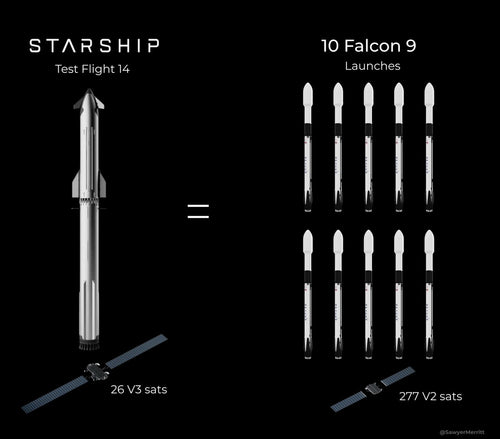
From a broader space industry perspective, this mission also unfolds against a backdrop of rapidly accelerating commercial lunar activity — including SpaceX's own Starship program, which according to verified reports is targeting mid-March 2026 for its 12th test flight using the upgraded V3 configuration with Raptor V3 engines. Two major launch programs, two different March windows: it's shaping up to be one of the most consequential months in human spaceflight in recent memory.
Sources & reporting notes
The links below identify the material source records used for this report.
- @NASASpaceflight on X (2026-02-20T16:53:07.000Z) — Direct source
- @NASASpaceflight on X (2026-02-20T16:11:25.000Z) — Direct source
- @NASASpaceflight on X (2026-02-20T16:07:23.000Z) — Direct source
Source links are preserved as published or accessed. See our editorial standards and corrections policy.
The BASENOR Editorial Desk covers Tesla, SpaceX, and related technology, curating reporting from primary sources — official accounts, regulatory filings, and software release data. Every article passes source-record and fact-checking review before publication. About the newsroom.
This report was curated by the BASENOR Editorial Desk from the sources listed above. Read our editorial standards or email editorial@basenor.com to report an error.