SpaceX is set to launch one of the more technically ambitious missions of 2026 next week. On July 21 at 2:15 PM UTC, a Falcon 9 Block 5 will lift off from Space Launch Complex 40 carrying DARPA's Robotic Servicing of Geosynchronous Satellites (RSGS) payload — a spacecraft designed to inspect, repair, and extend the life of satellites already in orbit, tens of thousands of kilometers above Earth.

What's Actually Flying on This Mission
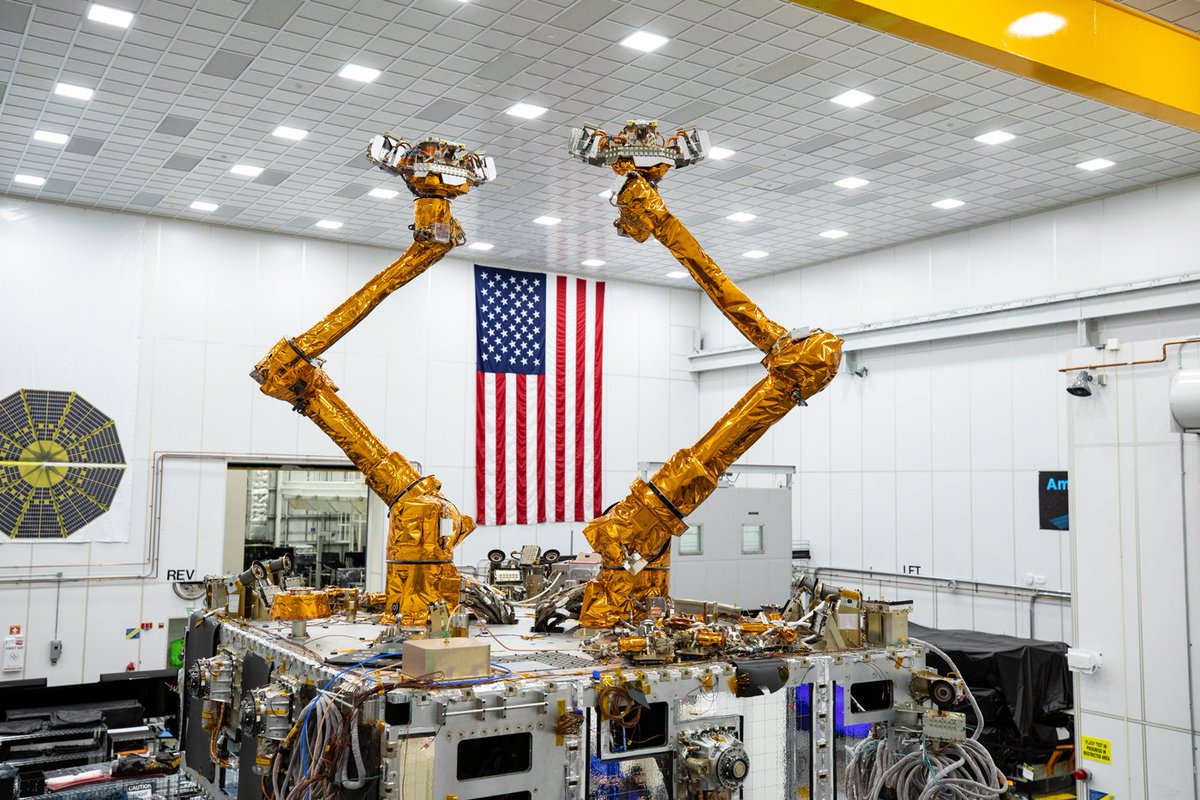
The primary payload is Northrop Grumman's Mission Robotic Vehicle (MRV), a 3,000-kilogram spacecraft that functions as both a commercial satellite bus and a mobile repair platform. Mounted on the MRV are two highly dexterous robotic arms engineered by the U.S. Naval Research Laboratory — the hardware that makes the whole concept work. These arms are designed to perform complex mechanical tasks in the vacuum of space, from inspection to physical attachment of hardware onto client satellites.
Also aboard the Falcon 9 are three Mission Extension Pods (MEPs). Once the MRV reaches its operational orbit, it will use those robotic arms to mechanically bolt the MEPs directly onto client satellites, providing propulsion and extending their operational lifespans by up to six years per pod. It's essentially a pit-stop service for satellites that would otherwise be decommissioned or left to drift.
Northrop Grumman's SpaceLogistics division is the commercial partner on the program, having purchased the Falcon 9 launch outright for this mission. The RSGS payload itself was assembled and completed environmental testing back in 2024, with key robotic arm tests having been validated as far back as 2021.
The Road to Geosynchronous Orbit
One detail worth understanding: the MRV won't arrive at its operational altitude immediately after launch. The spacecraft uses electric propulsion, which is highly fuel-efficient but slow. According to mission parameters, it will take approximately 10 months for the MRV to raise its orbit from the initial injection point to geosynchronous Earth orbit (GEO) — roughly 35,786 kilometers above the equator. That means the vehicle won't begin actual servicing operations until mid-2027 at the earliest.
GEO is where the stakes are highest. It's home to some of the most valuable and strategically important satellites on the planet — communications infrastructure, weather monitoring systems, and military assets. Many of these satellites were designed without any expectation of in-orbit servicing, which is precisely what makes the RSGS concept both novel and commercially significant.
Why This Mission Is a Milestone
According to DARPA, this launch represents the United States' first multi-mission robotic servicing capability in high Earth orbit. It's also described as the first long-life U.S. spacecraft purpose-built for in-space servicing, assembly, and manufacturing (ISAM) — a category that the defense and commercial space communities have been working toward for over a decade.
The public-private structure of the program is notable too. DARPA developed the core technology and the robotic arms through the Naval Research Laboratory, while Northrop Grumman's SpaceLogistics is responsible for commercializing the capability. The intent is that once proven, the MRV becomes a recurring commercial service — not a one-off government demonstration.
| Mission Detail | Specifics |
|---|---|
| Launch Date | July 21, 2026 — 2:15 PM UTC |
| Launch Site | Space Launch Complex 40 (SLC-40) |
| Launch Vehicle | SpaceX Falcon 9 Block 5 |
| Primary Payload | Northrop Grumman MRV (~3,000 kg) |
| Secondary Payloads | 3× Mission Extension Pods (MEPs) |
| Robotic Arms | 2× NRL-built dexterous arms |
| Target Orbit | Geosynchronous Earth Orbit (GEO) |
| Orbit Raise Time | ~10 months (electric propulsion) |
| MEP Lifespan Extension | Up to 6 years per client satellite |
| Program Partners | DARPA + Northrop Grumman SpaceLogistics |
The broader context here is a growing recognition — across both government and commercial sectors — that the GEO belt is too valuable to treat as a write-off zone. Satellites that cost hundreds of millions of dollars to build and launch shouldn't have to be abandoned simply because they've run low on propellant or suffered a repairable fault. If the MRV performs as designed, it could fundamentally shift how satellite operators plan asset lifecycles going forward. The July 21 launch is just the starting gun.
Sources & reporting notes
The links below identify the material source records used for this report.
- @JoeTegtmeyer on X (2026-07-14T15:15:38.000Z) — Direct source
Source links are preserved as published or accessed. See our editorial standards and corrections policy.
The BASENOR Editorial Desk covers Tesla, SpaceX, and related technology, curating reporting from primary sources — official accounts, regulatory filings, and software release data. Every article passes source-record and fact-checking review before publication. About the newsroom.
This report was curated by the BASENOR Editorial Desk from the sources listed above. Read our editorial standards or email editorial@basenor.com to report an error.