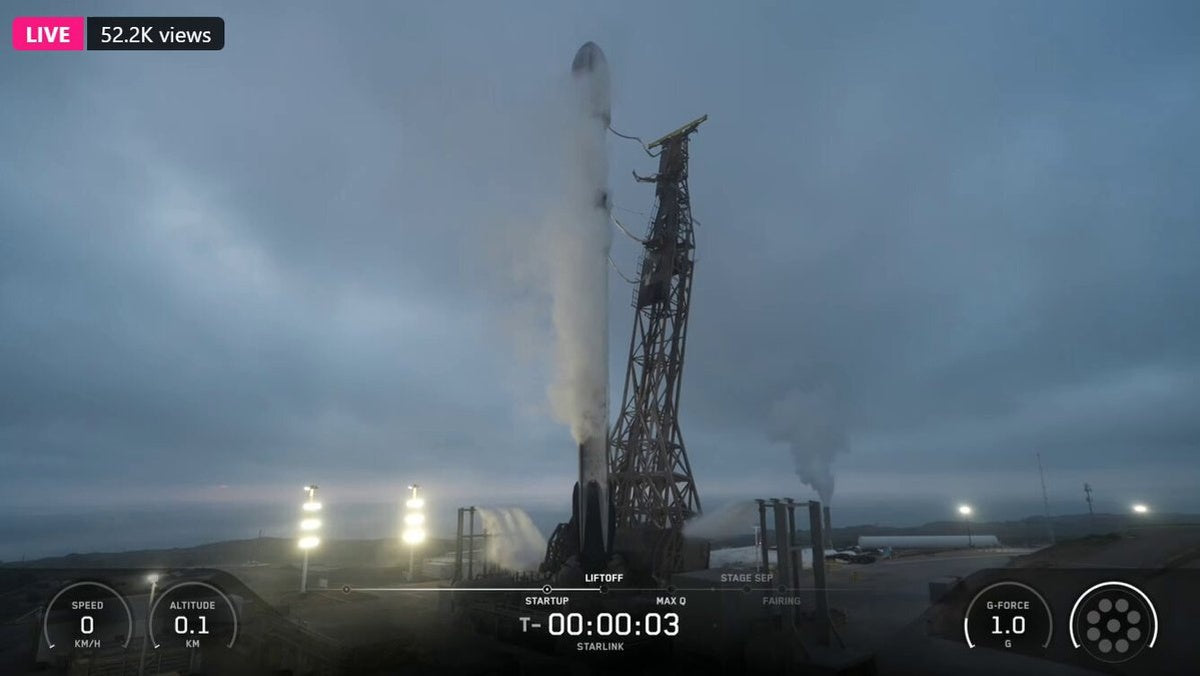
SpaceX added another 24 satellites to the Starlink constellation early Wednesday, launching Falcon 9 booster B1093 from Space Launch Complex 4E at Vandenberg Space Force Base in California. Liftoff occurred at 2:42 AM UTC on April 30, 2026, and the mission wrapped cleanly with a successful booster touchdown — the 13th flight for this particular core.

NASASpaceflight confirmed the launch of Starlink Group 17-36 moments after liftoff, capturing the Falcon 9 climbing out of Vandenberg on its thirteenth mission. The booster designation B1093-13 underscores just how routine high-cadence reusability has become for SpaceX — a core flying double-digit missions is no longer headline news on its own, but the consistency is the point.

About nine minutes after launch, the booster touched down as planned, confirmed by NASASpaceflight's live coverage. With 24 more satellites in orbit, SpaceX continues filling out the Starlink shell structure that underpins global broadband coverage — each successful mission tightening the network's capacity and redundancy.

For Tesla owners using Starlink for connectivity at home or on the road, this kind of operational tempo is what keeps the service competitive. SpaceX has shown no sign of slowing its launch cadence heading into mid-2026, and with each new shell group added, coverage gaps in rural and remote areas continue to shrink.

Sarah focuses on Tesla Energy, SpaceX missions, and the broader Musk AI portfolio. Former data analyst in clean energy. Based in San Francisco.
Sources & reporting notes
The links below identify the material source records used for this report.
- @SpaceX on X (2026-04-30T02:32:25.000Z) — Direct source
- @NASASpaceflight on X (2026-04-30T02:43:50.000Z) — Direct source
- @NASASpaceflight on X (2026-04-30T02:52:06.000Z) — Direct source
Source links are preserved as published or accessed. See our editorial standards and corrections policy.
The BASENOR Editorial Desk covers Tesla, SpaceX, and related technology, curating reporting from primary sources — official accounts, regulatory filings, and software release data. Every article passes source-record and fact-checking review before publication. About the newsroom.
This report was curated by the BASENOR Editorial Desk from the sources listed above. Read our editorial standards or email editorial@basenor.com to report an error.