The News: SpaceX has begun testing its redesigned Stage Zero 2.0 launch infrastructure alongside the V3 Super Heavy Booster at Starbase, marking a pivotal step toward Starship Flight 12.
Why It Matters: This is the most significant hardware upgrade in the Starship program since the original pad was destroyed in 2023 — and it directly sets the timeline for the next generation of SpaceX launches that underpin Starlink, future Mars missions, and the broader space economy Tesla owners care about.
Source: @CSI_Starbase on X

What SpaceX Is Actually Testing Right Now
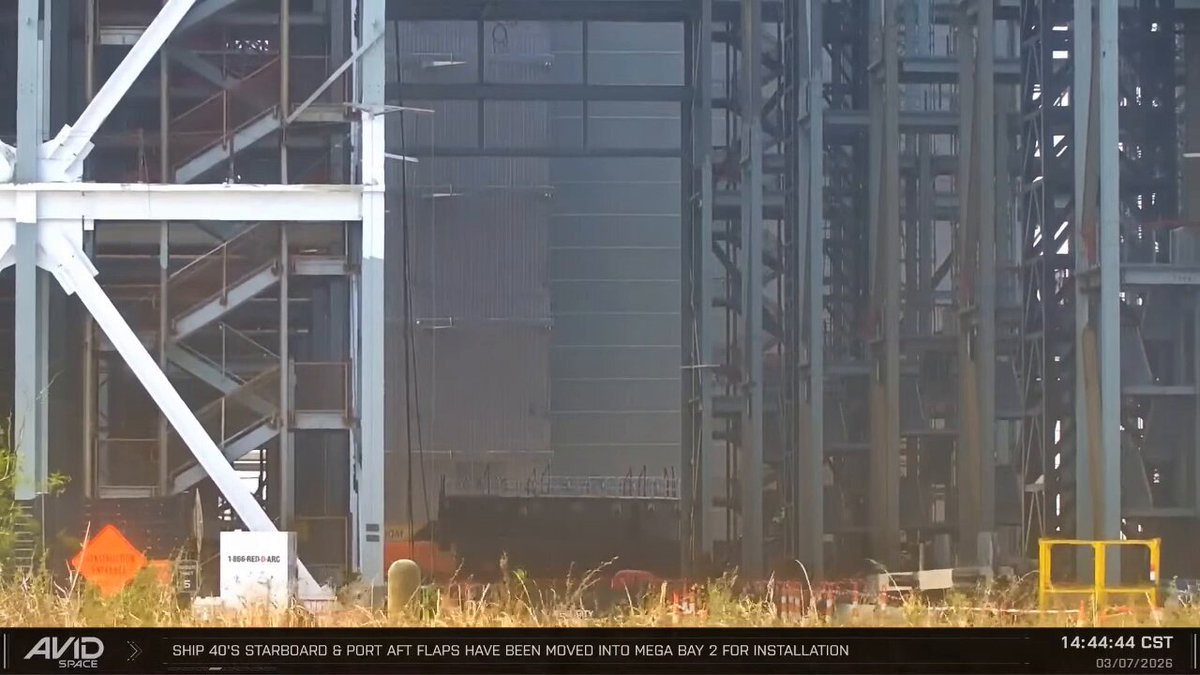
Starbase observer Zack Golden (@CSI_Starbase) confirmed on Saturday that SpaceX has moved into active testing of two major hardware systems simultaneously: the completely rebuilt Stage Zero 2.0 launch complex and the first V3-generation Super Heavy Booster. This isn't a routine checkup — it's the beginning of a full test campaign on hardware that has never flown before.
To understand why this is significant, you need to know what was wrong with the original setup. Pad A — the launch mount used for Starship's first integrated flight tests — was severely damaged during the April 2023 launch when the lack of a flame trench allowed the exhaust to excavate a crater beneath the pad and shower the surrounding area with debris. SpaceX didn't just patch the problem. They rebuilt from scratch.
📊 Key Figures
| Metric | Value | Context |
|---|---|---|
| Water capacity per event | 422,000 gal | Per static fire, launch, or landing |
| V3 Booster height | 72.3 m | vs. 71 m for V2 |
| Raptor 3 max thrust | 80.8 MN | 18,200,000 lbf total |
| Grid fin size increase | 50% larger | 3 fins vs. 4 on V2 |
| Propellant mass (Block 3) | 3,650,000 kg | Super Heavy booster only |
| Targeted first V3 flight | March 2026 | Flight 12 |
| Booster 18 first test | Nov 20, 2025 | Anomaly encountered; redesign ongoing |
Stage Zero 2.0: A Ground-Up Rebuild
The new Pad B (also called Pad 2) is a fundamentally different structure. The most critical addition is a proper flame trench paired with a heavily water-cooled double-sided flame diverter. That 422,000-gallon water activation capacity isn't just an engineering footnote — it's the system that prevents the kind of ground-shockwave damage that plagued early flights and forced months of pad repairs.
Tower 2, the new launch tower serving Pad B, also advances on the original Mechazilla design in a key area: dual booster quick disconnects (BQDs) for both liquid oxygen and liquid methane. These are engineered to retract faster than the single-arm setup on Pad 1, reducing the window during which the connectors are exposed to engine exhaust at ignition. The quick disconnect (SQD) interface plate was recently installed on Tower 2's SQD arm, signaling the pad is now ready for its first full V3 stack test campaign.
SpaceX also broke ground on an on-site air separation unit (ASU) at Starbase in July 2025. Rather than trucking in liquid oxygen, the facility will produce it locally — a move designed to cut costs and accelerate turnaround between flights, which is central to SpaceX's reusability economics.
The V3 Super Heavy: What's Actually Different
The V3 booster (Booster 18 is the first example) isn't an incremental update. It's a rearchitected vehicle. The headline spec is the switch to Raptor 3 engines delivering a combined 80.8 MN of thrust, but the structural and manufacturing changes are arguably more important for SpaceX's long-term cadence.
The autogenous pressurization lines have been streamlined and the gas manifold moved to an external position — changes that sound minor but significantly reduce the complexity of assembly. SpaceX's stated goal is a dramatic increase in production speed, which matters enormously when the plan calls for dozens of Starship flights per year.
Other notable V3 changes: the booster is slightly taller at 72.3 meters (up from 71 m on V2), features three enlarged grid fins spaced 90 degrees apart instead of four smaller ones, incorporates an integrated hot stage ring, and has had its heat shield removed entirely — a design simplification made possible by improvements in the Raptor engine's thermal management.
It hasn't been a clean path. During initial pressure testing in November 2025, Booster 18 experienced a structural anomaly — buckling or rupturing under pressure while SpaceX was validating the redesigned propellant systems. That setback pushed the development timeline but didn't derail it. The current test campaign at Pad B suggests SpaceX has worked through those issues and is ready to push toward a full static fire.
🔭 The BASENOR Take
Timeline: Testing underway now → Static fire campaign → Flight 12 targeted March 2026
Impact Level: 🔴 High — This is the foundation for all future Starship missions
Confidence: Medium-High — Hardware is confirmed on pad; Flight 12 date remains SpaceX's target but depends on test outcomes
The simultaneous debut of a new pad and a new booster generation is an unusually high-stakes test campaign. SpaceX is essentially validating two critical unknowns at once. That's aggressive, but it's consistent with how the company operates — parallel development rather than sequential validation.
For the broader space industry, a successful V3 test campaign would confirm that Raptor 3 performs as designed at full stack scale, and that the Stage Zero 2.0 water suppression and quick disconnect systems work under real ignition conditions. Both are prerequisites for the flight rate SpaceX needs to make Starlink's next-generation constellation and any crewed missions viable on their stated timelines.
Flight 12 — if it proceeds in March 2026 as targeted — will be the first time a V3 booster flies and the first launch from Pad B. That's a lot of new variables in a single mission. Watch the static fire results closely. They'll tell you far more about the actual Flight 12 timeline than any official target date will. For more on SpaceX's development milestones, see our SpaceX coverage.
🚀 Following the Starship program? See every test flight, official outcome and the next launch window in our SpaceX Starship Tracker.
Sources & reporting notes
The links below identify the material source records used for this report.
- @CSI_Starbase on X (2026-03-07T22:04:00.000Z) — Direct source
Source links are preserved as published or accessed. See our editorial standards and corrections policy.
The BASENOR Editorial Desk covers Tesla, SpaceX, and related technology, curating reporting from primary sources — official accounts, regulatory filings, and software release data. Every article passes source-record and fact-checking review before publication. About the newsroom.
This report was curated by the BASENOR Editorial Desk from the sources listed above. Read our editorial standards or email editorial@basenor.com to report an error.