📌 UPDATE — April 21, 2026
SpaceX has successfully launched the GPS III-8 satellite to orbit aboard a Falcon 9 rocket, confirming a successful outcome for the mission targeted for April 20. The launch marks SpaceX's ninth GPS III mission overall and its fourth accelerated mission for the program, underscoring the company's consistent operational reliability on this national security contract. SpaceX confirmed the milestone via their official account on April 21, 2026.
@SpaceX · Apr 21, 2026"Falcon 9 launches GPS III-8 to orbit, completing SpaceX's fourth accelerated mission and ninth GPS III mission"

📌 UPDATE — April 21, 2026
SpaceX has officially confirmed the successful deployment of the GPS III-8 satellite, completing the mission that launched Monday, April 20. The confirmation came via SpaceX's official account on April 21 at 8:24 AM UTC, marking the successful conclusion of the final GPS III satellite launch and cementing the company's role as a key partner to the U.S. Space Force in delivering critical national security space assets.
SpaceX @SpaceX · Apr 21, 2026Deployment of GPS III-8 confirmed
 ❤️ 1,142 🔁 127 👁 45,615
📌 UPDATE — April 20, 2026
SpaceX has pushed the GPS III-8 launch by one day to Tuesday, April 21, citing unfavorable weather conditions for booster recovery operations. The mission itself remains unchanged — the delay is purely weather-driven and teams are continuing to monitor conditions ahead of the new target. SpaceX confirmed the update via their official account early Monday morning.

The News: SpaceX will launch GPS III-8 — the final satellite in the US Space Force's GPS III constellation — aboard a Falcon 9 rocket on Monday, April 20, from pad 40 at Cape Canaveral.
Why It Matters: Completing the GPS III constellation brings stronger signals, better accuracy, and improved resilience to the navigation system that every Tesla — and every smartphone — relies on daily.
Source: @SpaceX on X
SpaceX Set to Launch the Final GPS III Satellite Monday — Here's What It Means for Navigation
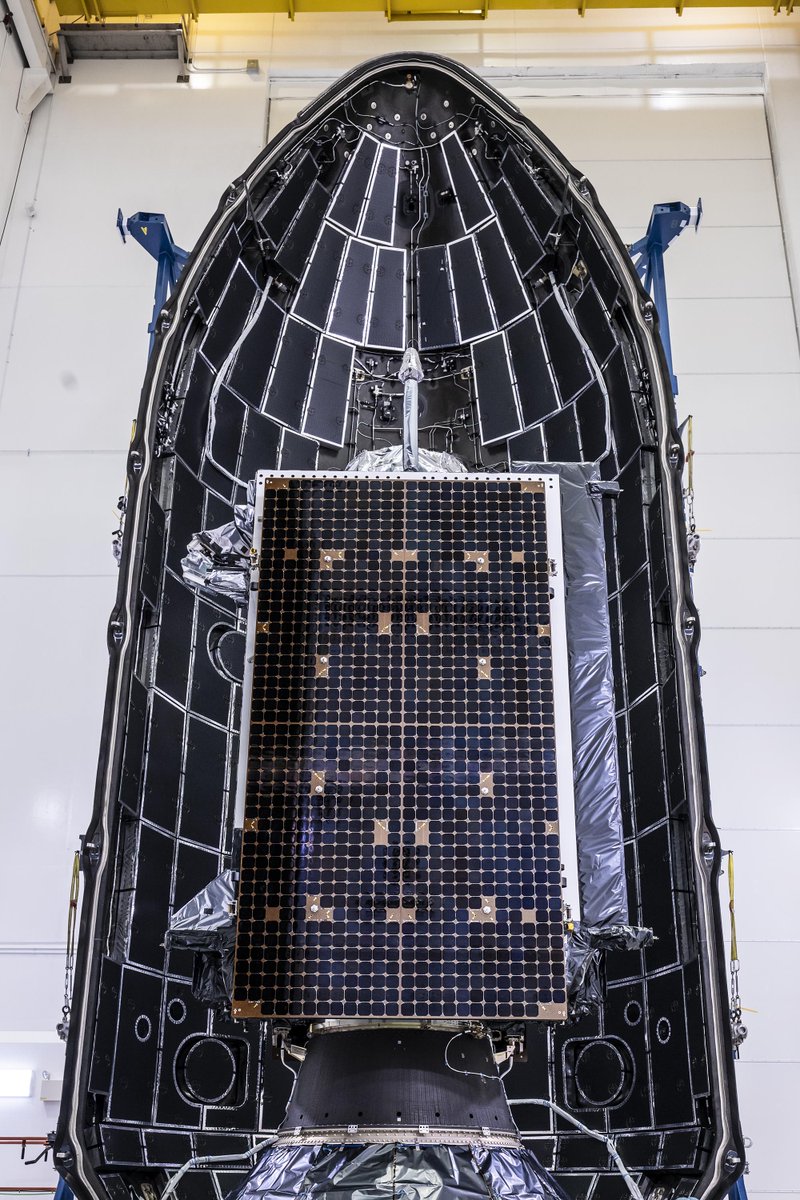
After years of incremental launches, the GPS III constellation is about to be complete. SpaceX confirmed this week that teams have encapsulated the US Space Force's GPS III-8 satellite — the tenth and final vehicle in the GPS III series — into Falcon 9's payload fairing, with liftoff targeted for Monday, April 20 from Space Launch Complex 40 (SLC-40) at Cape Canaveral Space Force Station in Florida.

The mission, formally designated GPS III SV10 and named Hedy Lamarr in honor of the actress and inventor, closes out a multi-year program to modernize the backbone of global navigation. The 15-minute launch window opens at 2:57 a.m. ET Monday, with a backup opportunity on Tuesday, April 21, at 2:53 a.m. ET.
📊 Key Figures
| Metric | Detail |
|---|---|
| Mission Name | GPS III-8 (SV10) — Hedy Lamarr |
| Launch Vehicle | Falcon 9 |
| Target Date | Monday, April 20 — 2:57 a.m. ET (15-min window) |
| Backup Date | Tuesday, April 21 — 2:53 a.m. ET |
| Launch Site | SLC-40, Cape Canaveral Space Force Station, Florida |
| Booster Flight | 7th flight (6 prior Starlink missions) |
| Booster Landing | Just Read the Instructions droneship, Atlantic Ocean |
| Constellation Size After Launch | 32 active GPS satellites |
| Original Launch Provider | United Launch Alliance (ULA) — reassigned to SpaceX |
Why This Mission Was Reassigned to SpaceX
GPS III-8 was originally contracted to United Launch Alliance and their Vulcan Centaur rocket. Following an anomaly investigation tied to Vulcan, the US Space Force made the call to reassign the mission to SpaceX to ensure rapid delivery of this critical national security asset. It's a significant vote of confidence in Falcon 9's reliability record — and a notable shift for a program that has historically spread launch contracts across multiple providers.
The booster flying this mission is no stranger to orbit. It's on its seventh flight, having previously launched six Starlink missions. After delivering GPS III-8 to its target orbit, the first stage will attempt a landing on the Just Read the Instructions droneship positioned in the Atlantic Ocean.
What GPS III-8 Actually Delivers
The GPS III series represents a generational upgrade over the legacy GPS IIF satellites still in the constellation. GPS III-8 specifically brings:
- Stronger signals — up to three times more powerful than previous-generation satellites, improving performance in challenging environments like dense urban canyons
- Advanced M-Code technology — an encrypted, jam-resistant military signal that's significantly harder to spoof or disrupt
- Additional civilian signals — the L1C signal, compatible with international navigation systems, improving accuracy for everyday users
- Improved timing precision — critical for financial systems, power grids, and autonomous vehicles that depend on GPS time synchronization
With GPS III-8 operational, the constellation reaches 32 active satellites — providing redundancy and coverage improvements that benefit every GPS-dependent device on the planet, including Tesla's navigation and Autopilot positioning systems.
🔭 The BASENOR Take
Timeline: Launch April 20, 2026 | Backup April 21, 2026
Impact Level: 🟡 Medium-term — infrastructure improvement with long-tail benefits
Confidence: High — payload encapsulated, launch site confirmed, window set
The completion of the GPS III constellation is one of those infrastructure milestones that doesn't generate headlines proportional to its actual importance. Every navigation system on Earth — including the one in your Tesla — depends on GPS signal quality. Stronger, more jam-resistant signals mean more reliable positioning in tunnels, parking garages, and dense city environments where GPS historically struggles.
For Tesla owners specifically, improved GPS accuracy has a direct downstream effect on Autopilot and FSD performance. While Tesla's autonomy stack relies primarily on cameras and neural nets rather than GPS for immediate driving decisions, precise positioning feeds into route planning, map matching, and the broader data pipeline that improves the system over time.
The reassignment from ULA to SpaceX is also worth noting as a signal of where the US government's launch confidence currently sits. Falcon 9 has now become the default fallback for national security missions when other vehicles face delays — a position that would have seemed unlikely a decade ago. For SpaceX's ongoing national security launch cadence, GPS III-8 is another data point in a long reliability record.
Assuming a nominal launch Monday morning, GPS III-8 will undergo an on-orbit checkout period before being declared operational. The full benefits to the constellation won't be felt immediately, but the foundation will be in place — and that matters for every connected device that takes a GPS fix for granted.

Sarah focuses on Tesla Energy, SpaceX missions, and the broader Musk AI portfolio. Former data analyst in clean energy. Based in San Francisco.
Sources verified at publish time. Spotted an inaccuracy? Email editorial@basenor.com.