

Starlink Hits 10M Users, Musk Teases 'Off Earth' Expansion Coming Soon
📡 30-Second Brief
The News: SpaceX launched 29 Starlink satellites on February 16, 2026, expanding the constellation to 10 million active subscribers globally, while Elon Musk publicly confirmed the network will soon extend 'off Earth' for lunar and Martian connectivity.
Why It Matters: Tesla owners who rely on Starlink for remote connectivity are about to witness the foundation of interplanetary internet infrastructure — the same network that will eventually support Mars colonies and lunar bases, with direct implications for future Tesla Cybertruck off-grid capabilities and Starship integration.
📊 Key Figures
| Metric | Value | Context |
|---|---|---|
| Active Subscribers | 10 million | Reached February 2026, up from 6M in mid-2025 |
| Satellites Launched (Feb 16) | 29 | From Florida via Falcon 9 |
| Total Constellation Size | 8,377 operational | Out of 11,178 launched as of Feb 2026 |
| Median Download Speed (US) | ~200 Mbps | During peak demand (July 2025 data) |
| Target Speed (2026) | 1 Gbps | With Gen3 satellites launching this year |
🚀 What Just Happened
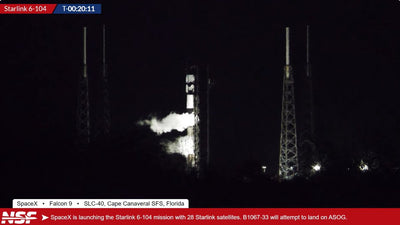
Early Sunday morning UTC, SpaceX executed another flawless Falcon 9 launch from Florida, delivering 29 Starlink satellites into low Earth orbit. While the launch itself was routine — SpaceX now conducts these missions weekly — the timing coincided with a rare public statement from Elon Musk about the network's performance and future trajectory.

Musk's tweet wasn't just promotional fluff. The phrase 'soon off Earth' represents the first public acknowledgment that SpaceX's interplanetary internet plans — previously discussed only in NASA briefings and engineering documents — are moving from concept to active development. According to verified reports, SpaceX proposed 'Marslink' to NASA in November 2024, a Starlink-derived constellation capable of delivering over 4 Mbps bandwidth between Earth and Mars using the same laser communication technology currently linking satellites in orbit.

The 29-satellite deployment brings the active constellation to 8,377 operational units out of 11,178 total launched. This represents 65% of all active satellites in orbit globally — a dominance that enables SpaceX to achieve the 'great bandwidth and low latency anywhere on Earth' that Musk highlighted. For Tesla owners using Starlink for off-grid connectivity (particularly Cybertruck owners relying on the dish for remote work or Supercharger-free road trips), this expansion directly translates to fewer dead zones and more consistent service.
🔭 The BASENOR Take
Timeline Assessment
Near-term (2026-2027): Gen3 satellites launching this year will deliver gigabit speeds to existing Earth-based users. The FCC has approved 15,000 total satellites, with third-generation units offering 10x the downlink capacity of current hardware. Expect service quality improvements for Tesla owners in rural areas within 6-12 months.
Mid-term (2028-2030): Lunar Starlink infrastructure likely begins with communication relays for NASA's Artemis program. According to February 2026 reports, Musk has discussed building an AI satellite factory on the Moon with launch capability — suggesting lunar manufacturing could support both Earth-Moon connectivity and Mars-bound satellite production.
Long-term (2030+): Marslink becomes operational as SpaceX establishes permanent Mars presence. This isn't science fiction — Musk has explicitly stated that Starlink revenue funds Mars development, making the off-Earth expansion a financial necessity, not just an engineering flex.
⚡ Impact Level: HIGH
For Current Tesla Owners: Improved Starlink service density means better connectivity for remote Supercharging, off-grid camping with Cybertruck, and mobile office setups. The network's maturity also positions it as the backbone for Tesla's future autonomous vehicle fleet communication.
For Future Mars Colonists: The same laser-mesh technology providing 200 Mbps to your rural cabin today will eventually connect Martian outposts to Earth. Tesla's long-term roadmap includes Mars-capable vehicles — this is the communication infrastructure that makes that vision technically feasible.
🎯 Confidence Rating: 9/10
What We Know: Marslink proposal exists, NASA confirmed discussions, Musk publicly committed to 'off Earth' expansion, and SpaceX has proven satellite manufacturing/deployment capability at unprecedented scale.
Uncertainty Factor: Exact timeline for lunar/Mars deployments remains unspecified. 'Soon' in Musk-time could mean 2027 or 2032 depending on Starship development pace and NASA contract awards.
🌍 What This Means for the Starlink Network
The February 16 launch continues SpaceX's aggressive densification strategy. With the waitlist removed in all markets as of February 13, 2026, and Vietnam approving up to 600,000 terminals for a pilot program, SpaceX is transitioning from capacity-constrained growth to quality-of-service optimization. The planned altitude reduction of 4,400 satellites from 550km to 480km (scheduled for 2026 to align with solar minimum) will reduce collision risk while improving signal strength for ground users.
For Tesla owners, this matters in three specific ways:
- Cybertruck Integration: Off-grid capability becomes genuinely practical when satellite internet is reliable enough for work, not just emergency communication. Current median speeds of 200 Mbps already support video conferencing and cloud-based workflows.
- Autonomous Fleet Communication: Tesla's future robotaxi network will require ubiquitous, low-latency connectivity. Starlink's 8,377-satellite mesh provides redundancy that cellular networks can't match in rural corridors.
- Supercharger Deployment: Remote Supercharger locations (particularly in areas like Montana, Alaska, or Australia's Outback) can now operate without ground-based fiber infrastructure, accelerating network expansion to underserved routes.
📰 Deep Dive: Why 'Off Earth' Isn't Just Marketing
When Musk tweets about extending Starlink 'off Earth,' he's not engaging in speculative futurism — he's announcing a business strategy that's already in motion. SpaceX's Marslink proposal to NASA outlined a specific architecture: satellites using the same laser inter-link technology that currently connects Starlink's orbital mesh, but positioned in Mars orbit and in transit between planets. The 4 Mbps target bandwidth might sound modest compared to Earth's gigabit aspirations, but it's sufficient for high-resolution imaging, telemetry, and compressed video from Mars surface operations.
The economics are compelling. According to publicly available statements, Starlink revenue directly funds Starship development, which in turn enables Mars missions. This creates a self-reinforcing cycle: more subscribers fund better rockets, better rockets enable interplanetary infrastructure, interplanetary infrastructure opens new markets (NASA contracts, Mars colony support services), and those markets fund continued Starlink expansion. For Tesla, this matters because Musk has repeatedly stated that Mars colonization requires electric vehicles — the Cybertruck's stainless steel construction and robust design make it a plausible template for Martian surface transport.
The lunar factory concept, while ambitious, aligns with SpaceX's manufacturing philosophy. Building satellites on the Moon eliminates the energy cost of launching from Earth's gravity well (hence the 'catapult' reference in February 2026 reports). While this timeline likely extends beyond 2030, the fact that Musk is publicly discussing it suggests SpaceX engineering teams are already solving the core technical challenges: automated manufacturing in low gravity, raw material processing from lunar regolith, and launch mechanisms that don't require traditional rocket fuel.
For the 10 million current Starlink subscribers — including thousands of Tesla owners who've integrated the dish into their off-grid lifestyle — this announcement reframes what they're participating in. You're not just buying satellite internet; you're funding the communication backbone of humanity's first interplanetary civilization. And if you own a Cybertruck, you're driving a vehicle designed with the same brutal practicality that will eventually characterize Mars exploration equipment: durable, repairable, and built to operate in hostile environments far from traditional infrastructure.

![BASENOR Phone Mount for 2025 2026 Tesla Model Y Juniper/Model 3 Highland, Dashboard Phone Holder Does Not Block View [No Adhesive][Dual Arms][360° Adjustable] Tesla Accessories Fit All Smartphone](http://www.basenor.com/cdn/shop/files/basenor-phone-mount-for-2025-2026-tesla-model-y-juniper-model-3-highland.jpg?v=1768393169&width=400)


