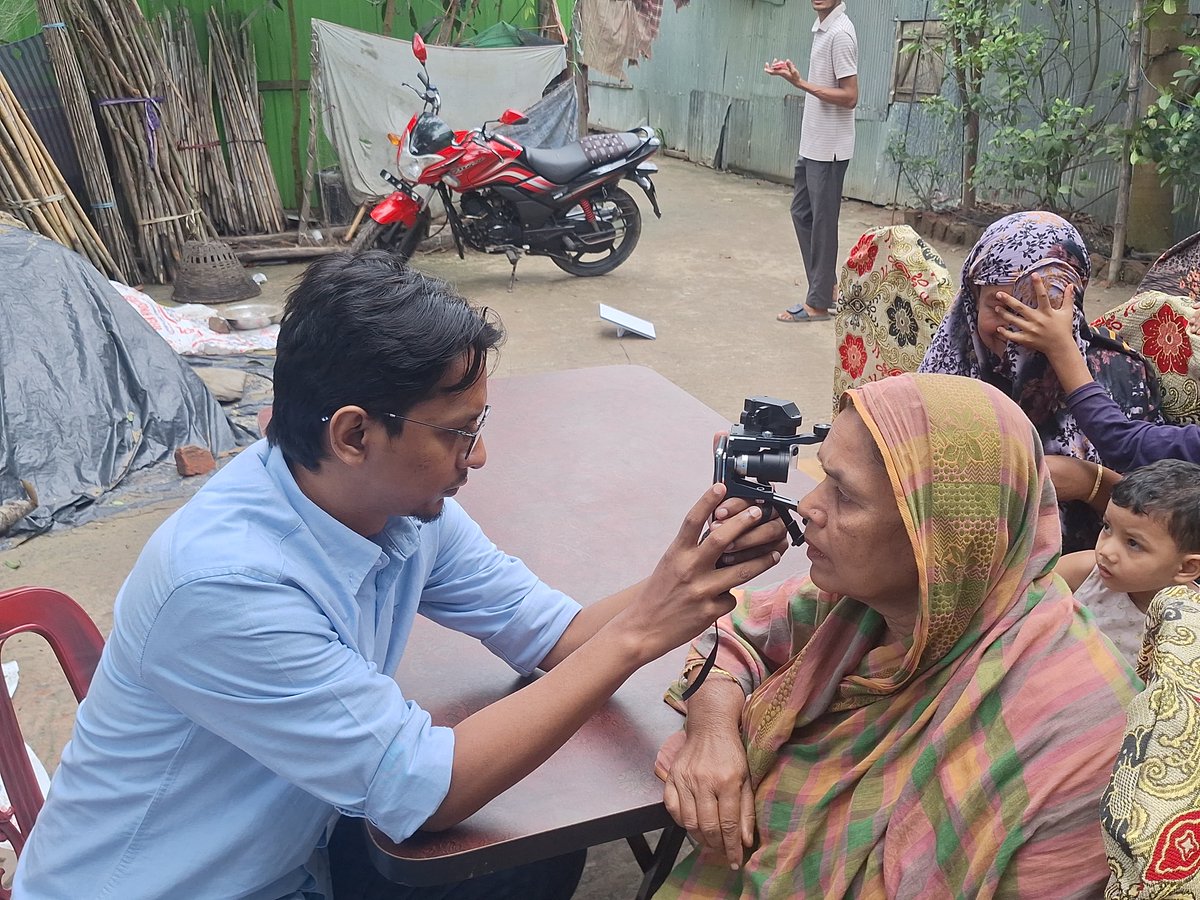
Starlink has quietly crossed a milestone that goes well beyond connectivity statistics. Working alongside the Grameen Health telemedicine platform and a network of digitally connected diagnostic centers, the satellite internet service has now reached more than 1.2 million patients in rural Bangladesh — with 450,000 teleconsultations completed in communities that previously had little to no reliable internet access.

How It Came Together
Starlink officially launched in Bangladesh on May 20, 2025, making it one of the first major South Asian nations to adopt the service. The groundwork was laid months earlier — in February 2025, Nobel Laureate Professor Muhammad Yunus, founder of Grameen Bank and Grameen Healthcare Trust, held direct discussions with Elon Musk about bringing Starlink's satellite internet to Bangladesh. The focus from the start was practical: reaching remote, hilly, and coastal regions where traditional broadband infrastructure simply doesn't exist.
The Grameen Health partnership put that connectivity to immediate use. By pairing Starlink's reliable high-speed signal — capable of download speeds up to 300 Mbps — with an established telemedicine platform and on-the-ground diagnostic centers, the program gave rural patients access to doctors they could never have reached in person. The numbers reflect that: 1.2 million patients served and 450,000 teleconsultations completed is not a pilot program anymore. It's a functioning healthcare delivery system built on satellite internet.
The Infrastructure Behind the Numbers
Bangladesh's adoption of Starlink has expanded steadily since launch. Grameenphone signed an agreement with Bangladesh Satellite Company Limited (BSCL) to distribute Starlink's satellite internet solutions to corporate clients in areas with limited terrestrial coverage. More recently, Banglalink announced a collaboration with Starlink Mobile in April 2026 to introduce the country's first satellite-to-mobile service — initially focused on messaging via standard 4G LTE smartphones, with data services planned as the next phase pending regulatory approval.
Starlink's operations in Bangladesh are governed by the country's Non-Geostationary Satellite Orbit (NGSO) policy, which requires use of a local broadband gateway and compliance with national security regulations including Lawful Interception requirements. Equipment carries a one-time setup cost of approximately Tk 47,000, with monthly subscriptions ranging from Tk 4,200 to Tk 6,000 — pricing that remains a barrier for individual households but is workable for clinic-level deployments.
Why This Matters Beyond Bangladesh
The Bangladesh deployment is becoming a template. The combination of satellite internet, an existing telemedicine platform, and distributed diagnostic centers sidesteps the decades-long infrastructure gap that has kept rural healthcare out of reach across South Asia, sub-Saharan Africa, and parts of Latin America. Starlink doesn't need roads or fiber cables — it needs a clear view of the sky and a local partner with clinical credibility.
The Grameen Health model provides exactly that. With 1.2 million patients already served, the question shifts from whether satellite-powered telemedicine works to how fast it can scale — and which country builds the next version of this partnership.
Sources & reporting notes
The links below identify the material source records used for this report.
- @Starlink on X (2026-05-14T21:32:00.000Z) — Direct source
Source links are preserved as published or accessed. See our editorial standards and corrections policy.
The BASENOR Editorial Desk covers Tesla, SpaceX, and related technology, curating reporting from primary sources — official accounts, regulatory filings, and software release data. Every article passes source-record and fact-checking review before publication. About the newsroom.
This report was curated by the BASENOR Editorial Desk from the sources listed above. Read our editorial standards or email editorial@basenor.com to report an error.