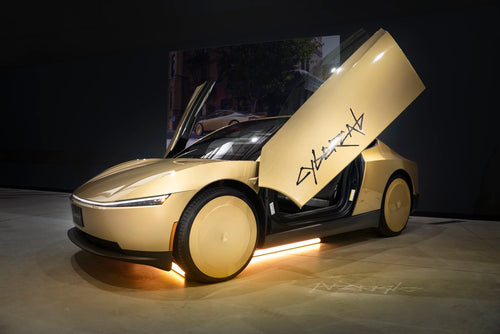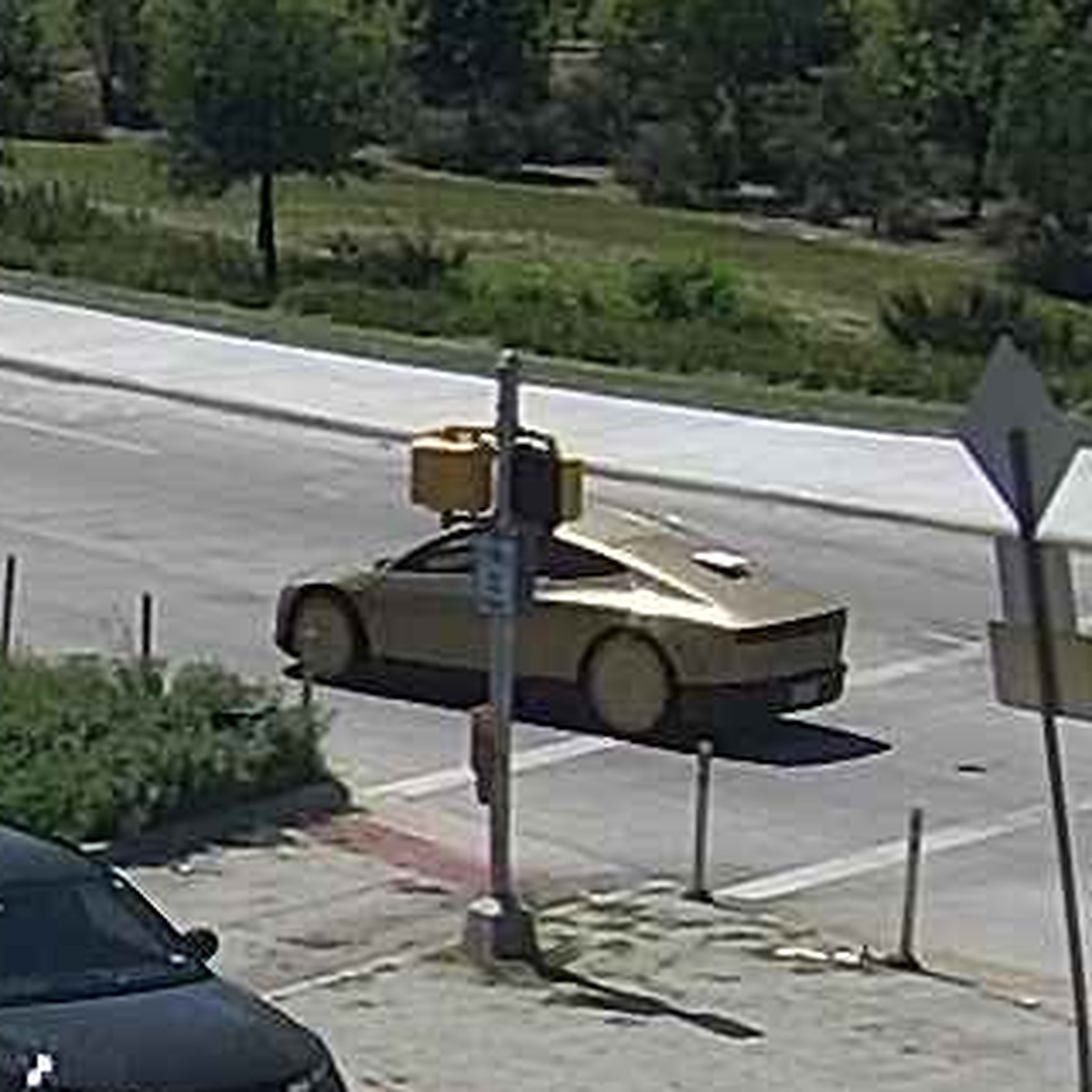
A Tesla Cybercab prototype has turned up in the wild with something unexpected bolted to its rear: a Starlink Mini satellite terminal. Spotted and shared by Sawyer Merritt on X, this appears to be the first time the two Elon Musk-led companies' hardware has been photographed together on a production-bound test vehicle.

The Starlink Mini is a compact, IP67-rated satellite dish roughly the size of a laptop — weighing just 1.1 kg and capable of pulling down speeds above 300 Mbps. Its small footprint makes it a natural candidate for vehicle-mounted connectivity, and seeing it on a Cybercab prototype suggests Tesla is actively testing satellite-based internet as a potential backbone for its robotaxi network. A vehicle operating fully autonomously, without a driver to troubleshoot a lost cellular signal, has an obvious need for redundant, always-on connectivity.
The Cybercab entered production at Gigafactory Texas earlier this year, with Tesla targeting a sub-$30,000 consumer price point by 2027. More than 500 units are reportedly active in testing environments. Whether Starlink Mini connectivity would ship as a standard feature, a fleet-only option, or simply a testing tool that gets removed before consumer delivery remains an open question — but the prototype sighting puts the integration firmly on the radar.
For a robotaxi service operating at scale, satellite connectivity could serve as a fallback when cellular coverage drops, or as the primary data link in areas where 5G infrastructure is thin. It also fits the broader Tesla-SpaceX ecosystem play that Musk has long hinted at. Whether this makes it into the production Cybercab or stays a prototype experiment, it's a detail worth watching as Tesla's commercial robotaxi launch approaches.
🚕 Following the Robotaxi rollout? See every operating city, launch date and announced market in our Tesla Robotaxi Tracker.
Related Gear
Gear up your Tesla with tested, custom-fit BASENOR accessories — shop Tesla accessories →
Sources & reporting notes
The links below identify the material source records used for this report.
- @SawyerMerritt on X (2026-05-14T04:54:59.000Z) — Direct source
Source links are preserved as published or accessed. See our editorial standards and corrections policy.
The BASENOR Editorial Desk covers Tesla, SpaceX, and related technology, curating reporting from primary sources — official accounts, regulatory filings, and software release data. Every article passes source-record and fact-checking review before publication. About the newsroom.
This report was curated by the BASENOR Editorial Desk from the sources listed above. Read our editorial standards or email editorial@basenor.com to report an error.