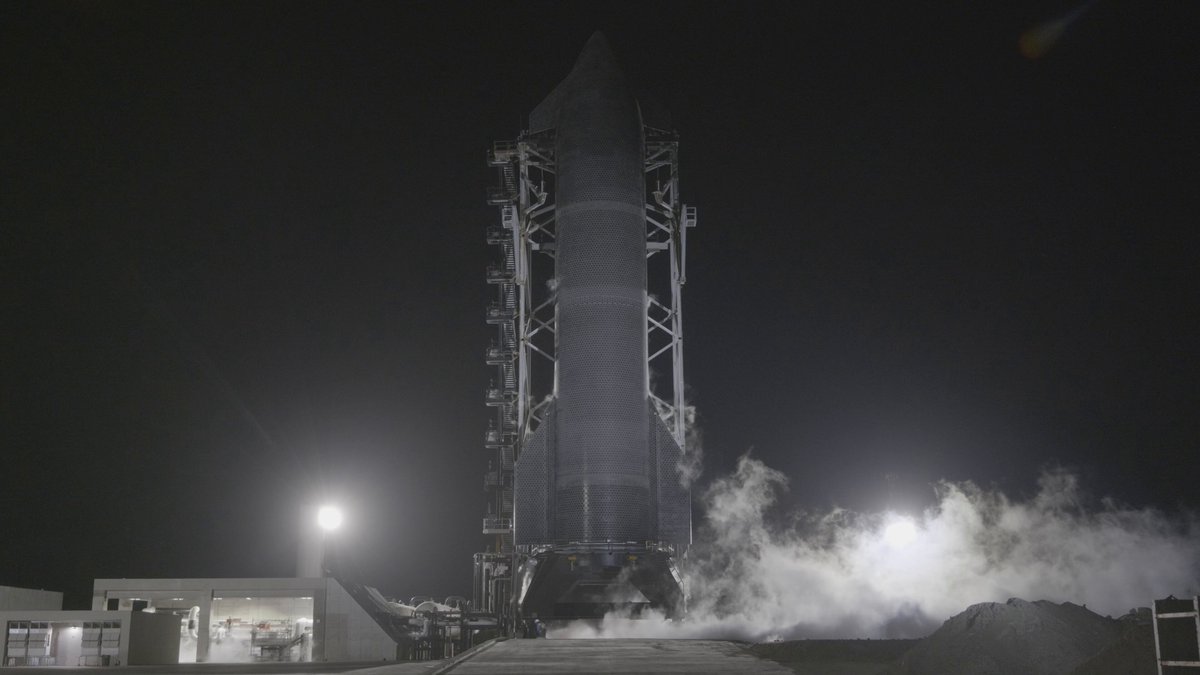
SpaceX has cleared another milestone on the path to fully reusable orbital spaceflight. On August 20, 2026, Starship successfully completed a single-engine static fire specifically designed to demonstrate a deorbit burn — the controlled engine firing that will slow the vehicle enough to survive re-entry from orbit. It is a quiet but technically significant step, and it signals that controlled orbital return is no longer a design goal but an actively tested capability.

Why the Deorbit Burn Is the Hard Part
Getting a rocket to orbit is one problem. Getting it back in one piece is another. For Starship, the deorbit burn is the moment where the upper stage — Ship — fires one or more Raptor engines while still in space to reduce its velocity before hitting the atmosphere. Get it wrong and re-entry becomes uncontrolled. Get it right and you have a vehicle that can be caught, refueled, and flown again.
The challenge is that this burn has to work reliably in the vacuum of space, at extreme cold, after the vehicle has been coasting unpowered for an extended period. A single-engine static fire under those conditions — rather than a full multi-engine ignition — is a deliberate engineering choice. It keeps the deceleration manageable and reduces the risk of destabilizing the vehicle's attitude during re-entry. SpaceX's decision to test this specific profile now suggests the team is working through the precise thrust and duration parameters that orbital return will require.

Where This Fits in the Orbital Roadmap
Starship's previous flight tests have progressively expanded the envelope — from pad survival, to controlled ascent, to the dramatic booster catch at Mechazilla. Each flight has added a new demonstrated capability rather than simply repeating the last. The deorbit burn static fire follows that same incremental logic: before SpaceX attempts a full orbital re-entry with Ship, it needs verified data that the engine can ignite on command in the right conditions and produce the right impulse.
Completing this ground test is a prerequisite, not a finish line. The data gathered today feeds directly into the flight software and mission profile for the next orbital attempt. SpaceX framed the test explicitly as preparation for "upcoming orbital missions" — language that implies the timeline is active, not speculative. For our SpaceX coverage, this is one of the more operationally concrete checkboxes the program has ticked in recent months.
What Full Reusability Actually Requires
The broader context here matters. SpaceX's long-term economics for Starship depend entirely on rapid reusability of both stages. Super Heavy booster catch has already been demonstrated. Ship reusability hinges on surviving re-entry, which hinges on the deorbit burn being precise. A burn that is too short leaves the vehicle with too much velocity; too long and it risks structural loads during the deeper atmospheric pass that follows.
Passing this static fire test means SpaceX has at least one verified data point on engine behavior in the deorbit profile. Whether one test is enough before a live orbital attempt is a question only the engineering team can answer — but the fact that they ran it and announced it publicly suggests confidence in the result.
The next milestone to watch is whether SpaceX integrates this deorbit burn profile into a full integrated flight test, and whether Ship demonstrates a controlled splashdown or — eventually — a tower catch of its own. Today's test was the engine proving it can do the job. The vehicle still has to prove it can survive what comes after.
🚀 Following the Starship program? See every test flight, official outcome and the next launch window in our SpaceX Starship Tracker.
Sources & reporting notes
The links below identify the material source records used for this report.
- @SpaceX on X (2026-08-20T16:52:14.000Z) — Direct source
Source links are preserved as published or accessed. See our editorial standards and corrections policy.
The BASENOR Editorial Desk covers Tesla, SpaceX, and related technology, curating reporting from primary sources — official accounts, regulatory filings, and software release data. Every article passes source-record and fact-checking review before publication. About the newsroom.
This report was curated by the BASENOR Editorial Desk from the sources listed above. Read our editorial standards or email editorial@basenor.com to report an error.